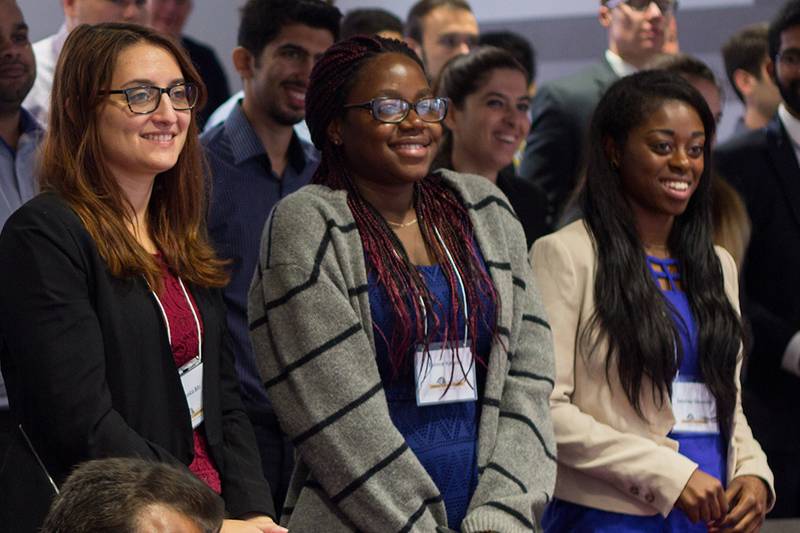
"I have a passion for culture," said Es-pranza Humphrey ’17, who interned at the New
York Historical Society before earning her master's degree from Columbia University.
She is now assistant curator of collections at Poster House in New York City. "I learned
so much about developing my research and writing as a historian."
We know that those who don’t know history are bound to repeat it. As a history major
at the University of New Haven, you will develop an in-depth understanding of how
the seminal events that preceded us impacted us then and how they affect our society
today and moving forward.
The field of history is one of the central disciplines of the liberal arts and it
provides a classic mode of learning. It also is a popular and interesting major to
pursue. Why? Because everything has history. At its core, history deals with real
people and events, and it offers limitless opportunities for intensive exploration.
History is not constrained by borders, neither are we
You learn through class discussions, debates and a senior thesis project; have the
opportunity to study abroad for a semester; take elective courses that allow you to
customize your course of study based on your interests; or double major or minor in
a complementary field of study.
You’ll also develop your critical thinking, research, and writing skills, and gain
an education in logic and reasoning. These are core skills that will serve you well
as you attend law school, pursue an advanced degree in a range of disciplines, or
start your career in a variety of fields or industries.
History is not constrained by borders, neither are we
You learn through class discussions, debates and a senior thesis project; have the
opportunity to study abroad for a semester; take elective courses that allow you to
customize your course of study based on your interests; or double major or minor in
a complementary field of study.
You’ll also develop your critical thinking, research, and writing skills, and gain
an education in logic and reasoning. These are core skills that will serve you well
as you attend law school, pursue an advanced degree in a range of disciplines, or
start your career in a variety of fields or industries.
History is not constrained by borders, neither are we
You learn through class discussions, debates and a senior thesis project; have the
opportunity to study abroad for a semester; take elective courses that allow you to
customize your course of study based on your interests; or double major or minor in
a complementary field of study.
You’ll also develop your critical thinking, research, and writing skills, and gain
an education in logic and reasoning. These are core skills that will serve you well
as you attend law school, pursue an advanced degree in a range of disciplines, or
start your career in a variety of fields or industries.
History is not constrained by borders, neither are we
You learn through class discussions, debates and a senior thesis project; have the
opportunity to study abroad for a semester; take elective courses that allow you to
customize your course of study based on your interests; or double major or minor in
a complementary field of study.
You’ll also develop your critical thinking, research, and writing skills, and gain
an education in logic and reasoning. These are core skills that will serve you well
as you attend law school, pursue an advanced degree in a range of disciplines, or
start your career in a variety of fields or industries.
Learn from professors who are dedicated to your success.
Our faculty are leaders and innovators in their fields, bringing both deep professional
experience and academic rigor to the classroom.
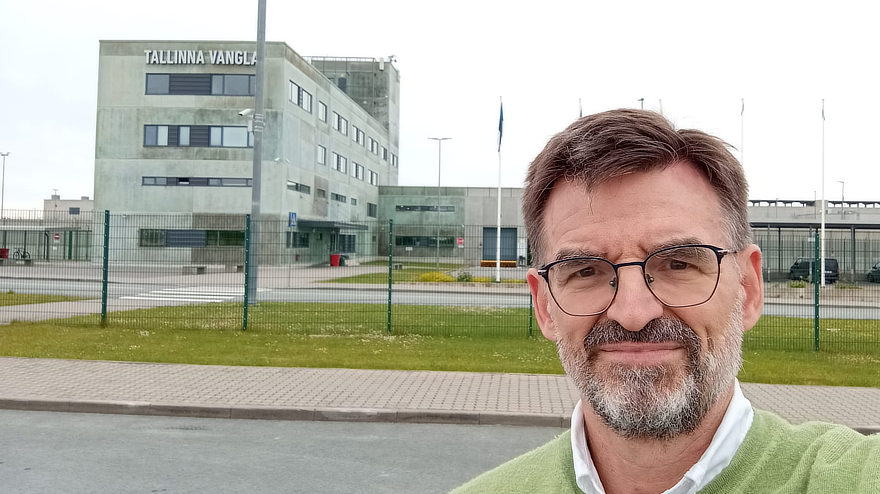
Associate Professor of History Dr. Bradley Woodworth helped showcase the University’s
expertise and global reach as he organized an international conference with Yale.
To say that the Baltic countries of Estonia, Latvia, and Lithuania have experienced
instability in their histories would be a significant understatement. Since the ninth
century at least, the region has endured invasions from the Kingdoms of Denmark and
Poland, German traders, and, from across the Baltic Sea itself, the Kingdom of Sweden.
“But the big constant for so many of the peoples in this part of Eastern Europe has
been Russia, which expanded beginning in the 16th century, and then into the Baltic
region in the 18th century,” University of New Haven associate professor of history
Dr. Bradley Woodworth said. “So even though these peoples speak very different languages,
they have this shared past as being part of the Russian Empire.”
Today, Russia continues to loom over the region, due to Russian Federation president
Vladimir Putin’s invasion of nearby Ukraine. It’s in this context that Dr. Woodworth,
as vice president for conferences with the Association for the Advancement of Baltic
Studies (AABS) for the past two years, organized the association’s annual conference
held in New Haven over four days in June.
Co-hosted by the University of New Haven and Yale University on the Yale campus, the
conference featured panels from all fields of the humanities and social sciences,
education, technology, transnational security, safety, and well-being—with 12 of the
panels chaired by University of New Haven faculty members. College of Arts and Sciences
Dean Shaily Menon, Ph.D., and School of Health Sciences Dean Betsy Francis-Connolly,
Ph.D., also chaired panels. Faculty members Maria Tcherni-Buzzeo, Ph.D., (criminal
justice) and Matthew Schmidt, Ph.D., (national security) presented papers as part
of the proceedings.
Associate Professor of History Dr. Bradley Woodworth helped showcase the University’s
expertise and global reach as he organized an international conference with Yale.
History Professor Pitches Importance of Baseball, Politics, and Culture in New Book
In her inaugural book, April Yoder, Ph.D., explains the important role baseball has
played in democracy and politics in the Dominican Republic over the last century.
She hopes her book will inspire her readers while shining a spotlight on the important
contributions Dominicans have made to the game – and how it, in turn, impacts their
culture.
History Professor Pitches Importance of Baseball, Politics, and Culture in New Book
Career Opportunities with Bachelor's Degree in History
$62K
Archivists
3.8% Growth 2024-2034
$74K
Historians
2.2% Growth 2024-2034
$62K
Curators
7% Growth 2024-2034
The info provided is designed to show just a few of the many possible careers you
could pursue with a bachelor's degree in history. The data includes median national
salaries and industry growth projections*. *U.S. Bureau of Labor Statistics, National Occupational Employment and Wage Estimates
(September 2025). Salary data fluctuates frequently.
Selected Courses and Programs
The development of science and technology from antiquity to the present. Their impact
on society and the world.
A study of China from 1800, including the impact of the West and Japan; transformation
from monarchy to civil war to the People’s Republic of China up to the present; the
Republic of China on Taiwan; the incorporation of Hong Kong intro the PRC.
This course investigates the development of natural and built environments in modern
times. The problems of global warming are a recent manifestation of environmental
problems. Institutional, cultural, and political changes came with the construction
of cities, industries, and infrastructures, resulting in problems with air, water,
land, and energy. These local and global environmental issues may reflect an unsustainable
relationship with nature.
Analyze the major political, economic, social, and cultural transformations that took
place in the last half-century of tsarist rule in Russia and in the Soviet Union.
Emphasis is placed on the crisis of autocratic rule in the late empire; the emergence
of the Soviet Union in the cauldron of World War I; the influence of a diverse, multi-ethnic
population on both the Russian Empire and the Soviet Union; the nature of the radical
and often violent experiment that was Soviet rule; the role of the Soviet Union in
World War II and in the Cold War, and the ultimately revolutionary policies of Mikhail
Gorbachev. Post-Soviet Russia and the Soviet successor states are also examined.
The University of New Haven offers a wide variety of in-depth courses that create
a transformational educational experience for our students. To view the complete list
of courses you'll take while pursuing a Bachelor of Arts in History, check out the
Academic Catalog:
We are proud to be a university that's continuously growing and making positive changes
for our students and the community. Our achievements are a testament to
our dedicated
faculty and staff and the cutting-edge programs they develop; our talented
students,
who continue to be engaged members of the community; and our alumni, who
consistently
become leaders in their chosen fields.
The University of New Haven was named one of the nation's best institutions for undergraduate
education by The Princeton Review in its 2025 "The Best 390 Colleges" guidebook,
amd
we were ranked a top-tier university in the North region by U.S. News &
World Report
in its annual "Best Colleges" rankings. In addition, our Tagliatela College
of Engineering
is rated among the top third in the country in our category in U.S. News'
rankings
of the best undergraduate engineering programs.
Our Pompea College of Business is accredited by AACSB International, placing it among
the Top 6 Percent Worldwide. We are also a proud member of The New American
Colleges
and Universities (NAC&U), an exclusive national consortium of selective,
small to
mid-size (2,000-7,500 students) independent colleges and universities that
are dedicated
to the purposeful integration of liberal education, professional studies,
and civic
engagement.
Nationally Recognized Center for Career Development
All University of New Haven students have access to the many resources available through
the University’s Career Development Center, which has been named one of
the best in
the nation by The Princeton Review.
From career assessments, networking, and job shadowing to on-campus interviews and
salary negotiation, the Career Development Center provides the skills and
connections
to identify a meaningful career and an opportunity to pursue your passion.
Cody Wallace ’13, a junior research fellow for the Centre for Security Governance
at the American University of Beirut in Lebanon, spent part of his college
career
in Jordan studying Arabic. "What’s fascinating about the Arabic language
is that it
is so dynamic and complex," he said. "It is a skill that cannot be learned
in a classroom
or from a book; it is a language you pick up from constantly talking to
people and
from those intimate social connections."
His experiences abroad as a student reshaped his vision of the world. "I chose to
study abroad so I could really experience a whole new world outside the
classroom,"
he said.
This is one example of the hundreds of the hundreds of opportunities University of
New Haven students have across the globe to live and learn in a variety
of diverse
cultures.
William Adams, an emeritus professor of computer science, led a program for many years
that brought students to the University’s satellite campus in in Tuscany,
Italy, in
the cradle of the Renaissance for their initial semester as first-year students.
"I tell parents that their son or daughter will be standing taller when they see them
again after their European experience," said Adams. "Upon their return,
parents often
attest to this fact."
Find Your Place in Our Enhanced Learning Communities
The University of New Haven’s innovative Enhanced Learning Communities (formerly "LLCs")
enable first year students to live with students in the same major or interest
area,
enabling the educational experience to transcend far beyond the walls of
the classroom.
Robin Willick ’16 remembers her first year in the LLC like yesterday. She and her
suitemates and hallmates – still her best friends – would study together
late into
the night. "And I’d make waffles," she said. "We had so much fun." That
year she and
other LLC residents attended the Imagination Quest at Villanova University
and she
"began to see all the possibilities out there for women engineers."
"In the LLC, you were always being encouraged to take chances," she said. "I tell
the students I tutor to say yes – say yes to a project or an internship
or a trip.
I said yes to research and it led to two internships."
Today, she is a manufacturing engineer for John Deere.
"Before I got to the University, I didn’t think I would want to live in an LLC," Willick
said. "I’m so glad I did."
Whether you're still in high school or are transferring from another college, we offer
full- and part-time opportunities for undergraduates from inside the U.S. and abroad.
The admission process can begin as early as the end of your high school junior year.
We offer a comprehensive financial aid program, with students receiving assistance
in the form of grants, scholarships, student loans, and part-time employment. Funds
are available from federal and state governments, private sponsors, and from university
resources. More than 95 percent of the University's full-time undergraduate students
receive some form of financial assistance.
Find out more about why the University of New Haven is a great fit for you. Our admissions
team will contact you with information personalized to your interests.