Candidates in the University of New Haven’s Master of Public Health (MPH) program applied classroom learning to real-world public health projects focused on mental health, food insecurity, and community-health assessment.
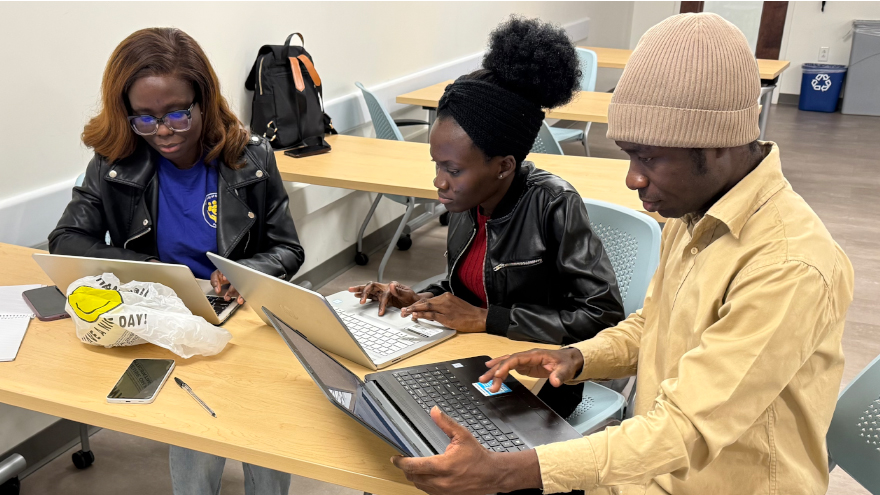
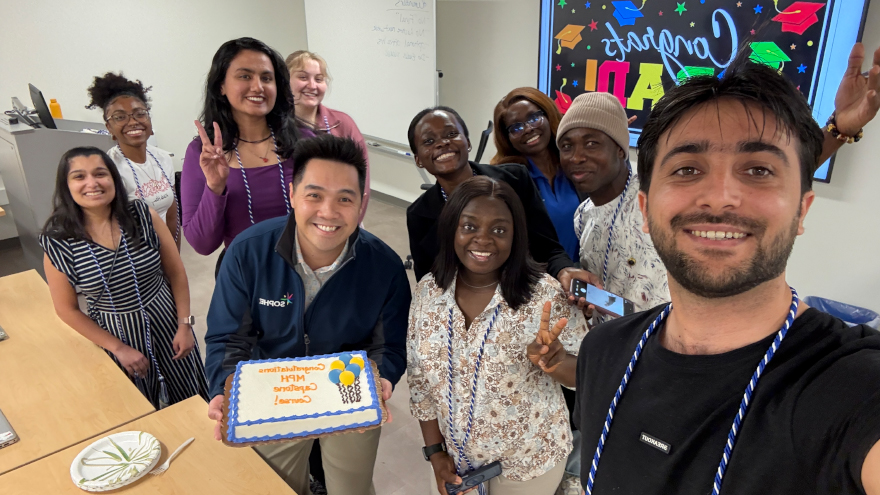
For many students in the University of New Haven’s Master of Public Health program, the Public Health Capstone represents more than a final academic requirement. As one of the culminating experiential learning opportunities within the MPH program, the course allows students to apply the knowledge and skills developed throughout their coursework to real-world public health projects, research, and community engagement. Students in the MPH program may choose either the Public Health Capstone or an internship experience, with both pathways designed to provide meaningful applied learning experiences that prepare students for professional public health practice.
This year’s Public Health Capstone students worked on four applied public health projects focused on qualitative research, community health needs assessment, report development, and survey design. Rather than completing hypothetical classroom assignments, students contributed to ongoing public health initiatives connected to mental health, food insecurity, and community-health assessment efforts.
Contact
Get the highlights!
Stay up to date with our weekly e-newsletter, highlighting stories from around the University and media clips featuring our faculty experts.
'A way to communicate to people in a language they understand’
As part of a qualitative research project connected to initiatives associated with the Born This Way Foundation, Esha Patel ’26 MPH, Priyal Haresh Sheta ’26 MPH, Emily Soares ’26 MPH, and Keyana Hewitt ’26 MPH analyzed focus group transcripts related to LGBTQ+ youth and mental health while learning how to conduct qualitative thematic analysis using qualitative data analysis software.
Reflecting on the experience, Patel shared that the project emphasized, “stories, real-world impact, and personal growth rather than just methods and statistics.”
Sheta similarly noted that, “It is important for any researcher to find a way to communicate to people in a language they understand, without overwhelming them with statistics and methodology.”
Soares reflected that, “through reading the focus-group transcripts, I have learned that the LGBTQ+ community heavily utilize social media as a safe space for them to fully express who they are when they may not have the ability to do that in their day-to-day lives.” Hewitt added that public health research should connect to, “real-world situations that people who have no public health background knowledge can understand and relate to.”
‘Community engagement is the most important’
In a separate community-engaged capstone project connected to an ongoing West Haven community-health needs assessment conducted by faculty in the School of Health Sciences, Victoria Turtiainen ’26 MPH, Krima Dimpalbhai Soni ’26 MPH, and Syed Maisam Ali ’26 MPH developed their own focus group guides and conducted focus groups with West Haven residents to better understand community perspectives related to health and local needs.
Reflecting on the experience, Turtiainen emphasized the importance of centering community voices throughout the focus-group process, noting that, “community engagement is the most important to highlight in a focus group.”
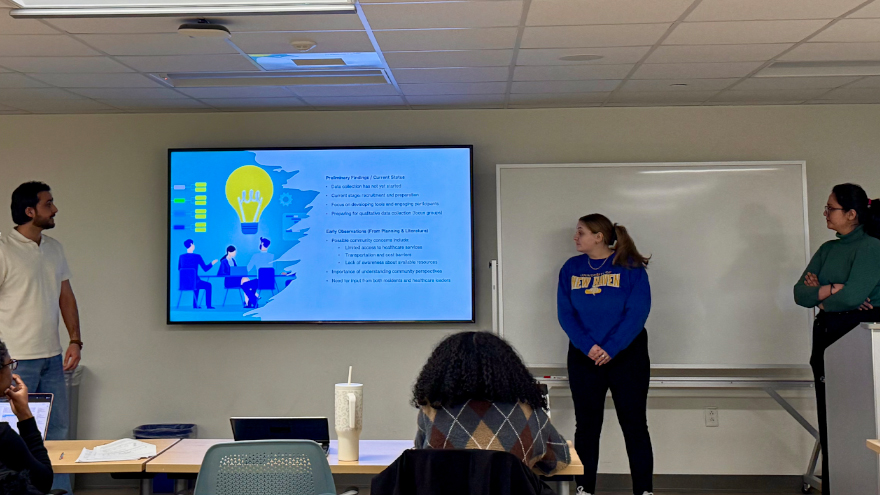
Valentina Owusu Nuamah ’26 MPH, Anita Twum Amponsaa ’26 MPH, and Dominic Danyi ’26 MPH, also recent MPH graduates, worked on a project that involved helping draft a report highlighting preliminary results from the ongoing community-health needs assessment in West Haven. Their work included reviewing and synthesizing existing public-health data and helping organize findings into a community-focused report intended to support ongoing public-health planning and outreach efforts.
‘A transition from learning about public health to actively practicing it’
Capstone students Olawumi Jemiseye ’26 MPH and Abiola Jessica Odusola ’26 MPH worked on a project focused on food insecurity among college students. As part of their capstone experience, they helped revise and pilot test an existing campus food insecurity survey designed to better understand students’ experiences accessing affordable and nutritious food. The findings from the project will help inform future discussions and decision-making at the college level related to student support, food access, and campus-wellbeing initiatives.
For many students, the capstone experience represented a transition from learning about public health to actively practicing it. Through collaborative projects, community engagement, and applied research, students left the course with a deeper understanding of how public health professionals listen to communities, communicate findings, and work toward meaningful change.
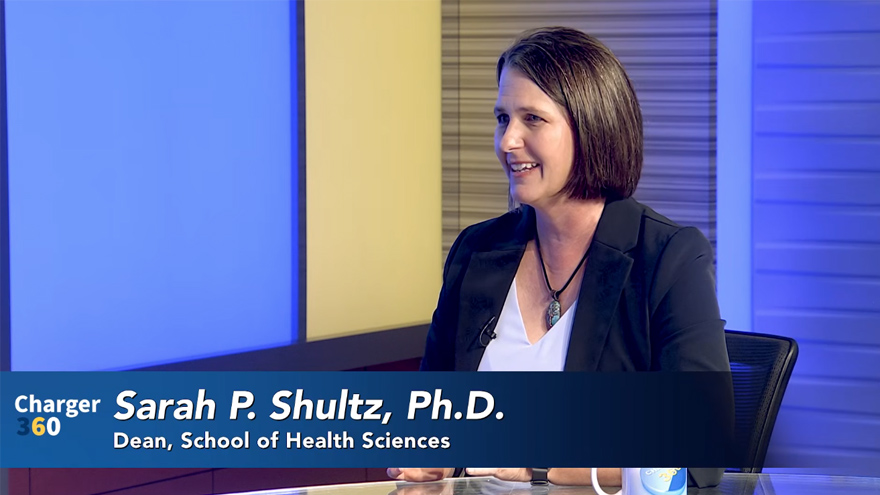
The course was taught by Dr. Alvin Tran, chair and associate professor in the Department of Population Health and Leadership.
Recent News
University News
University of New Haven Welcomes 15 New Corporate Partners, Doubling Network of Cutting-Edge Industry Collaborators
Charger 360