After serving in the U.S. Marine Corps, computer science student Nicole Hernandez ’26 shares her journey navigating the transition to college life and finding a community on campus.
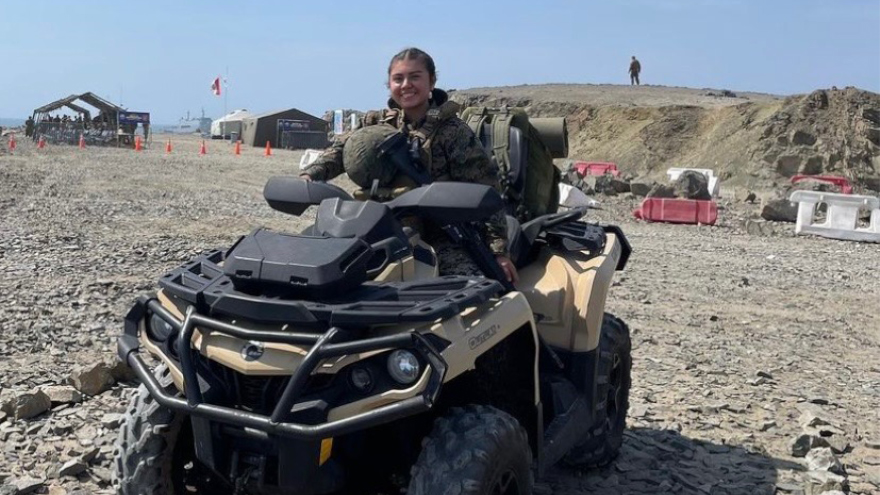
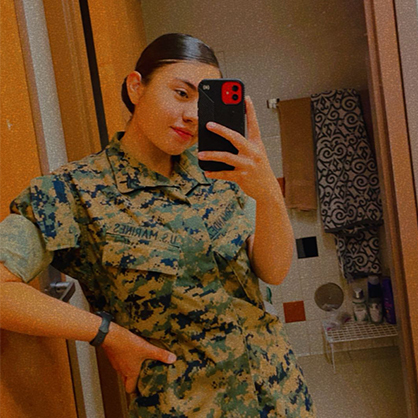
Many students find the transition to college takes place immediately after high school. For Nicole Hernandez ’26, it was a bit different. When I spoke with her, she explained that after graduating high school, she enlisted in the United States Maine Corps in October of 2020. She was unsure of what she wanted to do but knew she wanted stability and time to figure it out. She stated, “I knew I wanted to go to college, but I wasn’t decided on my major, and I felt as if the military would give me that time.”
During her service, Nicole worked as a motor transport operator. However, her journey in the military was short, approximately three years, as she got medically separated. When it was time for her to transition out of the military, she only had a few months to decide what to do next. She decided to go to college, specifically the University of New Haven because it was close to home, which gave her comfort during such a big change. She also liked the engineering program offered – she is currently majoring in Computer Science with hopes of becoming a software engineer or pursuing a position the data security field.
Nicole was extremely honest when speaking about how difficult her transition from military life to college was. She explained that going from a highly structured environment to one with so much independence was overwhelming. “You go from structure to no structure at all,” she said.
Contact
Get the highlights!
Stay up to date with our weekly e-newsletter, highlighting stories from around the University and media clips featuring our faculty experts.
‘She found her place on campus’
Academically, she struggled to adjust at first. Getting back into the groove of writing essays, keeping up with assignments, and managing deadlines was not easy after being away from school for such a long time. She shared that during her first semester, she did not do as well in two classes as she wanted to, because she hadn’t yet found her rhythm.
Socially, the transition for her was just as challenging. Nicole explained that she felt out of place at first, especially since she was older than many of her classmates. “I didn’t know anybody,” she said. “I was lonely.” However, over time, she found her place on campus. She got involved in student organizations, such as the computer programming club, and became a transfer peer mentor by helping other students who were also adjusting to a new environment.
One of the biggest sources of support for Nicole was the university’s Military & Veterans Affairs Office. Through this space, she connected with other veterans who understood her experiences, which made a huge difference in her transition.
‘Don’t isolate yourself and don’t be afraid to speak up’
Despite the challenges faced, Nicole shared that her time in the military gave her skills that continue to help her as a student today, such as time management, professionalism, and communication. She even told me about working with NATO during a deployment, where she had to speak clearly and with confidence. She is using those same skills now in presentations and class discussions.
She also spoke about the ways the University is continuing to enrich its support for student veterans. She highlighted the importance of Green Zone Training, which is a program that helps faculty and staff better understand veterans’ experiences and needs. She also shared that expanding this participation could further strengthen that supportive environment on campus, making it even more welcoming for veterans.
When I asked her what advice she would give to fellow veterans, her answer was quite simple: Don’t isolate yourself, and don’t be afraid to speak up. She emphasized the importance of finding your group and remembering that you are not alone.
Hearing Nicole’s story gave me a better understanding of the challenges that veterans face when transitioning to college. It also showed me the strength and resilience they bring with them. Her journey is a reminder that even though the transition may be difficult, it is possible to find your place and succeed.
Recent News
University News
University of New Haven Welcomes 15 New Corporate Partners, Doubling Network of Cutting-Edge Industry Collaborators
Charger 360