Recent Master of Public Health graduates from the University of New Haven’s WeEmbody Lab co-authored multiple peer-reviewed studies on public health topics, including cannabis use, sexual health, digital health communication, and homelessness education.
Experiential learning at the University of New Haven is a core part of how students prepare to address complex public health challenges. Through hands-on research, mentorship, and collaboration, students gain opportunities to contribute to meaningful scholarship, while developing skills that extend far beyond the classroom.
This academic year, several recent graduates from the WeEmbody (WE) Lab in the School of Health Sciences celebrated an exciting milestone: contributing to multiple peer-reviewed publications addressing topics ranging from cannabis use and sexual health to health communication and homelessness education.
Working as research and advocacy fellows under my mentorship, these graduates transformed their classroom learning into published research that contributes to ongoing conversations in public health.
Contact
Get the highlights!
Stay up to date with our weekly e-newsletter, highlighting stories from around the University and media clips featuring our faculty experts.
‘I was excited to contribute to scientific literature in an area that remains relatively underexplored’
Two recent studies explored how marijuana use intersects with health behaviors among sexual minority men in the United States. Using data from the Men’s Body Project, the research examined emerging health issues that remain relatively underexplored.
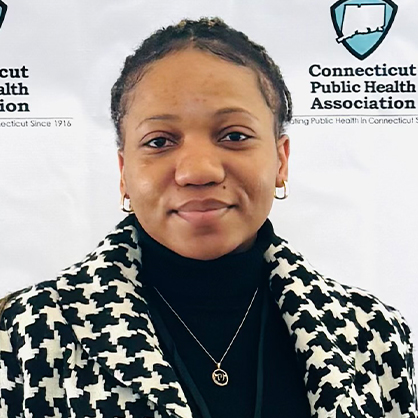
Chiamaka Vivian Ibeh, ’25 MPH, OD, authored a study in the Journal of Cannabis Research examining the association between marijuana use and unhealthy weight control behaviors among sexual minority men.
“Publishing my article on marijuana use and its association with unhealthy weight-control behaviors among sexual minority men was both meaningful and rewarding,” said Ibeh. “The process strengthened my skills in research design, data analysis, and academic writing. Working with the WE Lab helped me strengthen my critical thinking, develop thoughtful research questions, collaborate effectively within a team, and learn from colleagues with diverse perspectives. It also taught me how to translate data into meaningful and actionable insights.”
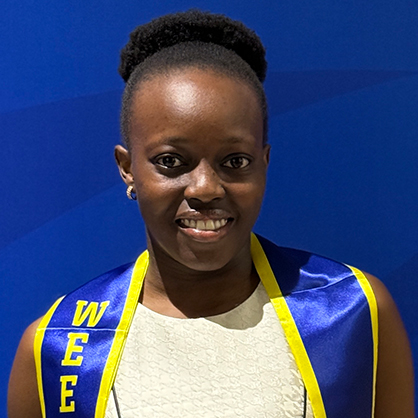
Today, Ibeh applies these research skills in her work in eye care, where she contributes to developing research initiatives focused on patient awareness and educational needs within clinical settings. Another publication, also in the Journal of Cannabis Research, led by Marion Otieno ’25 MPH, examined the relationship between marijuana use and erectile dysfunction among sexual minority men.
“The journey toward publishing my paper began as a Research and Advocacy Fellow with the WeEmbody Lab,” said Otieno. “This project was very personal to me because it aligns with my research interests in reproductive health. I was particularly excited to contribute to scientific literature in an area that remains relatively underexplored.”
Through the research process, Otieno gained experience in literature review, data analysis, scientific writing, and presenting research findings. “Responding to peer reviewers expanded my critical thinking capacity by offering fresh perspectives that strengthened the paper,” she said. “I also had the opportunity to contribute to the Rough Sleepers project, which expanded my qualitative research skills and broadened my methodological training.”
‘The opportunity to explore pressing social and public health issues’
Krupa Ann Mathew ’25 MPH, contributed to research examining how digital platforms shape identity, community, and health behaviors among sexual minority men. The study, published in Frontiers in Communication, explored how dating-app use and tribal identity intersect with sexual-health behaviors, highlighting how digital spaces influence conversations around intimacy, identity, and community.
Reflecting on her experience working on this and other WE Lab projects, Mathew shared how participating in multiple studies allowed her to see the broader impact research can have on public health practice.
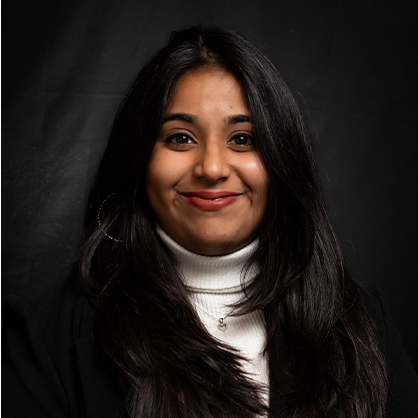
“This year, I had the privilege of contributing to three publications through the WE Lab,” she said. “Each project gave me the opportunity to explore pressing social and public health issues and to see firsthand how thoughtful research can make a difference in people’s lives.”
“Through these experiences,” she continued, “I learned the value of persistence, collaboration, and curiosity, and how careful analysis can transform complex questions into meaningful insights. Dr. Tran’s mentorship and leadership were invaluable. He challenged me to think critically, ask bold questions, and pursue research that connects directly to real-world challenges.
“The skills and confidence I gained in the WE Lab continue to guide my professional and academic growth, and I now apply them every day in ways both big and small,” added Mathew. “I am grateful to have been part of the WE Lab research community, which helped me discover my passion for tackling issues that matter and inspired me to continue using research to make a meaningful difference in the world.”
‘This project helped me view homelessness through a deeper public health lens’
A fourth publication, published in BMC Medical Education, focused on public health education and how storytelling can deepen students’ understanding of structural health issues. The study examined undergraduate students’ perceptions of homelessness after engaging with Rough Sleepers by Tracy Kidder, which chronicles physician Jim O’Connell’s work providing care for individuals experiencing homelessness in Boston.
Several WE Lab fellows contributed to the project, including Moushume Chowdhury ’25 MPH.
“During my MPH program, I joined the WeEmbody Lab to gain hands-on community research experience,” said Chowdhury. “I contributed to thematic coding, identifying emerging themes, and ensuring rigor through intercoder reliability. The process gave me a greater appreciation for the care and intentionality that rigorous qualitative research requires.”
Chowdhury credits the experience with helping her transition into the workforce.
“Being able to speak concretely about my research contributions gave me confidence during interviews,” she said. “This journey with the WE Lab played a meaningful role in helping me land my current position as a clinical research coordinator.”
For Acsah Mathews ’25 MPH, the project reshaped how she understands homelessness as a public health issue.
“Working on this project helped me view homelessness through a deeper public health lens and better understand how social conditions, structural barriers, and lived experiences shape health outcomes,” said Mathews. “Today, in my role as a case manager, I work closely with individuals navigating housing instability and other social determinants of health. The experience I gained through the WE Lab continues to shape how I approach my work with compassion, awareness, and a commitment to supporting people whose stories are often overlooked.”
‘Students learn best by doing’
From my perspective, these publications reflect the broader mission of the WeEmbody Lab. They are about creating opportunities for students to engage in meaningful research while developing practical skills that extend beyond the classroom.
The WeEmbody Lab is built on the idea that students learn best by doing. “When students are involved in every stage of the research process, from developing questions to publishing and presenting findings, they gain the confidence and skills needed to make a real impact in public health.”
The WeEmbody Lab currently has several additional manuscripts in the publication pipeline, and many students are preparing to present their research at upcoming national and regional conferences, including the annual meetings of the Connecticut Public Health Association, the Society of Behavioral Medicine, and the Society for Public Health Education.
As these graduates and current fellows continue their careers in healthcare, research, and community practice, their work reflects the WeEmbody Lab’s commitment to mentorship, collaboration, and advancing public health through student-driven research.
Recent News
The Charger Blog
Family Day Celebration Highlights Connections Across Charger Community
University News