

A future of opportunity
Civil engineering positions account for the most jobs of any engineering field, and this job growth is predicted to continue. In Connecticut alone, job openings for civil and environmental engineers are expected to grow by 13.8 percent through 2022, which is higher than the aggregate rate of growth for all occupations in the state.
Federal funding for sustainable and "green" development has also led to an increase in environmentallyfriendly infrastructure projects, which has driven demand for civil and environmental engineers.
QUICK FACTS
- Total Credits: 30
- Length to Complete: 1.5-2 years
- Start Dates: Fall/Spring
- Final Deadlines:
Fall: June 1 (Visa Students) / Aug. 1 (Domestic Students)
Spring: Nov. 1 (Visa Students) / Jan. 1 (Domestic Students) - Public Safety Personnel 50% discount

Learn from professors who are dedicated to your success.
Our faculty are leaders and innovators in their fields, bringing both deep professional experience and academic rigor to the classroom.
Charger Advantage
Get an inside look at what differentiates the University of New Haven and how your experiences as a student will prepare you for success.





Career Opportunities with a Master's Degree in Computer Science
$100K
Civil Engineers
3.7% Growth 2024-2034
$84K
Architectural and Engineering Managers
4.9% Growth 2024-2034
$122K
Petroleum Engineers
2.6% Growth 2024-2034
Selected Courses and Programs
This course provides an overview of the concept of sustainability, including changing attitudes and values toward technology and the environment in recent times. Topics include models for population growth and urbanization trends, energy resources, global food production, global water resources, the built environment, and basics of quantifying sustainability with tools for sustainable engineering.
The University of New Haven offers a wide variety of in-depth courses that create a transformational educational experience for our students. To view the complete list of courses you'll take while pursuing a Masters of Science in Civil Engineering, check out the Academic Catalog:
Dual Degree: B.S. in Civil Engineering and M.S. in Civil Engineering (Accelerated or Direct Entry)
Research Opportunities

Civil and Environmental Engineering
The Master of Science in Civil Engineering provides research opportunities in civil infrastructure, construction management/engineering, and sustainability.
The current research areas in the program include computer-aided structural analysis for highway structures, recycled concrete, renewable energy, economic feasibility of sustainability, transparent concrete, and more.
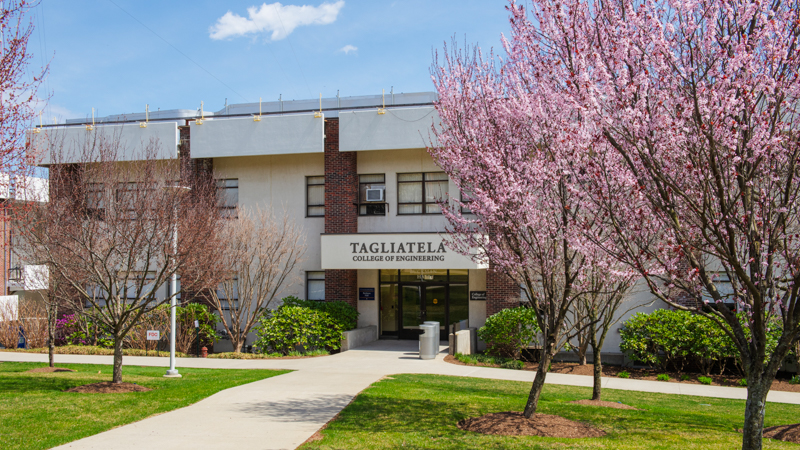
Tagliatela College of Engineering News
Upcoming Events
Next Steps
An advanced degree from the University of New Haven will help you take your career to the next level. Each program offers convenient scheduling, personalized attention, and state-of-the-art facilities.
View Application RequirementsThe University of New Haven Graduate School is an excellent value with reasonable tuition. Of course, you will still have bills to pay and the Financial Aid office can help.
Financial Aid WebsiteWANT MORE INFO?
Find out more about why the University of New Haven is a great fit for you. Our admissions team will contact you with information personalized to your interests.
VISIT
A campus visit is one of the most important parts of the college selection process. Come feel what it's like to Be a Charger!
APPLY
With more than 74,000 alumni and more than 100 years of history, #ChargerNation is the place to be. Begin Your Journey today.