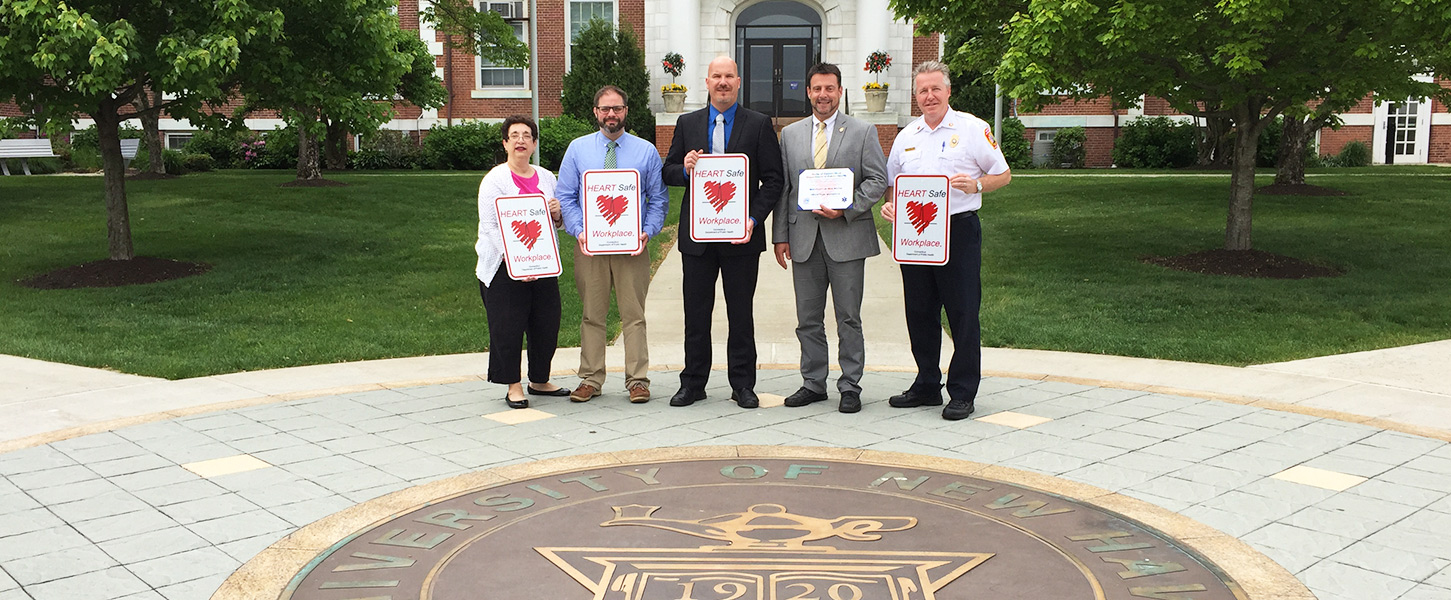
The University of New Haven is the first institution of higher education in the state to be designated as HeartSafe by the Connecticut Department of Public Health (DPH), Medical Services.
"The University of New Haven has demonstrated its commitment to ensuring that its employees, students and campus visitors receive the early lifesaving response proven to increase the chance of survival for heart attack victims."
The designation is part of DPH's Heart Disease & Stroke Prevention Program. The DPH and the state's Office of Emergency Medical Services in collaboration with the American Heart Association, aim to help Connecticut's workplaces, cities and towns improve the chances that anyone suffering sudden cardiac arrest will have the best possible chance for survival.
The university has worked for several years to achieve this designation. We believe this is an important part of our overall efforts to ensure the safety of our campus community.
– Ronald Quagliani, Associate Vice President for Public Safety and Administrative Services
As part of the program, the university has installed 28 defibrillators on the West Haven campus as well as machines on the Orange, Lyme and Saw Mill campuses, and has trained more than 140 employees - well above the 10 percent required to achieve the DPH HeartSafe designation -- to respond when someone has symptoms of a heart attack. The University offers CPR training for both employees and students every other month throughout the year.
The program is important, Quagliani said, because each year more than 250,000 Americans die from sudden cardiac arrest. The key to survival is timely initiation of a "chain of survival." An Automated External Defibrillator (AED) is used to treat victims who experience sudden cardiac arrest and/or a heart attack.
The American Heart Association notes that at least 20,000 lives could be saved annually by prompt use of AEDs.
This multi-year project was championed by Chris Reed, director of safety and training and the university fire marshal; Paula Cappuccia, director of health services; and Ryan Hagen, director of campus recreation.
The program has been run in partnership with the student EMS Club. The program involves not only training employees in CPR but also offering health education about recognizing the signs and symptoms of heart attacks and the need to call 9-1-1; controlling high cholesterol and high blood pressure; and reducing such heart disease risk factors as tobacco use, diabetes, physical inactivity, stress, and poor nutrition.
Contact
Get the highlights!
Stay up to date with our weekly e-newsletter, highlighting stories from around the University and media clips featuring our faculty experts.
Recent News
The Charger Blog

University of New Haven Researchers Advance Health Equity and Health-System Transformation
In the Media