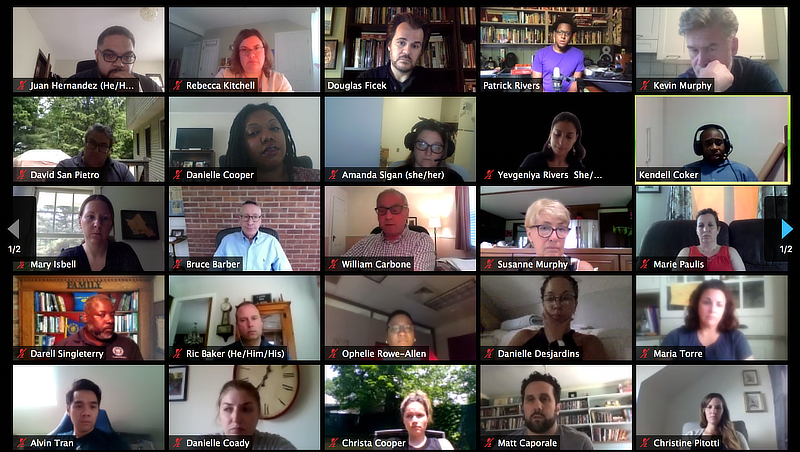
A recent Zoom discussion brought together more than 180 members of the University community to discuss recent incidents of racism and brutality across the nation and to find ways to promote inclusion, diversity, and education.
“Black lives matter.”
That’s how Juan Hernandez, director of the University of New Haven’s Myatt Center for Diversity and Inclusion, opened a recent panel discussion that brought the University community together to discuss issues such as race, inclusion, and bias.
Held in response to the recent incidents of police brutality, racism, and injustice across the country, the discussion included students, alumni, faculty, and staff for an emotional and, at times, painful conversation.
Hernandez, who served as moderator of the panel, wanted it to be an opportunity for all members of the University community to have a voice.
“Everyone is visible, and we can see each other’s faces,” said Hernandez. “There is no hierarchy, there is no ‘you see us, but we don’t see you.’ Not only will you be seen, you will also be heard. You will be respected, and you will be acknowledged.”
"This is not a happy moment, but we are extremely proud that our community is joining together. What I’m hoping for is a much larger, much deeper conversation..."Juan Hernandez
Titled “A Conversation in Response to Hate & Bias,” the discussion brought together a diverse group of faculty and staff members who served as panelists. Many, including Patrick Rivers, Ph.D., an assistant professor of music, shared their own stories of bias and racism.
“Growing up and as an adult, I always had this sense of having to be aware,” Dr. Rivers said. “My father taught me to be aware of who was around me, of who was watching me. Your heart and your mind have to consider different things.”
'He’s worried when I go outside now'
Kendell Coker, Ph.D., an assistant professor of psychology, also shared his own experiences. He described an encounter he had with police, who were looking for someone they were told was “running.”
“I was in a predominantly white area, and the police told me to, 'get up,' and they didn’t say it that nicely,” he said. “I tried to get up, hoping they would realize it could not have been me they were looking for because I had a huge cast on my leg from having surgery. They screamed at me to get up, and they were actually going to arrest me until another Black individual nearby said, ‘that’s not him.’”
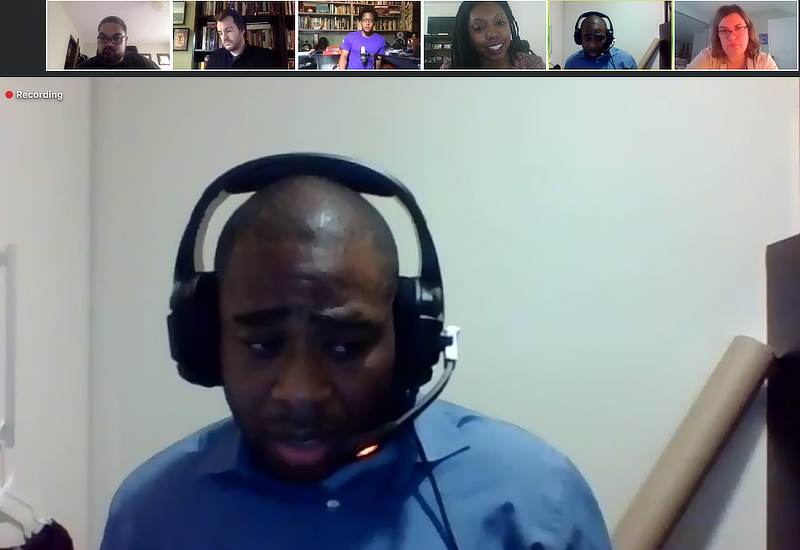
Dr. Coker told the University community that his family has also experienced racism, and that the encounters were especially painful to him as the parent of a 10-year-old.
"He's worried when I go outside now, and when I asked him why, he said, 'George Floyd,'" said Dr. Coker. “We should not point our fingers only at law enforcement because the more we do that, the more we absolve society of their role in all of this. Law enforcement is an institution within a biased society.”
'Everyone has to ask themselves where they are in this'
More than 180 students, faculty, staff, and alumni tuned into the discussion, which has been recorded so that all members of the University community can watch it. Through the Zoom chat feature, students and other viewers could ask questions or add their own comments and ideas to the conversation.
Panelists reflected on recent events, including the murder of George Floyd, the protests around the country that followed, and recurring incidents of police brutality and racism, while discussing their own feelings and hopes for the future.
“I have an emotional reaction to this, and it’s incredibly sickening and upsetting,” said Douglas Ficek, Ph.D., a visiting assistant professor of philosophy. “We are in this crisis and with that comes decision. We have a decision to make about how we move forward. When you see these images of protests, they are remarkably multiracial. I think that is reason to celebrate, and it does give me a sense of optimism.”
Panelists and participants discussed how the University community can continue to create a safe and inclusive atmosphere that promotes an environment of respect while creating new opportunities for education, inclusion, and growth.
“Everyone has to ask themselves where they are in this, what they have to say,” said Danielle Cooper, Ph.D., an assistant professor of criminal justice. “There are opportunities for each person to grow. It’s important to be uncomfortable, and these conversations are needed.”
'Much deeper conversation'
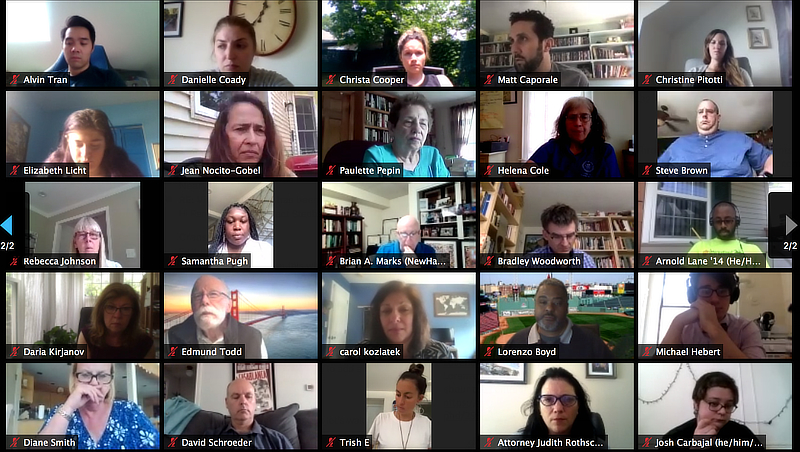
Learning was a critical component of the discussion. Panelists discussed opportunities to enhance education at the University, including the possibility of including more diversity- and race-related course material in the curriculum, as well as the educational resources available to the University community. Panelists also each recommended a book, as well as other media such as podcasts and documentaries, to enable participants to further educate themselves.
“We need to get uncomfortable,” said Rebecca Kitchell, Ed.D., assistant dean of students. “We need to get comfortable with that discomfort. Get a book, listen to a TED Talk. We need to start showing up.”
Hernandez agreed, reiterating the importance of including everyone in the conversation, as well as continuing to come together.
“Black lives matter – today, yesterday, tomorrow – and they will continue to matter,” said Hernandez. “This is not a happy moment, but we are extremely proud that our community is joining together. What I’m hoping for is a much larger, much deeper conversation around white privilege, eliminating prejudice, hate, bias, and the process of learning and unlearning for us as individuals.”
Contact
Get the highlights!
Stay up to date with our weekly e-newsletter, highlighting stories from around the University and media clips featuring our faculty experts.
Recent News
Charger 360
Season 5, Episode 4: Ashley McClain ’07 and Ariana James ’27
In the Media