A screening of the film The Right Track and a thought-provoking panel of experts brought together advocates, law enforcement, and survivors to explore anti-trafficking solutions rooted in dignity and policy reform.
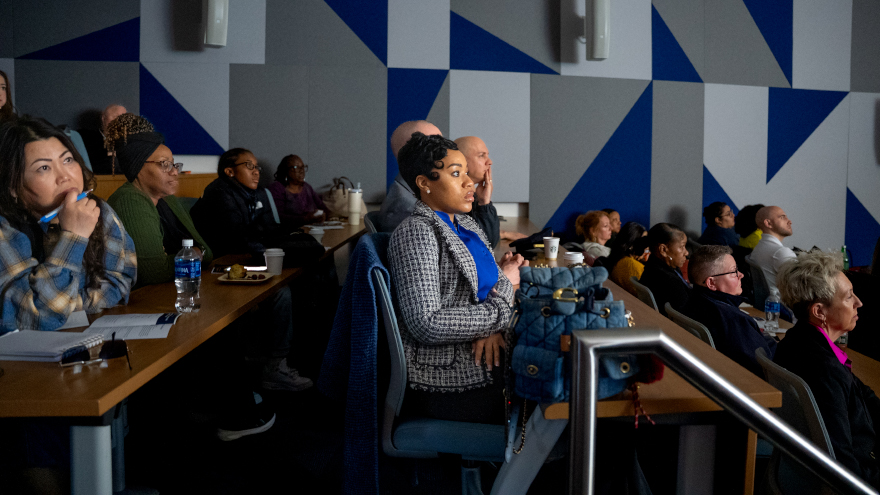
Meaningful conversations often begin with a willingness to listen and to act. That spirit was on full display at the University of New Haven during a recent campus event featuring a screening of The Right Track, a powerful documentary highlighting the realities of human trafficking and the growing movement toward survivor-centered solutions.
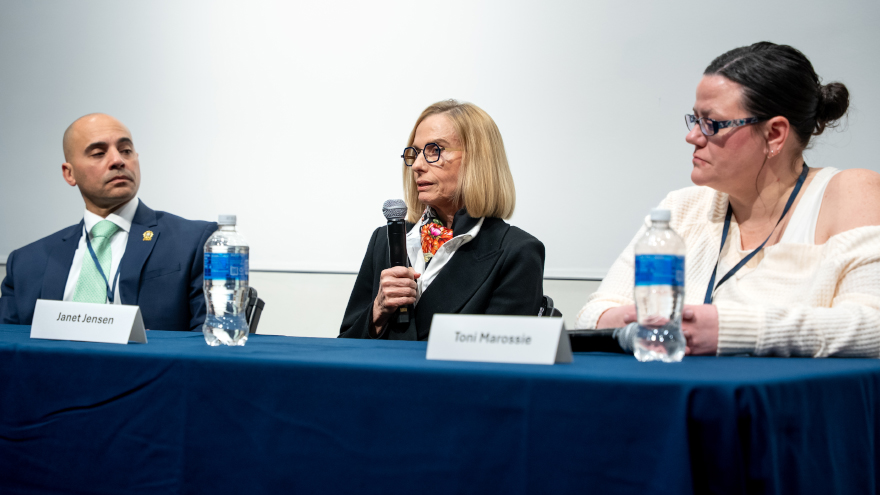
Hosted in the Bergami Center for Science, Technology, and Innovation, the event welcomed students, faculty, and community partners for a morning of reflection, learning, and dialogue. The film screening was followed by a panel discussion featuring experts across advocacy, law enforcement, and policy, alongside a survivor whose lived experience brought urgency and humanity to the conversation.
In thanking the esteemed panelists, Brian Otis, vice president of University advancement said, “Their combined experience will let us understand not only the realities of trafficking, but also the solutions that are making a meaningful difference.”
Contact
Get the highlights!
Stay up to date with our weekly e-newsletter, highlighting stories from around the University and media clips featuring our faculty experts.
‘Justice must be humane and grounded in the dignity of every person’
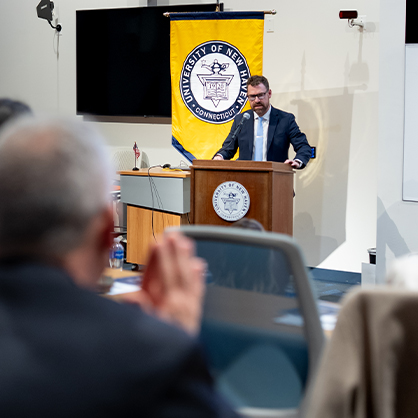
Opening remarks underscored the University’s longstanding commitment to addressing and responding to human trafficking through education, research, and community partnership. Leaders emphasized that preventing exploitation requires a multidisciplinary approach — one that integrates criminal justice, public policy, and a deep respect for human dignity.
President Jens Frederiksen, Ph.D. highlighted the role of the University’s internationally respected Henry C. Lee College of Criminal Justice and Forensic Sciences in advancing survivor -based practices and shaping national conversations around justice and public safety.
“Justice must be humane and grounded in the dignity of every person,” he said. “When we strengthen youth justice, community safety, and survivor-centered responses, we strengthen our collective ability to prevent exploitation before it begins.”
‘If we don’t care for the survivors first and foremost, it’s a failure’
The film, developed through the work of The Jensen Project and its founder and friend of the University Janet Jensen ’17 Hon., challenges audiences to rethink how systems respond to exploitation. At the heart of The Right Track is the Survivor Model.
Jensen explained, “In the Survivor Model, we don’t arrest the individuals being exploited — we hold the buyers and traffickers accountable.”
Following the screening, panelists expanded on these ideas, discussing how survivor-centered approaches can transform both policy and practice. They emphasized that trafficking is often misunderstood and frequently hidden in plain sight, which makes education and awareness critical first steps.
The moderator for the event was Timothy Palmbach, executive director of the University’s Center for Forensic Investigations of Trafficking in Persons, who brought decades of leadership in forensic investigations, policy development, and survivor-centered work. Palmbach started the discussion off by saying, “If first and foremost we don't care for the survivors, it's a failure. So that is the model that we're going to move toward, and that is the starting point of this conversation today.”
A key theme throughout the discussion was the importance of language. Panelists noted that terms often used casually can obscure the realities of exploitation, reinforcing the need to frame trafficking as a form of organized crime and systemic harm.
Jensen emphasized that while it is often commercialized, it’s important to recognize that, “this is organized crime.”
‘When you’re in that life, you’re not seen as a person.’
Bringing her lived experience, courage, and insight to the anti-trafficking movement, Toni Marossie, a survivor, spoke candidly about the gaps in current systems. From misidentification by law enforcement to a lack of trauma-informed care, her perspective highlighted the urgent need for change.
“When you’re in that life, you’re not seen as a person; You’re seen as an object,” Marossie shared, emphasizing the importance of support systems that recognize survivors as individuals and not statistics.
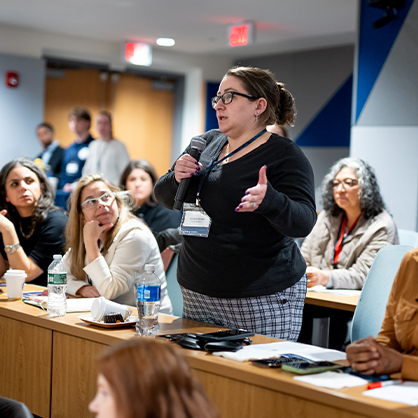
Marossie’s fellow panelists echoed this sentiment, noting that meaningful progress depends on building trust, offering long-term support, and ensuring that survivors have a voice in shaping solutions.
“Sometimes the most important thing is having someone who listens,” she said. “Having someone who sees you for who you are and who you can become.”
‘We can’t just make an arrest and leave’
Law enforcement perspectives added another important layer to the conversation, illustrating both the challenges and opportunities in addressing trafficking cases. Many complexities exist, such as identifying victims, especially in an era where exploitation is increasingly facilitated online.
Panelist Leonard Soto, a Special Victims Unit Detective with the New Haven Police Department, highlighted the importance of technology, pointing to tools that help track patterns and identify trafficking networks. Still, he stressed that technology alone is not enough, and that success depends on partnerships with advocates, researchers, and survivors themselves.
“We can’t just make an arrest and leave,” said Soto. “That’s not where it ends. We have to stay in their lives and help rebuild trust.”
‘A collaboration that will position the University as a national leader’
Confronting human trafficking requires collective action. From policymakers and law enforcement to students and community members, everyone has a role to play.
By bringing together voices from across disciplines and centering the experiences of survivors, the University of New Haven continues to foster conversations that raise awareness and drive meaningful change.
“This event reflects a shared mission,” said William (Bill) Carbone, MPA, professor of practice at the Henry C. Lee College and senior executive director of the University’s Tow Youth Justice Institute. “There is a commitment to transforming systems and elevating survivor leadership.”
Recent News
In the Media

Westchester and Fairfield Business Journals: Top Colleges and Universities in Greater Fairfield and Westchester Counties 2026
In the Media