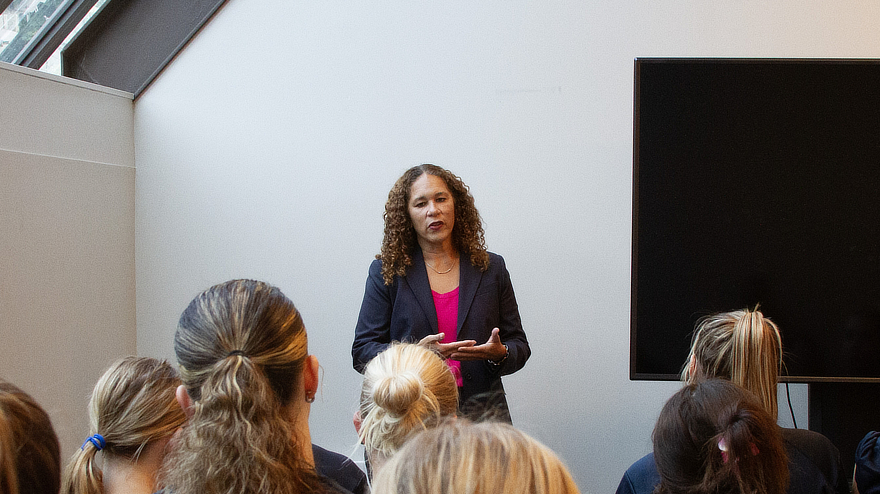
A groundbreaking study by University of New Haven Professor Susan M. Higgins, OTD, OTR/L, FAOTA, examines how a Fieldwork Educator Certificate Program helps practitioners develop the skills, structure, and confidence needed to guide occupational therapy students during fieldwork.
Recently, my article, Effectiveness of the AOTA Fieldwork Educator Certificate Program: A Cross-Sectional Survey of Participants, was published in the Journal of Occupational Therapy Education. Publication is always meaningful, but this one is especially significant.
I have been a trainer for the American Occupational Therapy Association (AOTA) Fieldwork Educator Certificate Program (FWECP) since 2009. For more than fifteen years, I have presented to fieldwork educators who mentor occupational therapy practitioner students during one of the most important stages of their professional development. I have heard their questions, listened to their frustrations, and celebrated their successes. I have also heard stories about students who struggled and the self-doubt that can follow.
Over time, I started asking myself a harder question: Is this program truly making the difference we believe it is?
We did not have long-term outcome data. We did not have research examining whether participation in the FWECP actually influenced confidence, competence, or supervision practices. That gap mattered to me. If we are asking occupational therapy practitioners to invest time to professional development, we should know whether it improves their ability to educate the next generation.
So, I decided to study it.
'The narratives were what stayed with me'
When the survey responses began coming in, I read every open-ended comment carefully. The quantitative data were encouraging; educators reported growth in designing fieldwork experiences, adapting supervisory approaches, providing feedback, and evaluating performance. But the narratives were what stayed with me.
Many educators reported feeling more prepared to manage struggling students. That theme came up again and again. Others talked about gaining structure, clearer expectations, better organization of their fieldwork programs, and more intentional approaches to giving feedback. Several noted that this was the only formal preparation they had ever received for serving as a fieldwork educator.
That stopped me.
We expect practitioners to teach. We rely on them to mentor students at one of the most important stages of professional growth. Yet many enter that role with little formal preparation. If the FWECP can reduce uncertainty, build confidence, and provide structure, then it is doing important work.
'It allowed me to move beyond assumptions and make decisions'
The feedback wasn’t all praise, and I wouldn’t want it to be. Participants asked for updated content, more real-world examples, and a deeper discussion of challenging supervisory situations. Some commented on the length or format of the workshop. That kind of feedback is what allows programs to evolve.
I have led the last two major revisions of the FWECP, and this study directly informed the most recent update. It allowed me to move beyond assumptions and make decisions grounded in data and lived experience. That, to me, is applied scholarship at its best as it is research that feeds directly back into practice.
Fieldwork is where academic preparation becomes professional competence. If we want strong practitioners, we must invest in the fieldwork educators who guide them in real-world settings. Supporting fieldwork educators is not secondary work. It is central to the future of occupational therapy.
This publication feels like a natural extension of my work, from trainer to researcher to program leader. But more than that, it reflects the voices of fieldwork educators who were willing to share their experiences honestly. Their insights will continue to shape the program and will guide its growth.
And that, more than publication itself, is what is most meaningful to me.
Contact
Get the highlights!
Stay up to date with our weekly e-newsletter, highlighting stories from around the University and media clips featuring our faculty experts.
Recent News
Charger 360
Season 5, Episode 4: Ashley McClain ’07 and Ariana James ’27
In the Media