Entrepreneur David Sussman partnered with the University of New Haven to pilot Uccountability, a program designed to strengthen student success through structured peer accountability. Students from the first cohort shared the far-reaching impact of their experiences.
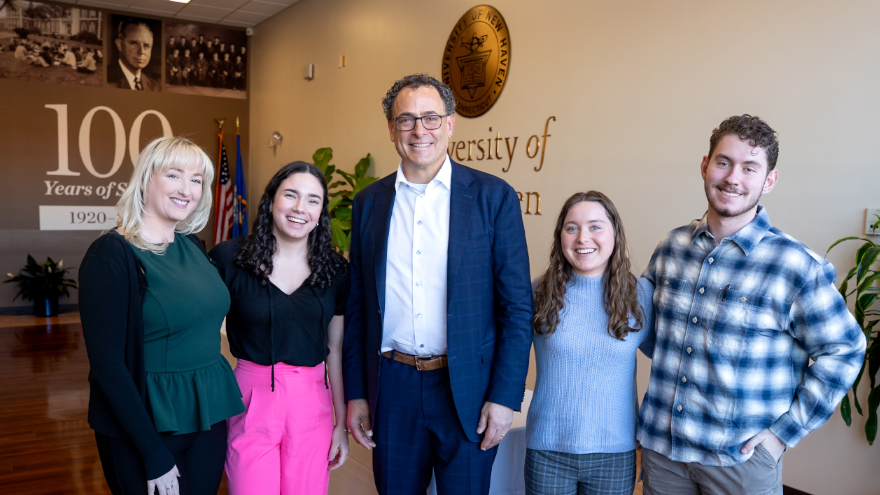
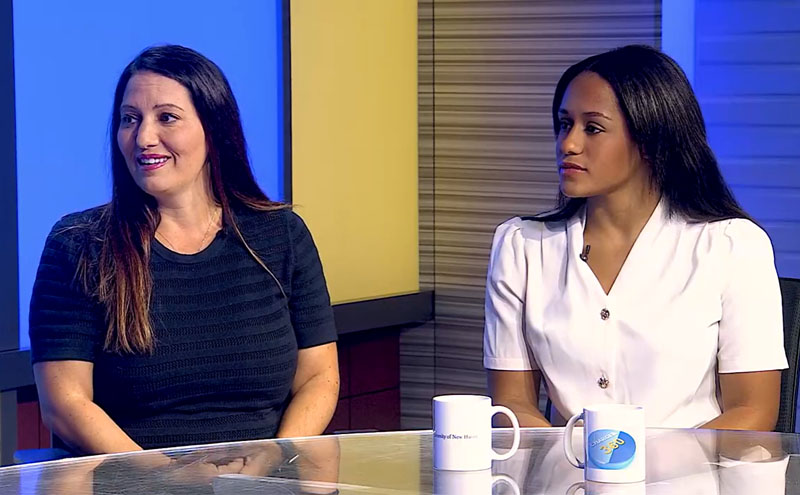
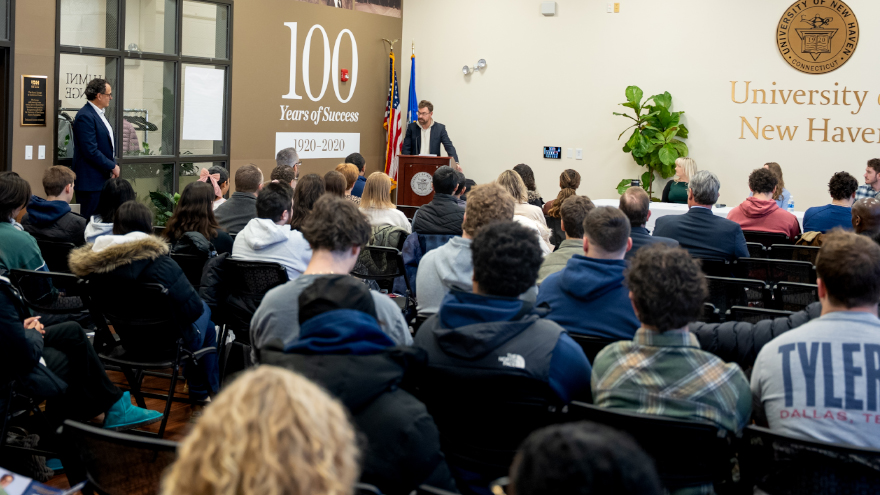
During a recent student panel discussion, entrepreneur David Sussman, chief visionary officer of The Family Security Plan and a member of the Pompea College of Business Advisory Board, spoke about the impact of Uccountability — a program he built to help students, faculty, and staff achieve academic, personal, and professional goals together.
“Throughout his career, David has focused on helping individuals identify meaningful goals and transform them into action through consistency and peer support,” Nancy Savage, Ph.D., provost and senior vice president for academic affairs said. “That work now forms the foundation for Uccountability.”
University leadership sees the program as a natural fit for its mission.
“At its core, Uccountability challenges us to hold one another and ourselves accountable for excellence,” President Jens Frederiksen, Ph.D., said. “It also embraces the powerful practice of self-exploration, understanding what matters most, and committing to achieving our best.”
Contact
Get the highlights!
Stay up to date with our weekly e-newsletter, highlighting stories from around the University and media clips featuring our faculty experts.
‘Here’s the secret to greatness: get a coach’
Sussman began the event by addressing goal setting, something everyone in the room could relate to.
“We all set goals,” he said. “New Year’s resolutions. The beginning of the school year. When you say, ‘When I graduate, I want to be this.’ Those are goals.”
The challenge, he explained, is not setting goals but sustaining them. “Life will happen to you,” he said. “You’re going to fall off. The question is, how long do you stay off?”
The “magic,” as he described it, comes from pulling someone else in.
“You pull a friend or a mentor. You find somebody connected to you who helps you get from point A to point B,” he said. “If you can shorten that window and get back on faster, you’re going to achieve your goal. This is a fact.”
He recalled attending a conference where a leader shared something he's never forgotten.
“She said, ‘Here’s the secret to greatness: get a coach,’” Sussman told the audience. “And a coach isn’t necessarily someone you pay. It could be a friend. A teacher. A therapist. A mentor. At the end of the day, Uccountability is the secret to success.”
The program aligns with key University priorities, including fostering resilience and leadership. Sussman noted that it directly connects to more than half of the University’s Charger 11 foundational tenets.
“If you build the system now,” he said, “you’ve got it for life.”
‘I didn’t have a way to keep myself honest’
For the students in the inaugural cohort, the program addressed a challenge they had felt for a long time.
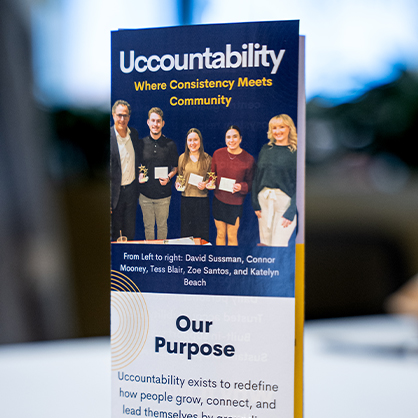
“Before joining Uccountability, I didn’t have a way to keep myself honest when tracking my goals,” said Connor Mooney ’28. “They would fade over time.”
Zoe Santos ’28, described relying on scattered to-do lists. “It was very unorganized,” she said. “Personal goals or health goals would just be things I’d say, ‘Oh, I should do this.’ And then that would never happen.”
For Katelyn Beach '25, '26 MBA, the issue was sustainability. “I’ve always been driven academically and professionally,” she said. “But when it came to personal goals, they would fall to the wayside. Going off sheer willpower wasn’t sustainable. Uccountability gave me the structure I needed.”
The pod system, where small groups check in with each other daily, proved transformative. “Being part of a pod was incredible,” Beach said. “It was like having a consistent support system that showed up every single day.”
Tess Blair '28, described the support as essential. “It’s a bunch of encouragement,” she said. “If I’m not having the best day, we talk about how I can combat it, reflect, and move forward.”
For all of the students, they felt accountability to their peers felt different than accountability to oneself.
“I would rather let myself down than let my peers down,” Mooney admitted.
Blair agreed. “My peers motivated me. They brought out motivation from within.”
‘Leadership is consistency. It’s showing up’
As the semester progressed, students began to see deeper changes.
“At first, I would hang back and wait for someone else to send their reflection,” Santos said. “Then I started getting excited to send mine first.”
For Beach, Uccountability reframed how she looks at leadership. “It’s consistency,” she said. “It’s showing up not just when it’s convenient, but when people count on you.”
The program also strengthened the students’ ties to the University. “It created a different kind of connection,” Beach said. “One based in support and shared growth.”
Students emphasized that the impact extends beyond academics.
“Uccountability fosters growth, no matter what that growth may be,” Blair said. “It enabled me to take on more, join more clubs, and manage my time properly.”
“If you want students to succeed,” Beach said, “you have to support how they succeed, not just what they succeed in. We don’t need another resource we have to seek out. We need a framework built into our daily lives. And Uccountability does that. It works.”
Recent News
The Charger Blog
How One University of New Haven Residential Life Coordinator Balances Work, Internships, and Graduate School
Charger 360