A unique event that served multiple purposes for all involved turned into a night to remember and a tradition that the University’s occupational therapy program plans to continue.
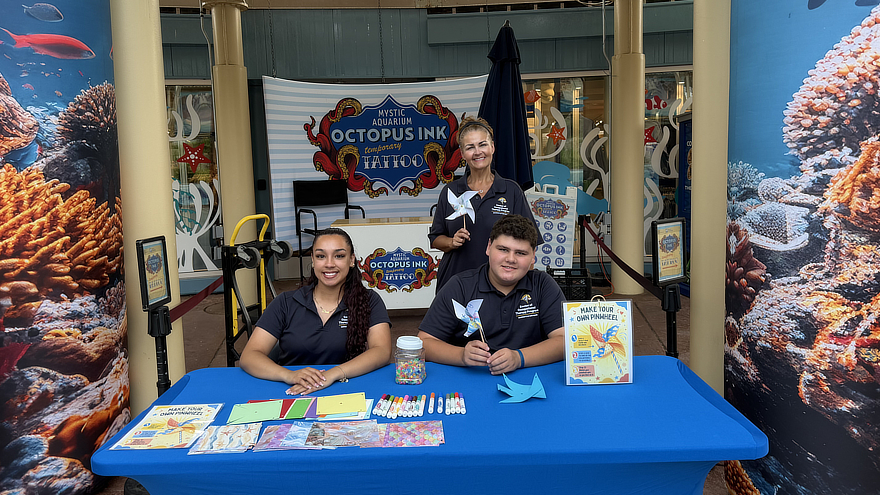
For the second year in a row, students from the University of New Haven's Doctor of Occupational Therapy Program (OTD) helped plan and participated in Sensory Friendly Night at Mystic Aquarium, which is designed for individuals with sensory differences, and their families, to have an unforgettable experience at one of the state's most family-favorite destinations.
Serving multiple purposes, this event also gave several of the University of New Haven's occupational therapy students the opportunity to apply their skills in a nontraditional setting, providing a firsthand look at the career possibilities available to them beyond traditional clinical environments.
'Think more broadly about where they can make a difference'
When associate professor Susan Higgins, OTD, joined the University several years ago, she knew she wanted to continue an already-established partnership she had with Mystic Aquarium to bring a non-traditional occupational therapy fieldwork opportunity to her students.
"Mystic Aquarium gives students the opportunity to see occupational therapy outside of a traditional clinical setting and to think more broadly about where they can make a difference," said Dr. Higgins, who is the director of the University's Doctor of Occupational Therapy Program. "Students are able to use their knowledge of sensory processing, environmental modification, activity analysis, education, and community participation in a setting where you would not typically find an occupational therapist."
Sensory Friendly Night is an annual event held during the summer that gives individuals with sensory differences, and their families, the opportunity to visit the aquarium in a calmer, more supportive setting, Dr. Higgins said.
This year, three students studying in the Doctor of Occupational Therapy Program completed their fieldwork at the aquarium and assisted in planning the August event.
Olivia Brescio '27 OTD was one of the students who completed her fieldwork at Mystic Aquarium, and she said this was her second time participating in the event.
"This was my first time taking on a leadership role in planning and running the event," she said. "It was exciting to be more involved behind the scenes and to help create an inclusive experience for children and families."
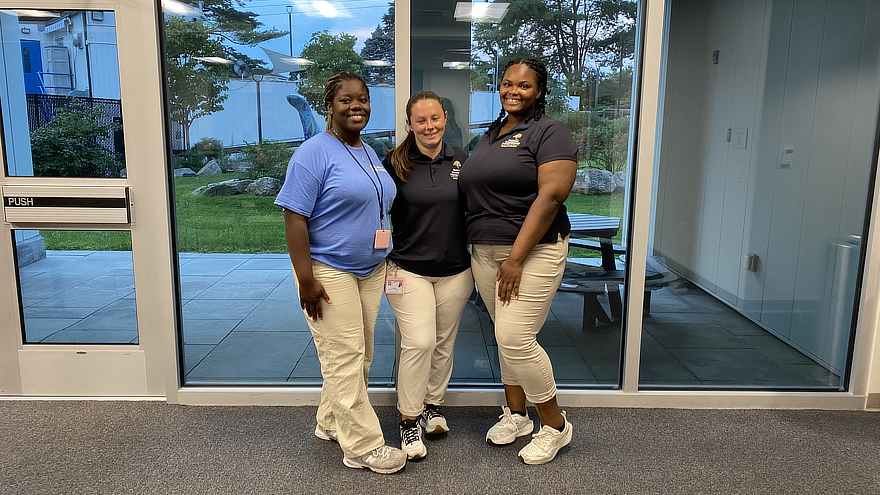
Additionally, Brescio and her two classmates who were also completing fieldwork provided sensory training to aquarium staff and volunteers ahead of the event, educating them on sensory processing, how to recognize when a guest might need additional support, and offering practices to utilize when support is needed.
The students also coordinated with six additional occupational therapy students who volunteered during the event.
"What I enjoyed most was seeing families feel welcomed and supported while exploring the aquarium," Brescio added. "It was rewarding to see children engage in the environment in ways that met their individual sensory needs and to witness the positive impact that small accommodations can have on participation and enjoyment."
'Explore the aquarium at their own pace'
For Sensory Friendly Night, the Aquarium implements a series of modifications, which include reduced crowds, lower sound levels, increased ambient lighting, and less visual stimulation, including turning off flashing lights and nonessential screens.
"Guests could explore the aquarium at their own pace, and quiet areas and sensory supports were available throughout the evening," Dr. Higgins said.
This year, the University of New Haven students provided a sensory friendly-based craft table where children and their families could make paper pinwheels. Last year, students made bubble wands and shared how blowing and playing with bubbles can support deep breathing, calming, attention, movement, sensory engagement, and social interaction.
"Both activities gave children and families something fun to do together while also incorporating sensory, motor, and social components," Dr. Higgins said.
'Making community experiences more accessible and inclusive'
Sensory Friendly Night is really about access, inclusion, and participation, Dr. Higgins said.
A busy environment, such as Mystic Aquarium, can be challenging for individuals who have sensory differences, so a specialized event reduces those barriers for families to enjoy.
"These types of community events give our students a chance to learn from one another while bringing different perspectives and skills to support individuals and families."
- Susan Higgins, OTD, OTR/L, FAOTA
But the event served multiple purposes. For the occupational therapy students, Dr. Higgins said the goal was for them to see how occupational therapy can make a difference outside of a traditional practice setting.
"This experience gave them an opportunity to think about how changing the environment, rather than always expecting the individual to adapt, can allow more people to participate," Dr. Higgins said. "It also helped them see the role occupational therapy can play in making community experiences more accessible and inclusive."
'Reinforced how vital occupational therapy principles'
That message resonated with Tiona Snowden '27 OTD, who also completed her fieldwork at Mystic Aquarium. She highlighted that one of the greatest aspects of occupational therapy is its diversity and how skills can be adapted to support various environments and populations.
"This non-traditional placement reinforced how vital occupational therapy principles are outside conventional clinical settings, particularly in evaluating unique environments, educating multidisciplinary teams, and designing tailored adaptations to support meaningful engagement," Snowden said. "Looking ahead, my career goals include working in home care with geriatric individuals, managing lymphedema, or serving older adults with rehabilitation needs within a community setting."
Classmate Elana Fletcher '27 OTD agreed, saying this experience reminded her to look out for other areas of improvement when it comes to inclusivity for those living with sensory-processing disorders.
"I most enjoyed walking around greeting people and hearing how much they value events like this to help them feel included," said Fletcher. "It has encouraged me to think about other fun outings to incorporate a sensory-friendly atmosphere"
'Learn from one another'
Overall, Sensory Friendly Night was a remarkable success for families as well as the occupational therapy students, and Dr. Higgins said the partnership with Mystic Aquarium is one that is valued with intentions of expansion.
"Faculty from our Speech-Language Pathology program have already participated in Sensory Friendly Night, and there are opportunities for more collaboration across programs in the future," she said. "These types of community events give our students a chance to learn from one another while bringing different perspectives and skills to support individuals and families."
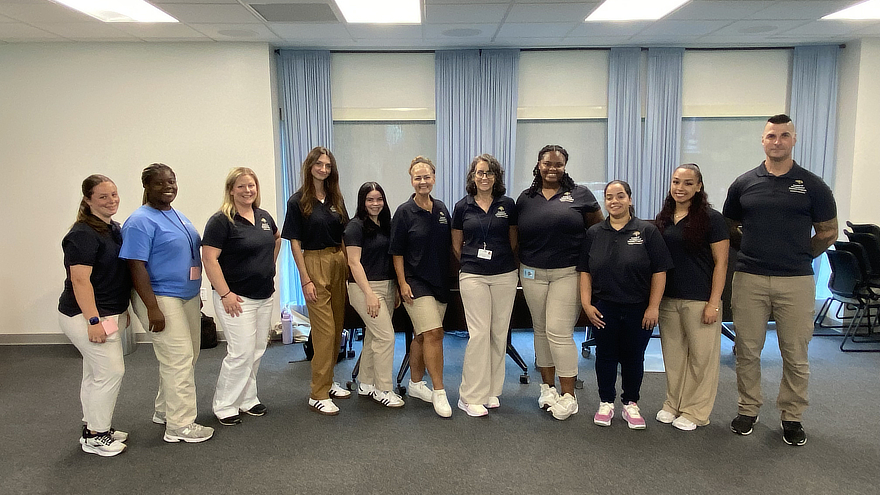
For the students, Dr. Higgins hopes the biggest takeaway is that occupational therapy isn't limited to traditional settings.
"The students also really valued the experience," she said. "It gave them a chance to see how occupational therapy can have a positive impact in a community setting. I think it also helped them think more about where and how they can use their occupational therapy skills."
'What prepares our students to be incredible healthcare practitioners'
Dr. Higgins went on to say that she hopes the students learned that supporting participation doesn't always mean asking an individual to change or adapt.
"Sometimes we can change the environment so that more people can participate," she said. "I think that is an important lesson for our students as they become occupational therapists."
Sarah Shultz, Ph.D., dean of the School of Health Sciences, supports this partnership as well, saying she's experienced this event firsthand and "was genuinely humbled by the level of care provided by our students and the Mystic staff for the guests attending this event."
"The guests were able to interact with the exhibits in a way that made sense to them, and the students engaged with the space and people in holistic and empathic ways," Dr. Shultz continued. "These activities, and the faculty who drive such meaningful community relationships, are what prepare our students to be incredible healthcare practitioners."
Contact
Get the highlights!
Stay up to date with our weekly e-newsletter, highlighting stories from around the University and media clips featuring our faculty experts.
Recent News
The Charger Blog
Students Showcase Passion for Discovery Through Summer Undergraduate Research Fellowship Program
The Charger Blog