The Charger Blog
Charger Blogger Looking Forward to New Opportunities as a Senior
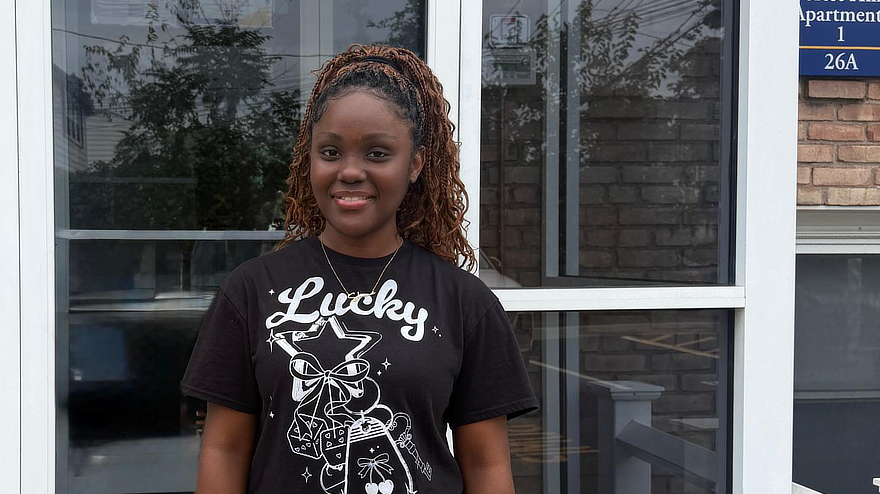
Shana-Kay Hyde ’27 is excited to serve as a resident assistant, be part of a research group, and begin her graduate studies as part of her 4+1 program.
The Charger Blog
Four UNewHaven undergraduates worked tirelessly throughout the last academic year in preparation to take on peers from across the world, outperforming teams from Harvard, Yale, Penn, and UC Berkeley, among others much larger in size, in the global University Rover Challenge.
June 17, 2026
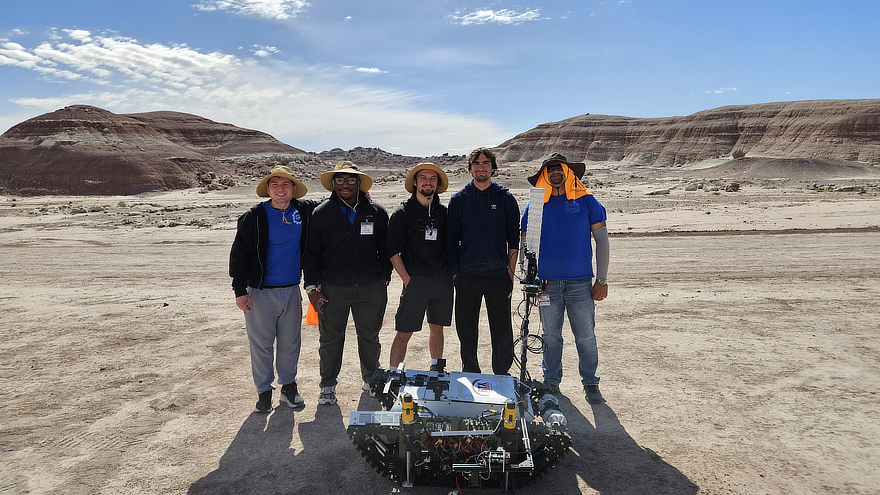
An academic year’s worth of hard work, dedication, and determination paid off for the University of New Haven’s Mars Rover team, who tested their unique skills beyond limits at the international University Rover Challenge.
Out of 116 teams from 18 countries that initially competed for an invitation to the international finals, the University of New Haven's Mars Rover Team advanced to the final competition, placing 20th among the 38 teams from across the globe that qualified. In distinguishing itself among some of the top colleges and universities in the world, the University of New Haven outperformed teams from Harvard, Yale, Penn, and UC Berkeley, among others much larger in size.
Organized by The Mars Society, the Rover Challenge is the world's premier collegiate Mars rover competition. It took place at the Mars Desert Research Station in Hanksville, Utah.
The students who worked on the UNewHaven team included Awwal Lawal '27, Declan McGrellis '26, Christian Pereira '26, and Samuel Rosen '27. They were advised by associate professor Shayok Mukhopadhyay, Ph.D.
At the Challenge’s awards ceremony, Dr. Mukhopadhyay said one of the founders noted that this competition is not something that college students should be able to do easily, if even at all.
“And yet there are many dedicated teams around the world, each with their unique set of skills and constraints, that take on this challenge, in some of the most inhospitable conditions possible,” Mukhopadhyay said.
The competition was held over the course of three days and consisted of four missions: Science Mission, Autonomous Navigation, Equipment Servicing, and Extreme Delivery.
Rosen, the team’s leader, said being accepted into the final challenge didn’t feel real at first.
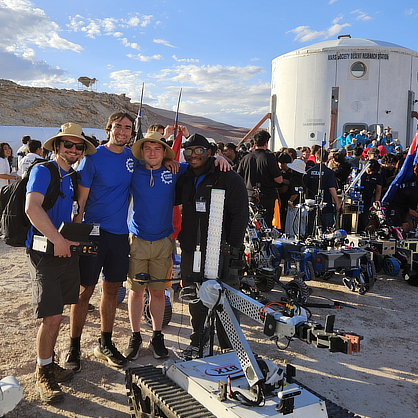
“So much work went into getting the four of us and our advisor there,” Rosen reflected. “The plane ride to Utah was when it really hit me. We were about to compete against some of the top engineering schools from around the world. Arriving at the Mars Desert Research Station and seeing the terrain and all the other teams was an incredible feeling. We were a team of four going up against teams with hundreds of members (some of which were Ph.D. students), yet we had earned our place right alongside them.”
While immersed in their academic courses, the four teammates dedicated their time to building the rover, a process that involved designing the mechanical, electrical architecture, software, and communications systems, and the science subsystem.
Following the design phase, Rosen said the next tasks were manufacturing, integration, troubleshooting, and then testing.
“It was a constant cycle of building, finding problems, improving the design, and testing again until competition,” he said.
As the team leader, Rosen coordinated the overall project, managed timelines and deliverables, and made sure the rover’s subsystems came together to function.
“My primary subsystem was the Science Mission, which I developed from concept to completion,” Rosen said. “Watching the rover successfully operate in the Utah desert after a full year of work was an incredibly rewarding experience.”
"We overcame challenges throughout the process and represented our University well." Awwal Lawal '27
After earning a spot in the competition, Rosen said his goal was to, “put ourselves in the best possible position and make everyone who supported us proud.”
The team finished 20th overall, and placed 11th in the Science Mission, with a score of 92 out of 100.
“For a team our size, that is something I am very proud of,” he said. “The Science Mission was especially rewarding because I spent nearly a thousand hours developing it. Seeing it perform well in competition made all of the work worth it.”
On the international stage, Mukhopadhyay said most of the other teams were much larger in size, some with hundreds of students and dedicated sponsors.
“Competing at this level this year with only four students, limited funding, and being able to outdo other competitors is truly an achievement,” Mukhopadhyay said.
Team member Awwal Lawal ‘27 shared the same sentiments as Rosen, saying going into the challenge he hoped everything would just work out as planned.
“Anyone who has worked on a project like this knows that things can go wrong at the worst possible time,” Lawal said. “We spent countless hours designing, testing, and fixing issues, so I just wanted all of that work to pay off and give our team a chance to perform at our best.”
Looking back at the competition, Lawal said he’s pleased with what the team accomplished.
“Our rover was more than capable of competing,” he said. “We overcame challenges throughout the process and represented our University well. Overall, Utah was a success!”
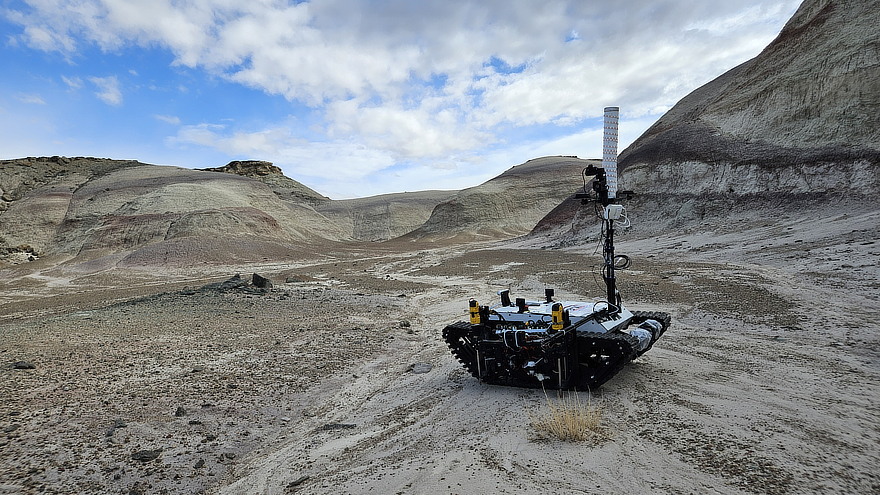
Dr. Mukhopadhyay said many students interested in pursuing the rover challenge get discouraged due to the amount of work and time that is required just to make the competition.
“This competition takes everything one can offer in terms of time and effort, but students who make it there, and see their designs working in real-life, usually come back wanting to compete again,” Dr. Mukhopadhyay said. “It gives them a true sense of what they can achieve, and a realization that the only things holding them back are many times their own misconceptions about their abilities.”
Rosen said his advice to future students ready to take on the challenge is to join and put in the work.
“Be curious and hungry to learn,” he said. “Skills and knowledge come from actually doing, so the more you participate, the more you’ll learn. Just keep trying. Try to get involved in as much as you can. And don’t quit, especially when things get intense because that’s when you’ll learn the most.”
Another reminder from Rosen: Don’t forget that failure is natural and offers just another opportunity to learn.
Dr. Mukhopadhyay said he hopes more students will be interested in taking on the challenge in the future.
“As hard as it is to do, I hope we have a team in the future who will want to step up to the challenge again,” he said. “It is an honor and a privilege to be able to compete alongside some of the best teams in the world."
To support the Mars Rover team's journey and help enhance their technology for next season's competition, click here.
The Charger Blog
Shana-Kay Hyde ’27 is excited to serve as a resident assistant, be part of a research group, and begin her graduate studies as part of her 4+1 program.
University News
Master partnership agreements with Sailion, Medtronic, Sheffield Pharmaceuticals, and ARBURG create new gateways for talent, innovation, research, and workforce solutions through the University’s Elevation Center.
The Charger Blog
As a new academic year ramps up at the University of New Haven, Charger Blogger Shana-Kay Hyde ’27 takes a moment to reflect on the past, set new goals, reconnect with the Charger community, and make the most of the opportunities ahead.