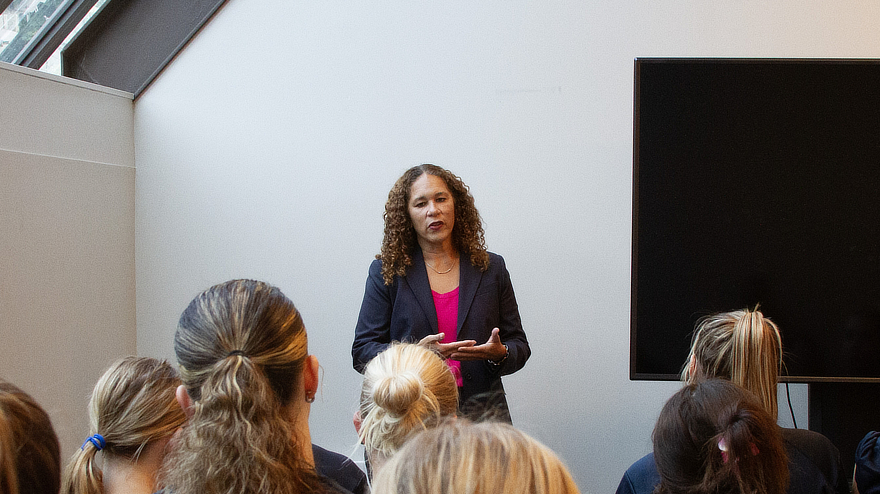
A new bachelor’s degree in electrical and computer engineering (ECE) offers exciting experiences for students, including new courses and opportunities for collaboration, that prepare graduates for in-demand careers in two areas of engineering that are increasingly becoming aligned.
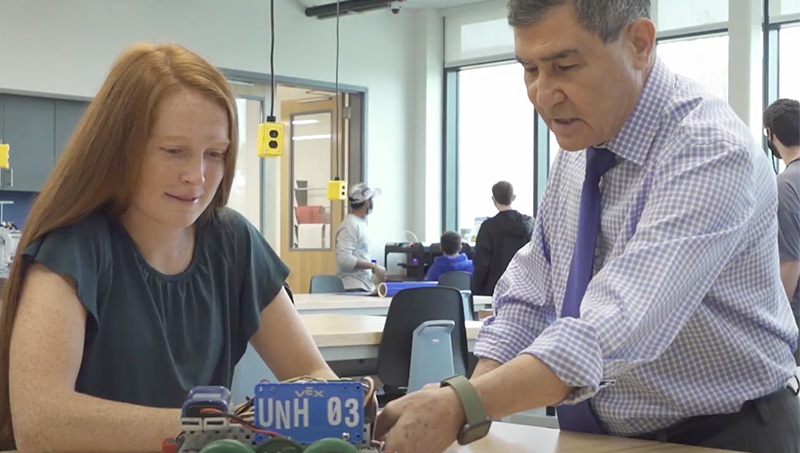
When Thomas Cozzarelli ’21 was a kid, his dad showed him how to build and solder basic circuits and to build custom remote-control planes. This sparked Cozzarelli’s interest in engineering, which later became the focus of his career. A recent graduate of the University’s electrical engineering program, he loves that he can now explain how most modern technologies that we use in our day-to-day lives actually function.
A radio frequency design and traffic engineer for Verizon Wireless as part of the company’s Leadership Development Program, Cozzarelli continues to draw on what he learned at the University. After completing an internship at Wireless Telecom Group during his first two years as a Charger, he interned at Verizon as a junior. He had a full-time job lined up when he graduated.
“My time at the University prepared me because, from the very beginning, I learned the core fundamentals that enabled me to make myself useful,” he said. “While taking a methods of engineering class my first year, I learned how to use Excel like an engineer, which was the most beneficial thing. These Excel techniques that I learned so long ago are still used in my day-to-day work.”
‘Say you want to build the next iPhone’
The University is reimagining its electrical and computer engineering programs to create new opportunities for students. Because these programs are so closely aligned, they will be combined into one degree – a Bachelor of Science in Electrical and Computer Engineering (ECE). Students have started enrolling in the program this semester.

For Christopher Martinez, Ph.D., who helped lead the charge to combine the programs, his background and education reflect how closely related these disciplines are. While his academic degrees are in electrical engineering, his professional background has been focused on computer engineering. He says it makes sense to have the two degrees under one name that encompasses both.
“It can become very difficult if you’re entering college and you see electrical engineering, computer engineering, cybersecurity, and computer science, and you many have no idea which program to choose,” Dr. Martinez said. “Say you want to build the next iPhone. Which of these degrees would that require? The truth of it is all of them. One way to lower that barrier is to select ECE, which is flexible enough that it allows students to take courses in computer science, cybersecurity, or data science as technical electives."
‘The most possibilities for a master’s degree’
Dr. Martinez says that, although degrees in electrical engineering and computer engineering were quite different 20 years ago, they are now increasingly similar – including, perhaps, 75 percent of the same common courses. There is also increasing overlap in both industries as well, and Dr. Martinez cites 5G as an example of an area that encompasses electrical and computer engineering.
Electrical engineering focuses on areas such as the generation of electric energy and communication and signal processing, whereas computer engineers design and build computers and computer components with a focus on hardware. Combining the two programs will enable students to develop a wider variety of important competencies.
Many individuals, such as Dr. Martinez, earned a degree in one concentration of engineering while working in another, such as an electrical engineering graduate who now works for Toyota writing software for self-driving cars. Students who study ECE may also pursue master's degrees in data science or biomedical engineering through one of the University's dual degree programs.
“The ECE degree is probably the degree that allows the most possibilities for a master’s degree,” said Dr. Martinez. “Students have options, since they’ll have the background to do it.”
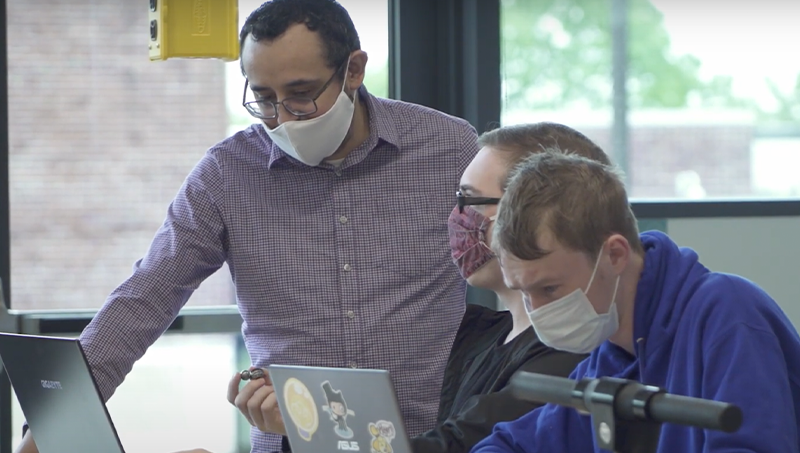
‘You’re getting the benefit of both worlds’
The combined ECE degree also creates new opportunities for students. The University has added more faculty – including a professor with expertise in robotics and autonomy – and expanded its offering of core courses and electives. The combined program includes new courses, enabling students to explore or expand their interests. They have the opportunity to take courses in topics such as autonomous robots and game development or to pursue a concentration in cybersecurity – something many schools don’t offer, says Dr. Martinez.
"Students will have even more choices when taking electives,” he said. “Upon returning from their internships after their junior year, they will have more electives available to them to explore more areas they’re interested in. It enables more exploration.”
Ali Golbazi, Ph.D., chair of the Electrical & Computer Engineering and Computer Science Department, says combining these programs to offer one ECE degree is the direction many universities are exploring, since there are so many commonalities between the programs, yet only about two dozen schools in the country have actually done so, so far.
“You’re getting the benefit of both worlds by getting an ECE degree because it allows the students to not only have the foundational knowledge that they need to succeed in the job market, but, also, to have flexibility,” he said. “It’s the core of electrical engineering and the core of computer engineering, with computer science in between the two. Because of the rigor of ECE, students will have programming and hardware competencies that are highly marketable."
‘Genuine enthusiasm to see students explore’
Last year, U.S. News and World Report recognized the University as a top school for undergraduate engineering programs. Graduates work for a wide array of companies, such as Sikorsky, IBM, Electric Boat, and Chevron. ECE graduates may have job titles such as web application developer, systems engineer, or electrical designer.
Mackenzie Myers ’22, an electrical engineering major, believes her time as a student has prepared her to begin her career after she completes her degree this spring.
“I have learned new material and new ways to complete problems,” she said. “I’ve had some great opportunities from my junior and senior design courses, which have allowed me to work on big projects as a group to build something and make it work. Studying electrical engineering will prepare me for success because it allows me to know what it is going to be like in the real world.”
Cozzarelli, the 2021 grad working as a Verizon Wireless engineer, was also well-prepared when he began his career. He says he particularly enjoyed the opportunities he had as a student to gain hands-on experience. One such opportunity entailed collaborating with students from the University of Mumbai in India to build a machine to dry leaves – work that has the potential to make a meaningful difference in people’s lives. He is also grateful for the guidance of his professors throughout his time at the University.
“I enjoyed the massive amounts of support and dedication from faculty and their genuine enthusiasm to see students explore and use all resources available to them,” he said. “I formed some of the best friendships, great memories, and had unforgettable teachers. There are a lot of opportunities at the University of New Haven that allow you to put in hard work and see a great reward.”
Contact
Get the highlights!
Stay up to date with our weekly e-newsletter, highlighting stories from around the University and media clips featuring our faculty experts.
Recent News
Charger 360

Season 5, Episode 4: Ashley McClain ’07 and Ariana James ’27
In the Media