Since spending 16 years in prison for a crime he did not commit, Jeffrey Deskovic has dedicated his life to helping the wrongly convicted. He visited campus to discuss the impact that mistakes in the criminal justice system can have on the lives of those unjustly accused.
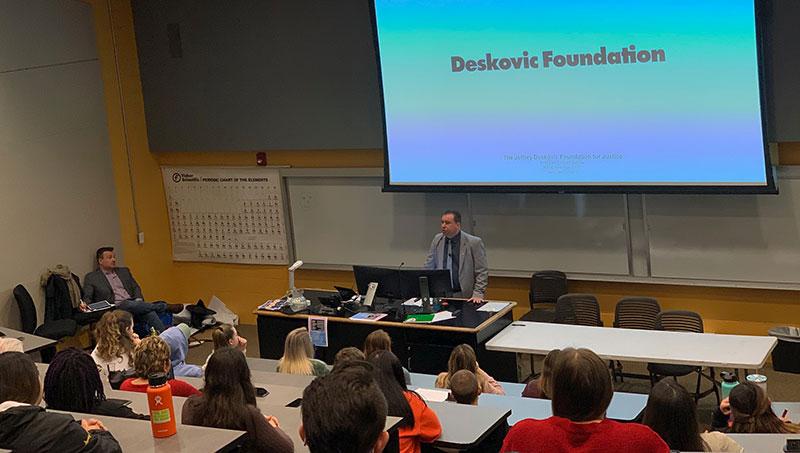
Cameron Filipe ’21 was in the audience recently as Jeffrey Deskovic, who was wrongly incarcerated for murder, visited campus to share his story.
A forensic science major, Filipe wanted to hear Deskovic’s unique perspective as an individual who had spent 16 years in prison for a crime he did not commit, and to learn firsthand about the importance of forensic science in the criminal justice system.
"This was a very powerful experience because it exposes how mistakes and gaps in what should be meticulous work can negatively impact someone’s life," he said. "As a student, you learn about forensic testing, and this reminds us that even after you’re done with the results, the impact they can make is not over."
When Deskovic was 17 years old, he was sentenced to life in prison for the 1989 rape and murder of a 15-year-old classmate. He was finally released in 2006 when DNA evidence exonerated him.
"Jeffrey Deskovic’s courageous talk was so important for students to hear."Peter Valentin ’08 M.S.
"I was released at age 32, but I still felt like I was 17," he said. "It’s difficult to put your life back together after a traumatic event like that – especially when you lose 16 years of your life, and especially when those are developmental years."
As he told students his story, he showed photos of himself as a teenager in the courtroom, explaining how it felt to be charged and sentenced as an adult. His story was meaningful for the students who attended – mainly forensic science, criminal justice, and psychology majors.
"This is something that should be talked about," said Noelle Vandebogart-Gonzalez ’22 a criminal justice major. "So many people are wrongly convicted and are still in prison, and we need to develop ways of freeing more of them. Mr. Deskovic’s talk was insightful for me because you can’t assume that a person is guilty. Stories such as his encourage me to look more closely."
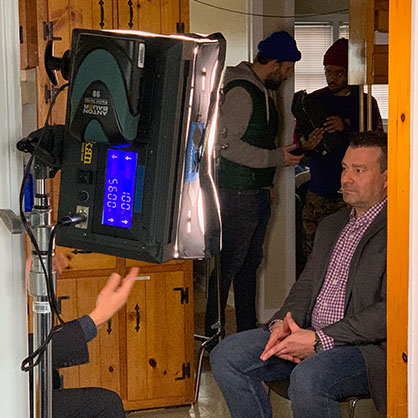
Since his exoneration and release, Deskovic has dedicated himself to helping the wrongfully convicted. He successfully sued the authorities responsible for his unlawful imprisonment and used a substantial portion of the compensation to start the Deskovic Foundation, a nonprofit organization dedicated to the exoneration of the wrongfully convicted and their recovery, and promoting judicial system reform.
Deskovic visited the University of New Haven as part of a special topics course taught by Professor Peter Valentin ’08 M.S., a retired detective in the Major Crime Squad of the Connecticut State Police. Footage from the lecture – as well as an interview with Prof. Valentin – will be included in an upcoming documentary about post-conviction proceedings.
"Jeffrey Deskovic’s courageous talk was so important for students to hear," said Valentin. "His unflinching account of all the mistakes and malfeasance in his case makes it clear that, as scientists, our allegiance must be to the evidence no matter where our career takes us. When we lose that objectivity, we run the risk of being part of a miscarriage of justice like his."
For many students, including forensic science major Taylor Bullock ’20, listening to Deskovic’s story enabled them to get an inside look at the impact – and importance – of what they have learned in the classroom.
"In my forensic science seminar, we’ve been talking about lab reports and testimony, and mistakes that can happen," said Bullock. "I was very interested to hear Mr. Deskovic’s story so I can help ensure similar mistakes don’t happen in the future."
Contact
Get the highlights!
Stay up to date with our weekly e-newsletter, highlighting stories from around the University and media clips featuring our faculty experts.
Recent News
Charger 360
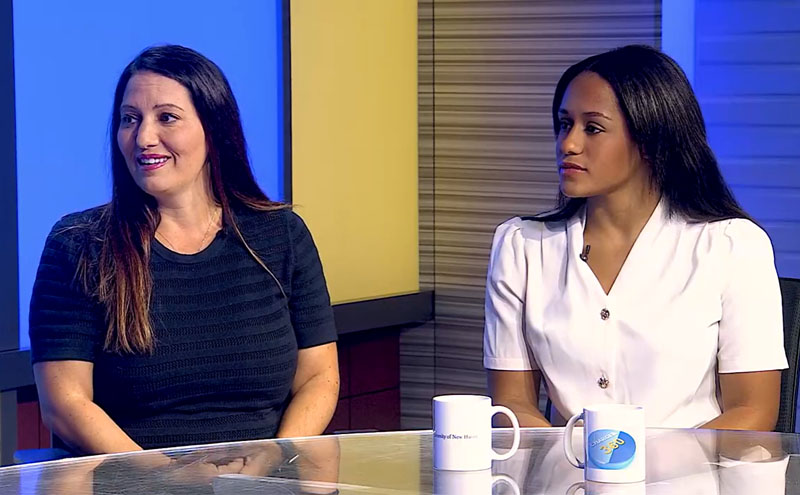
Season 5, Episode 4: Ashley McClain ’07 and Ariana James ’27
In the Media