Thanks to the dedication and game-changing work of Angie Ambers, Ph.D., Lydell Grant, who spent nearly a decade in prison for a murder he did not commit, has been freed and formally exonerated. Dr. Ambers believes the DNA technology that set him free could help exonerate others who have been wrongly convicted of crimes.
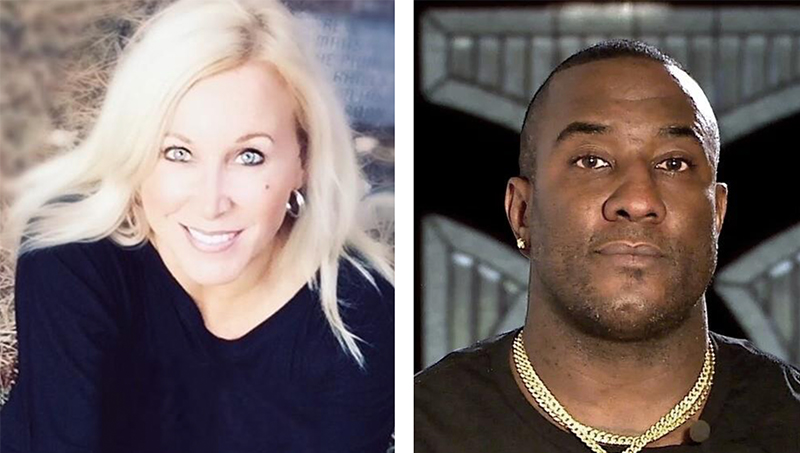
Angie Ambers, Ph.D., is passionate about teaching her students the importance of letting evidence “speak” for itself, as well as the importance of being aware of one’s own racial, cultural, and situational biases.
Specifically, Dr. Ambers emphasizes to her students the importance of a fair trial – that one is innocent until proven guilty in a court of law – especially since the accused may, in fact, be innocent. This is an issue Dr. Ambers knows well, as her work recently helped exonerate one wrongly convicted individual.
Dr. Ambers served as the lead forensic DNA consultant on the case of Lydell Grant, a Texas man who was convicted of the 2010 murder of Aaron Scheerhoorn. Sentenced to life in prison, Grant spent nearly a decade in prison for the crime, which he did not commit.
“There's a definite undertone in our education system and in the media that, if someone is formally indicted for a crime, he or she must be guilty,” said Dr. Ambers, an associate professor of forensic science at the University of New Haven and assistant director of the Henry C. Lee Institute of Forensic Science. “Unfortunately, the system doesn't always get it right, so we cannot just lock someone up and throw away the proverbial key. There's a reason we have a system of appeals for the convicted.”
‘Justice is only served’
Collaborating with the Innocence Project of Texas, which represented Grant, Dr. Ambers used a cutting-edge software program to reexamine the DNA evidence in the case. She worked with Cybergenetics, the developer of the leading software program TrueAllele, submitting a DNA mixture that contained Scheerhoorn’s DNA, as well as that of another male.
The analysis found alleles that did not match Scheerhoorn nor Grant, and they were able to deduce the profile of the unknown DNA contributor. Searching the profile against the Combined DNA Index System (CODIS), an FBI database, they identified Jermarico Carter, an Atlanta man, as the contributor of the unknown DNA. Carter, who has a lengthy criminal record, has confessed to the murder. Formally indicted for Scheerhoorn’s murder, Carter is currently awaiting trial.
“The truth is important not just for the wrongfully convicted, but also for the victim and the victim's family,” said Dr. Ambers. “Justice is only served when we put the person who actually committed the crime behind bars.”
‘We need to facilitate someone's ability to reintegrate into society’
Like the technology that set him free, the process of exonerating Grant was complex. Although Dr. Ambers’s work helped get him out of prison in 2019, the Texas Court of Criminal Appeals did not formally exonerate Grant until this spring.
“When we re-analyzed the DNA evidence in Lydell's case, we quickly realized it proved he was not involved in the murder,” explained Dr. Ambers. “But we still had to go through a series of hearings to prove his innocence. Many people are not aware that a formal exoneration – a declaration of ‘actual innocence’ by the appellate court – is not automatic. It can take years after someone is released from prison.”
Years that can cost the wrongly convicted – including Grant – dearly. In his case, it took nearly two years for the court to grant his exoneration. Even after his release from prison, he struggled to find employment, since background checks still revealed that he was a “convicted murderer.”
We need to facilitate someone's ability to reintegrate into society more quickly,” said Dr. Ambers. “This is critical, not just to reduce recidivism, but also to enable the wrongfully convicted to become productive members of the community, and to move on with their lives.”
‘A combination of these factors that collectively contributed to the guilty verdict’
Grant is now trying to move on with his life. He wrote and recorded a song about his ordeal, titled “I’m Actually Innocent,” under his artist name, Dello. He is also eligible for financial compensation for his wrongful conviction, as Texas is one of more than 30 states that provides such compensation. Like the process of exoneration, this can also be time consuming and challenging.
Dello - I'm Actually Innocent
Dr. Ambers says the cutting-edge DNA technology she applied to exonerate Grant could lead to more exonerations, while helping investigators solve cold cases. Although wrongful conviction is rare, it does happen, and it is an issue that, Dr. Ambers believes, there is a great deal for everyone – from students to professionals – to learn from.
“It forces us to critically evaluate the factors and/or errors that contributed to sending an innocent person to prison,” she said. “A review of 2,809 exonerations granted to date in the U.S. in the National Registry of Exonerations identified several common factors that contributed to wrongful conviction, including faulty eyewitness identification, false accusation, misleading forensic evidence, official misconduct, ineffective assistance of counsel, and racial bias.
“Regarding the latter, 1397 of the 2809 U.S. exonerees are African American, accounting for half of the wrongful convictions proven to date,” she continued. “In most cases, it was a combination of these factors that collectively contributed to the guilty verdict.”
Contact
Get the highlights!
Stay up to date with our weekly e-newsletter, highlighting stories from around the University and media clips featuring our faculty experts.
Recent News
Charger 360
Season 5, Episode 4: Ashley McClain ’07 and Ariana James ’27
In the Media