Students taking a unique investigations course at the University of New Haven reflect on the opportunities they had to conduct research and explore the impact of organized crime around the world.
As part of an exciting investigations course, students of various majors had the opportunity to explore the impact of organized crime. They researched the role of mafia groups in various countries, such as Ireland and Nigeria. The course, ‘The Code: Blood, Honor, and the Rules of the Mafia,’ was taught by Declan Hill, D.Phil, an investigations professor and journalist whose research has focused on organized crime, sports corruption, and match-fixing.
Below, two students reflect on their experiences in the course.
Melina Pachot ’26
The Honors program course, “The Code: Blood, Honor, and the Rule of the Mafia” had a lasting and powerful impact on my personal and professional development. As a criminal justice major, I found that this course added to my knowledge on how criminals operate and the grasp that they hold worldwide.
Throughout the course, we learned of the many organized-crime groups that are providing illegal business to millions of people around the world. We discussed the values, traditions, sources of income, and enablers within government that protect them from being brought to justice.
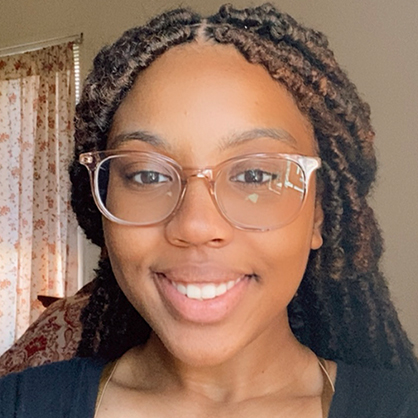
At the beginning of the course, we were tasked with researching and creating a presentation about a transnational group, along with their origin, source of income, and code of the group. The organized-crime group I examined was the Black Axe Mafia in Nigeria, which is known for their highly skilled business in cyber crime and human trafficking. The presentation consisted of speaking for 30 minutes while giving a full investigation of and providing videos and pictures of what we found.
This course and the presentation gave me the reassurance and confidence that I need to have in order to be in the field of law enforcement. Professor Hill taught me and everyone within the course using an approach that most students do not receive until their last year of undergraduate or graduate school. Even as a first-year student, I always felt like I was an equal with my other classmates, who were either juniors or seniors, despite my lack of experience.
This class, I feel, was able to give a perfect introduction to the real and gruesome side of organized crime and international crime, which is a field I hope to work in the future. It reassured me that I was strong and brave enough to stand on my own two feet and that I am able to present myself without feeling the need to get praise from others.
I want to thank Professor Hill and everyone in that course for making me feel safe and confident in myself, along with the Honors program for allowing students to experience such an eye-opening course as this one.
Angelo Ritacco ’24, ’25 M.S.
‘The Code’ with Professor Declan Hill was an incredible experience for me this semester. At first, I was somewhat hesitant about the course because of Professor Hill’s energy and extravagance while teaching, but I am extremely glad I stuck with the course until the end.
The course was unlike any I had ever taken before, and I feel like I have benefited greatly from it. The course was hyper-focused on organized crime and the set of principles that guides these groups, which is something I had never really thought about.
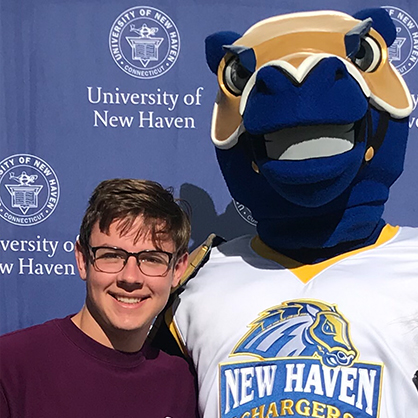
At the start of the course, we were given a term-long assignment to research a specific organization. I was the last student without a group, so Professor Hill reached out and asked what sort of things interested me. I told him I was a forensic science major, and a light bulb immediately went off in his head. He suggested researching tattoos rather than one specific organized-crime group because of their potential use in criminal investigations.
I was on board with this idea from the instant he mentioned it, and I knew that I could make a great presentation on this topic. I got to work researching the many tattoos that organized-crime groups use and some of the primary reasons that the practice of tattooing is so prevalent in organized crime.
Through this research, I was able to identify some of the more common and famous examples of tattoos belonging to crime groups, both here in the United States and internationally. I was particularly interested in some of the designs used by the Japanese Yakuza because of their extremely intricate and nuanced designs rooted in tradition and mythology. Doing work in this field was such a great experience because it allowed me to stay connected to my interest in forensic science more than any other project would have allowed, and I think what I have learned can be applied to my investigative work in the future.
I am super thankful for Professor Hill and the support he provided me throughout the semester. He was always telling me how excited he was to see my presentation, which inspired me to do the best work I possibly could.
Melina Pachot ’26 is a criminal justice major at the University of New Haven. Angelo Ritacco ’24, ’25 M.S. is a forensic science major.
Contact
Get the highlights!
Stay up to date with our weekly e-newsletter, highlighting stories from around the University and media clips featuring our faculty experts.
Recent News
The Charger Blog

University of New Haven Research Team Presents Digital Transformation Study at Major International Conference
The Charger Blog