Whether he’s working to improve artificial lungs or increasing access to ventilators during the pandemic, Kagya Amoako, Ph.D., has been making an important impact in the field of biomedical engineering. Recently inducted into Marquis Who's Who, he is also devoted to providing the “best classroom and laboratory research experience” for the next generation of researchers and leaders.
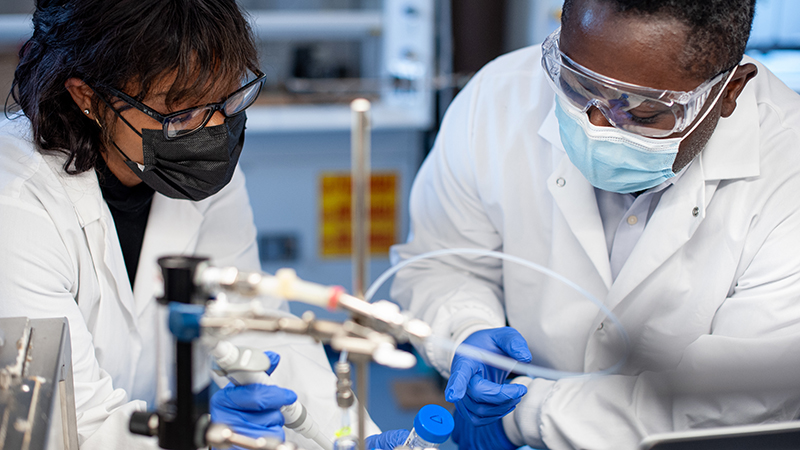
When Kagya Amoako, Ph.D., was a student at the University of Michigan in Ann Arbor, he had his first opportunity to take part in biomedical research. He soon realized how much he enjoyed the work and how impactful it could be.
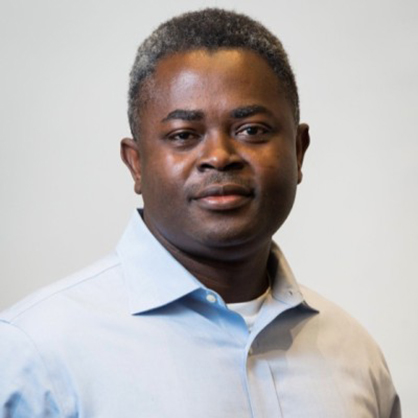
Whether he was experimenting with high-power femto-second lasers to carve stents from stainless steel cylinders or getting inspired by a lecture about biomaterials’ interaction with blood, his time as a student transformed the trajectory of his career. He is grateful to the leaders in the field who served as his mentors, and he is now doing the same for his own students. He says without his professors’ support – and the grant he earned that supported his doctoral training – he probably would have graduated with a master’s degree in mechanical engineering without going on to earn his doctorate.
Dr. Amoako, who conducted research at the University of Michigan’s NSF Engineering Research Center for Reconfigurable Manufacturing Systems, soon began to understand just how broad and multidisciplinary the field was. He saw its potential for enhancing healthcare and for making a difference in people’s lives. He is now using what he’s learned to make as much of an impact as he can, both in the laboratory and in the classroom.
“When I think about my work, I always ask myself how I can increase its significance,” he said. “I think about its ability to be deployed, enhance medicine, and exert a sustained impact on the scientific field. While that drives my work, the more exciting and rewarding aspects of my research have to do with trainees' achievements, from joining top doctoral degree programs, the workforce, and making contributions to science in various media. That hits home the most! That’s the metaphoric wind in my sails navigating the waters of the business of research funding.”
‘We went for it’
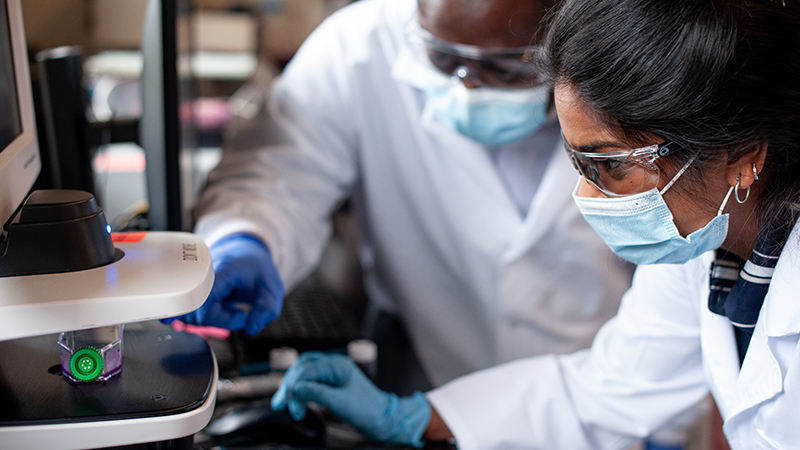
An associate professor and coordinator of the University’s graduate program in biomedical engineering (BME), Dr. Amoako serves as principal investigator for the Biomaterials and Medical Device Innovation lab (BMDilab). There, he and his students ask important questions, such as, “How close are we to the perfect second lung?” Their research and training focus on functional biomaterials, medical devices, and drug-delivery research.
While under Dr. Amoako’s mentorship, students are trained to master basic and advanced techniques in medical devices, drug delivery, biointerfaces, and macromolecular bioscience. He endeavors to create a hands-on, diverse, and varied learning environment while emphasizing using nanoparticles for targeting cellular and tissue interactions. He is driven to create as many important opportunities for his students as he can, and he says they, too, inspire him as an educator and as a leader in the field.
“When I think about each of our BME students, I see the hope of their families in them – hope for the future of medicine powered by engineering and hope that the universal human condition can be better,” explains Dr. Amoako, who is also serving as interim chair of mechanical and industrial engineering. “Those thoughts are a strong motivation for me to provide them a meaningful and the best classroom and laboratory research experience that I can.”
Driven by innovation, Dr. Amoako and his students have continued their important work, despite the challenges they’ve faced. One such challenge was the COVID-19 pandemic. Despite their in-person lab work being interrupted, as it was in so many labs around the world, he and his students saw an opportunity to use their skills and knowledge to help those who were suffering during the pandemic.
Concerned about the rising number of COVID cases and the increasing fatality rate in the U.S., Dr. Amoako feared there might be a shortage of ventilators. Although they could not work together in the lab, he and his students collaborated remotely to develop 3D-printed flow connectors that would enable doctors to treat two very ill patients with one ventilator.
“With the connector, the two lines can be bifurcated so that two patients can be hooked up to a single breathing machine,” he explains. “We had Zoom, Solidworks (a solid modeling computer-aided design and computer-aided engineering application), and a remote 3D printer, so we went for it.”
‘Grateful to work with some of the best students’
Dr. Amoako’s cutting-edge research and critical contributions to the field have been getting noticed. He was recently inducted into Marquis Who's Who, a publication established more than 120 years ago, for his contributions in biomedical engineering. Individuals profiled in Marquis Who's Who directories are chosen based on factors such as prominence in their field and noteworthy accomplishments.
“It was exciting to be inducted,” he said. “I feel that this is great for my professional development, as benefits include access to inductees, publications, curation of an online presence with a portfolio, and key placement in print media.”
Grateful for the opportunities to develop professionally at the University, Dr. Amoako is continuing his research and collaboration with students. Their questions about that perfect second lung continue to guide their work. They recently examined how antiplatelet lipid nanoparticles and a specific type of grafting could help achieve that goal. With support from the Bioengineered Organs Initiative team at Carnegie Mellon University's College of Engineering and the Advanced Respiratory Technologies, LLC, team, Dr. Amoako and his students recently published their findings on longer-term use of artificial lungs in Macromolecular Bioscience, a peer-reviewed journal.
“I have always been thankful for the remarkable professional development growth I’ve experienced at the University of New Haven and the amazing faculty I get to interact with on a daily basis,” he said. “I’m also grateful to work with some of the best students with unique academic backgrounds that a faculty member could ask to train, as well as the dynamic nature of tasks in which I have been involved.”
Contact
Get the highlights!
Stay up to date with our weekly e-newsletter, highlighting stories from around the University and media clips featuring our faculty experts.
Recent News
Charger 360
Season 5, Episode 4: Ashley McClain ’07 and Ariana James ’27
In the Media