As part of my Summer Undergraduate Research Fellowship project, I have explored how hormone replacement therapy affects sex determination, gaining hands-on experience and enhancing my communication skills.
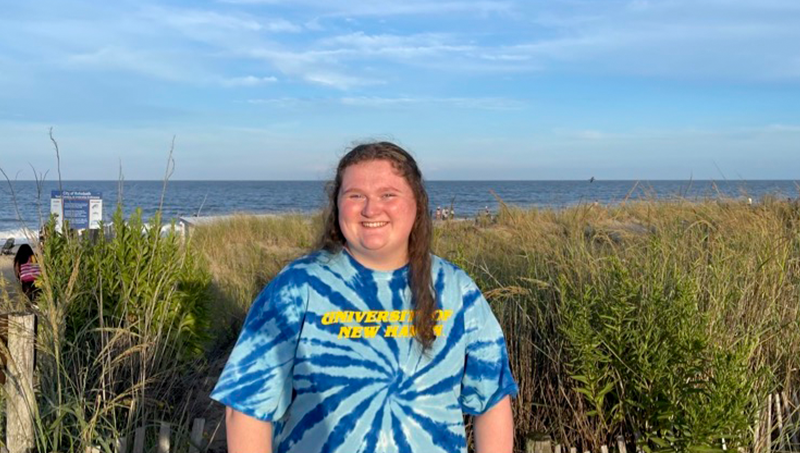
As a member of the University’s Summer Undergraduate Research Fellowship program, I had a wonderful opportunity to have a hands-on research experience and to expand my knowledge in so many ways.
I worked with my mentor Dr. Brooke Kammrath to examine the effect hormone replacement therapy has on sex determination using Raman spectroscopy. More specifically, we researched transgender individuals who had undergone hormone replacement therapy, using small blood deposits to determine sex through Raman spectroscopy. This research is very important to the scientific community as well as the LGBTQ+ community, as those within the LGBTQ+ community are underrepresented in all sorts of research. Any sort of research to date involving sex determination has only involved cisgender individuals.
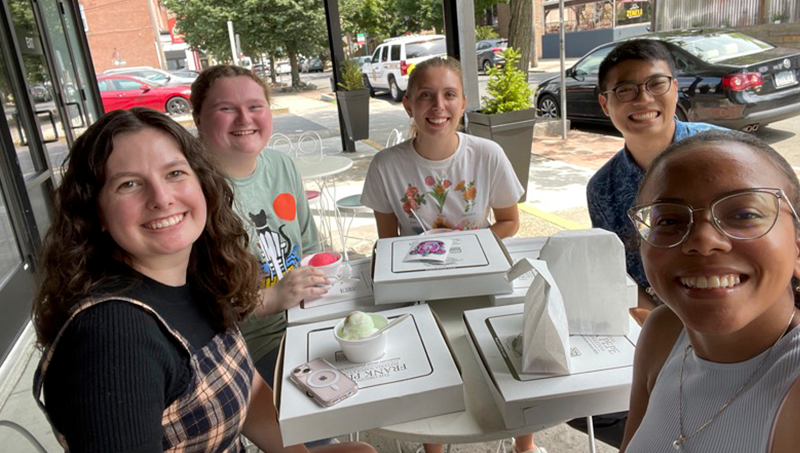
Working with Dr. Kammrath, I was able to collaborate with Dr. Igor Lednev and one of his Ph.D. students, Alexis Weber, at the University at Albany. Through this collaboration, I learned many different aspects of the research process more in depth, and it enhanced my communication skills when it came to problem solving.
Alexis Weber visited the University during my SURF project and taught me how Dr. Lednev’s group is using Raman spectroscopy to analyze blood deposits and the protocol they have for sample collection. Throughout the summer, I was also able to meet all of the graduate students currently working on research under Dr. Kammrath. Each of them was very helpful when it came to learning about the Raman spectrometer, and I was also able to learn all about their research as well.
During my SURF project, Dr. Kammrath has answered countless questions of mine, always making time to make sure I am understanding everything that is going on and that I have everything that I need to be successful. She encourages you to push your limits when she knows you are capable, even when you may doubt yourself.
After SURF, we are planning on continuing this research, and to developing it into my Honors thesis project.
Emily Miller ’23 is a forensic science major with a concentration in chemistry. She is also pursuing a minor in biology.
Contact
Get the highlights!
Stay up to date with our weekly e-newsletter, highlighting stories from around the University and media clips featuring our faculty experts.
Recent News
University News
University of New Haven Welcomes 15 New Corporate Partners, Doubling Network of Cutting-Edge Industry Collaborators
Charger 360