As a student and journalist in the Baltic region of the USSR in the early 1990s, I witnessed firsthand the fear and turmoil that overtook the area. I recently reflected on that time during a special event in Connecticut that brought together locals with ties to the Baltics to celebrate the 30th anniversary of the restoration of independence in that region.
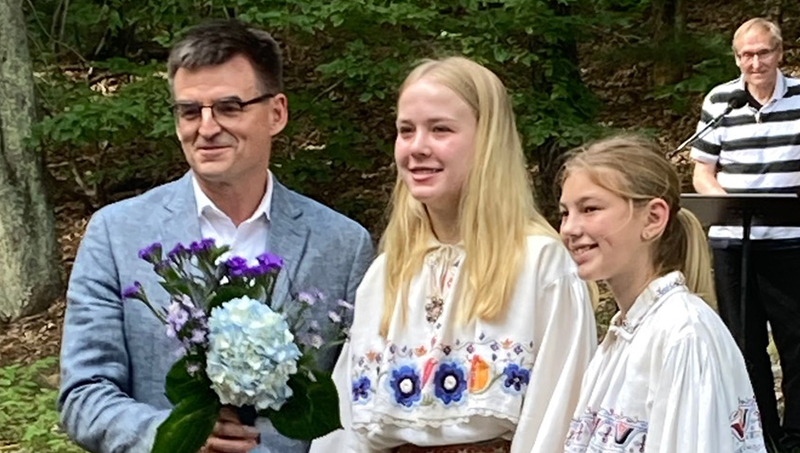
Thirty years ago this August I was in the Baltic region of the USSR, where I had been studying and working as a journalist for the previous year and a half. I recalled my experiences from August 1991 as the invited speaker at the commemoration of the 30th anniversary of the re-establishment of independence for Estonia, Latvia, and Lithuania. The Estonian, Latvian, and Lithuanian Societies of Connecticut held the event on August 21 in Andover, Conn.
Early in the morning of August 19, 1991, hardliners in the Kremlin seized power in Moscow, sidelining Soviet leader Mikhail Gorbachev, who was vacationing with his family on the Crimean Peninsula. In the evening of the next day, the Estonian Supreme Council (formerly, Supreme Soviet) declared de facto independence for the country, and the Latvian Supreme Council declared independence the day after that – August 21. In Lithuania, independence had already been declared a year and a half earlier, on March 11, 1990, but real independence for all three of these small countries on the southern shore of the Baltic Sea was made possible only with the subsequent unraveling of the coup in Moscow against Gorbachev.
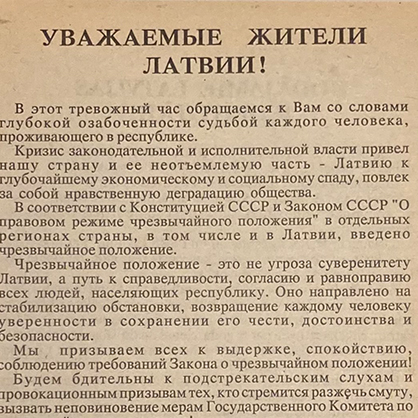
On the first day of the coup, I was in Daugavpils, a town in southeastern Latvia near the border with Lithuania, waiting for a train to the Latvian capital of Riga, from where I would continue on to Tallinn, capital of the Estonian Soviet Republic, my home for the time I was in the Soviet Baltic. I heard a helicopter fly over the Daugavpils station, and I ran out to see leaflets descending. It was a text by the Communist Party in the Latvian Soviet Republic. One side was printed in Latvian and the other in Russian, directing people to support the “law on the state of emergency” – the coup against Soviet President Gorbachev.
As I returned to Tallinn that evening, no one knew the coup would fail and that Soviet troops and tanks would not be unleashed, putting an end to the Baltic independence movements and continuing the violence by Soviet forces that had resulted in deaths in Vilnius and Riga earlier in the year.
‘Ardent Desire for More Authentic, Truthful, Free Lives’
Since the fall of 1990, I had been reporting for an English-language newspaper published in Tallinn, The Estonian Independent, which later in 1991 became The Baltic Independent. The week after the coup plotters were arrested, and as Western states one after another recognized Baltic independence (the United States did so on September 2), I interviewed people on the town’s central square about their impressions.
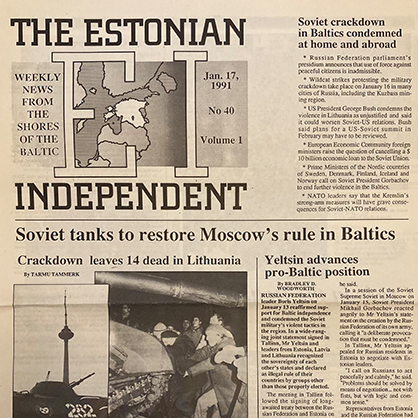
The interviews, published in the August 30-September 5, 1991 issue of The Baltic Independent, included these thoughts from Estonian Kalev Kaarus: “Everything has happened so fast. The events in Moscow have helped us so that we can now get our independence back. Totalitarianism will now be defeated.”
At the recent event in Andover, I recalled these experiences of 30 years ago with Americans of Baltic extraction and descent, many of whom remembered the fear and the excitement of 1991, while many did not, knowing their ancestral homelands only as the free, open, and democratic countries that they are today.
My experiences in the Baltic Region in the early 1990s were the most powerful of my entire life. I saw at firsthand the joint, collective action by people motivated not by exclusionist nationalism but, rather simply, by the belief in and ardent desire for more authentic, truthful, free lives.
I concluded by saying I knew how much the peoples of Latvia, Lithuania, and Estonia had gone through in the 20th century. The past 30 years have, overall, brought prosperity and security. Work remains to be done, though, to ensure the multiethnic societies in the Baltic are well integrated and that these multicultural and multilingual societies are not divided by their diversity.
I shared with the Baltic communities in Andover my confidence in the continuing success of the peoples of the Baltic, and on that day, the 30th anniversary of the restoration of their independence, I celebrated with them.
Bradley Woodworth, Ph.D., is an associate professor of history in the University’s Department of Human Sciences.
Contact
Get the highlights!
Stay up to date with our weekly e-newsletter, highlighting stories from around the University and media clips featuring our faculty experts.
Recent News
The Charger Blog

Health Sciences and Marine & Environmental Sciences Programs Launch Interdisciplinary Collaboration
University News