The generous donation of a new server from Dell Technologies is enhancing students’ and faculty members’ ability to train and test machine learning models while offering new and exciting data science research opportunities.
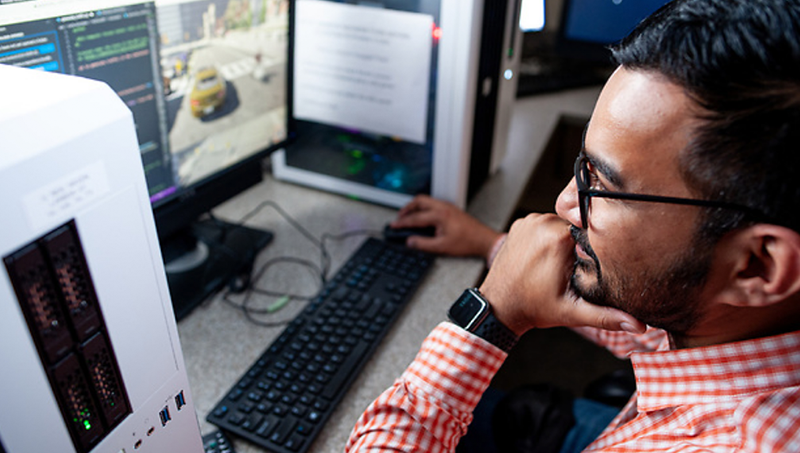
From crunching numbers to training with new computing models and simulations, the Connecticut Institute of Technology at the University of New Haven has received a big boost from Dell Technologies. The company generously donated a server to the University, which is providing a serious infusion of power for students, faculty, and staff to better test models and simulations in data science research.
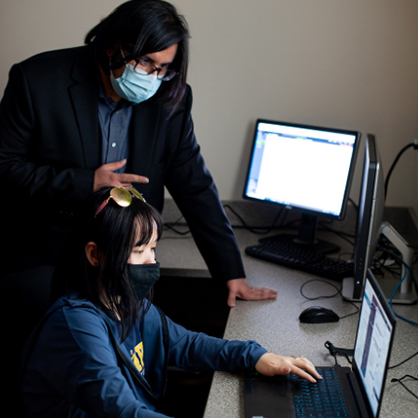
Ibrahim "Abe" Baggili, Ph.D., the founding director of the Connecticut Institute of Technology, called the server a "necessary resource," and explains in layman's terms that the server is "one big computer, working with other computers, to crunch numbers." The importance of the server is that it provides "research students with on-demand access to graphics processing unit (GPU) computing for training and testing machine-learning models."
Dr. Baggili says the technology was integrated into an existing network of four other computers, specifically the GPU work stations on campus, to create a mini-cluster, configured via Kubernetes/Jupyterhub, open source technologies for automating computer applications. The server is able to store significant amounts of information, as well as access and recall data, all while performing myriad of essential tasks required in data science research.
Some of that computing power goes into training and testing of deep reinforcement learning models and large transformer models, according to Dr. Baggili. The latter focuses on tasks such as taking neural networks to model social networks, as well as predicting or spotting intrusions and classifying cyber threat intelligence. Additionally, Dr. Baggili says the server helps researchers here at the University use simulations, including ones that train robot coordination and communication.
‘Enabled new lines of research’
Already, a first batch of results from these models and simulations has been collected. Student and faculty researchers are writing up what they have learned from the heavy-duty computing possible from the cluster of GPU workstations. The goal is to submit the findings to academic conferences, including the Association for the Advancement of Artificial Intelligence (AAAI) and the International Conference on Learning Representations (ICLR).
Vahid Behzadan, Ph.D., an assistant professor at the Tagliatela College of Engineering, says "this cluster has enabled new lines of research that require the training and fine-tuning of massive deep-learning architectures," which is enabled by the processing power and speed from the server Dell Technologies provided to the University. He says prior to the donation, the University’s "experimental capacity was limited to the availability of just a few GPUs in the lab cluster.
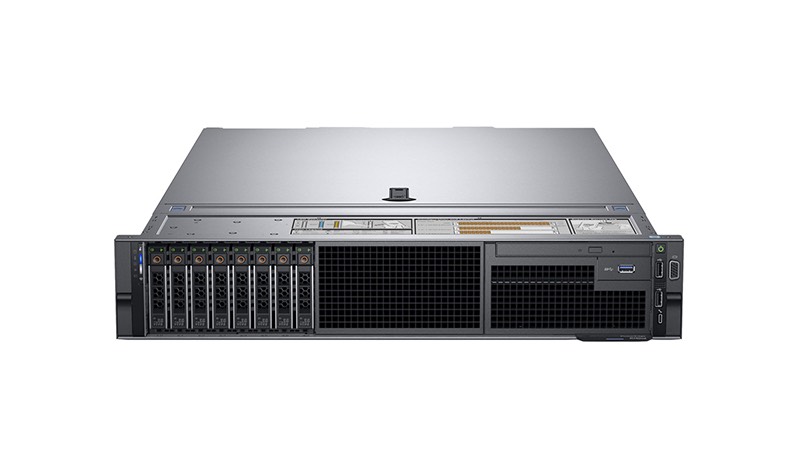
He adds, "The addition of this powerful server to our computing cluster has significantly increased our capacity, and has enabled us to train multiple large models in parallel and generate results at a significantly faster pace."
Dr. Behzadan says a student abstract called “Hybrid Deep Graph and Transformer Model for Fake News Detection in Social Network” is one of the most recent projects in a larger automated fake news detection effort. That abstract has since been accepted for presentation and publication for AAAI's 2022 conference. Dr. Behzadan explains that projects underway, thanks to the Dell server, have already been accepted for the Conference on Applied Machine Learning in Information Security (CAMLIS) and others are under review for other artificial intelligence (AI) conferences.
‘Fantastic collaborators’
Jeffrey Lancaster, Dell Technologies’ higher education strategist, provided some insight into why the company chose the University of New Haven for the server, saying the “standout cybersecurity and esports programs “align with many of Dell’s current areas of focus.”
Lancaster says the goal was to support education and research in “cybersecurity, data science, and other computationally intensive areas” after a meeting with Dr. Baggili in 2020. Since then, Lancaster says Dell has found “fantastic collaborators” at the University, including teaching a Diversity, Equity, and Inclusion in Esports class for the Master’s in Esports Business Program.
Lancaster continues, “We look forward to further exploring the bounds of industry-academic partnership with the University of New Haven.”
“We are grateful for Dell Technologies' generosity and excited for the opportunities that their investment will provide for the students and faculty of the Connecticut Institute of Technology,” adds Dr. Baggili.
Contact
Get the highlights!
Stay up to date with our weekly e-newsletter, highlighting stories from around the University and media clips featuring our faculty experts.
Recent News
Charger 360

Season 5, Episode 4: Ashley McClain ’07 and Ariana James ’27
In the Media