In a recent virtual panel discussion, four University of New Haven faculty members in the science, technology, engineering, and math (STEM) fields shared their expertise with students in another area in which they are very familiar: pursuing education at the highest level.
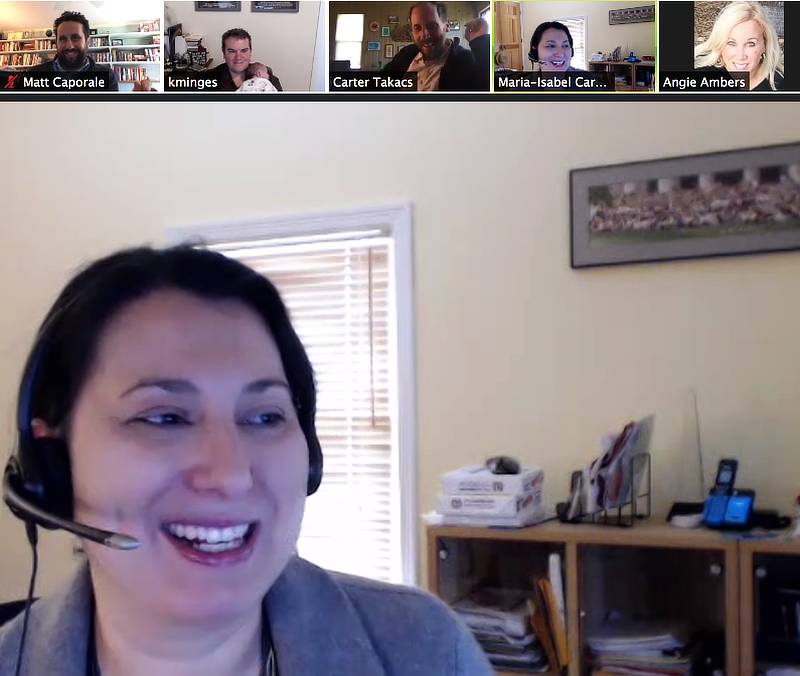
As a graduate student, Angie Ambers, Ph.D. taught high school biology. After earning a master’s degree in forensic genetics – following an earlier advanced degree in criminology – she decided she wanted to pursue her doctorate.
After identifying her three schools of interest that offered the Ph.D. in molecular biology she was seeking, she researched the faculty members at each school. She used her interviews as opportunities to learn more about the programs.
“I asked faculty members how open they were to having Ph.D. students work with them and design their own experiments,” said Dr. Ambers, an associate professor of forensic science who serves as assistant director of the Henry C. Lee Institute of Forensic Science. “It was important to me to have some intellectual freedom in designing my career path.”
Dr. Ambers, who earned her doctorate from the University of North Texas, reflected on her experience of choosing a Ph.D. program, and looked back at her time as a doctoral student, as part of a recent virtual panel discussion sponsored by Graduate Student Services.
The program brought together faculty members in the science, technology, engineering, and math (STEM) fields on Zoom, enabling them to share their experiences – and advice – with students considering pursuing a Ph.D.
‘It’s about answering questions and having discovery be your goal’
Faculty members endeavored to clarify some of the misconceptions associated with pursuing a Ph.D., including the belief that those who earn their doctorate always had a clear idea of what they wanted to do.
That wasn’t the case for Carter Takacs, Ph.D., an assistant professor of biology, who hadn’t always planned to earn his doctorate in genetics. He discussed how his own path meandered, starting with his background in anthropology and a job collecting arrowheads.
With the support of a mentor, he delved into some science classes and learned how to conduct research. When he took a cell biology course, he realized he was passionate about biology and genetics.
“I let my curiosity pull me in the direction I wanted to go, and I didn’t follow a script,” said Dr. Takacs, who earned his Ph.D. from the Dartmouth Medical School. “It’s not about getting the A. It’s about answering questions and having discovery be your goal.”
Faculty members discussed the importance of maintaining a work/life balance as Ph.D. students, some of the biggest challenges they faced, and how to pay for school. They shared their advice, hoping to help students make the most of their own experiences.
Maria-Isabel Carnasciali, Ph.D., assistant provost for program assessment and effectiveness and an associate professor of mechanical engineering, encouraged students to do their research and learn as much as they could before beginning a doctorate program.
“When visiting schools, I didn’t just want to speak with faculty members, I also wanted to interview students in the lab,” said Dr. Carnasciali, who earned her doctorate at the Georgia Institute of Technology. “You’re spending a lot of time there, and the people and environment are important.”
‘I have some of my fondest memories from my time as a Ph.D. student’
Matt Caporale, executive director of the University’s Career Development Center, moderated the panel. He hopes it was a source of support and information for students considering pursuing a Ph.D.
“The panel was a great way for students to hear firsthand stories and advice from faculty on how to navigate the process,” he said. “I hope students came away with a sense of what a Ph.D. program entails, how to locate suitable programs, what the experience is like, and that there are resources at the University of New Haven to help them navigate their own journey.”
Faculty members discussed the flexibility they had when creating their schedules, the invaluable networking opportunities, and the career options available to those who earn a doctorate.
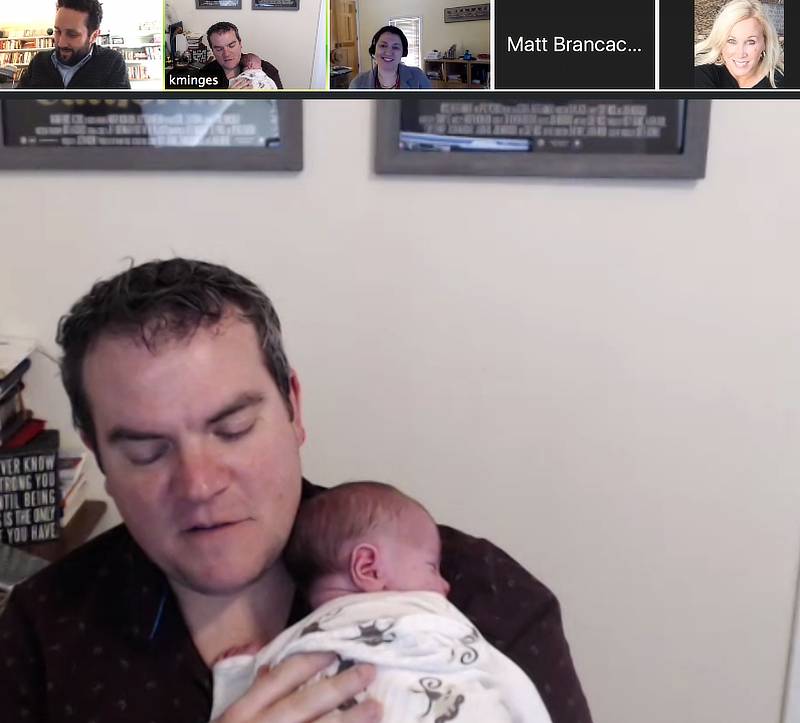
Karl Minges, Ph.D., who earned his doctorate at Yale University, said that about half of his colleagues in the program planned to enter academia. Originally interested in consulting, he ultimately decided to focus on research. He says the skills that doctoral students develop are very translatable to other career paths, and he encouraged students to make the most of their experience as Ph.D. candidates.
“I have some of my fondest memories from my time as a Ph.D. student,” said Dr. Minges, an assistant professor of health administration and policy. “The students in your cohort become your friends and colleagues. Take advantage of the opportunities to engage in clubs – maybe start your own. It’s your last chance to be a student.”
Contact
Get the highlights!
Stay up to date with our weekly e-newsletter, highlighting stories from around the University and media clips featuring our faculty experts.
Recent News
Charger 360
Season 5, Episode 4: Ashley McClain ’07 and Ariana James ’27
In the Media