Chris Cochran, the threat intelligence lead at Netflix, “visited” the University of New Haven virtually as part of the Bartels Lecture Series, discussing how the pandemic has shaped – and how he expects it will continue to shape – the field of cybersecurity.

Chris Cochran has dedicated his career to building advanced cybersecurity and intelligence capabilities for national-level governments and the private sector. Currently the threat intelligence lead at Netflix, he recently shared his expertise with the University community.
Cochran’s virtual visit was part of a live podcast edition of the Bartels Lecture Series, the University’s longest-running guest speaker series. It was held via Zoom amid the global coronavirus pandemic and streamed live on the University’s Facebook page.
A former member of U.S. Marine Corps Intelligence, Cochran is a member of the advisory board for the University’s cybersecurity and networks program. He has made it his personal mission to motivate and empower cybersecurity professionals and teams through coaching, his podcast "Hacker Valley Studio," and speaking engagements.
"Communication is 100 percent key when it comes to cybersecurity," he said. "Whether you’re on the threat intel side or you're leading a cybersecurity program, being able to communicate what you do to add value is super important."
"I think this has shown us that not only do we need to double down on technology ... but we also need to double down on the people we're connecting with."Chris Cochran
Cochran compared cybersecurity to Formula 1 Racing, in which drivers reach high speeds and are connected to their pit crews via a headset. The pit crew, which has access to gauges and the car’s critical information, tells the driver how fast to go and how hard to push the car. He says cybersecurity has a similar role, advising organizations and individuals how hard they should push to avoid danger.
As part of the event, Cochran was joined by Abe Baggili, Ph.D., Elder Family Chair and director of the University's Connecticut Institute of Technology. Bruce Barber, general manager of WNHU, the University’s radio station, served as the moderator for the wide-ranging conversation.
An internationally recognized expert in cybersecurity and digital forensics, Dr. Baggili discussed cybersecurity challenges brought on by the pandemic, as well the impact to technology and the workplace.
"I think conversations like this can really help us cope with it," he said. "Universities can focus on the deep technical skills that are needed and on telling students that cybersecurity is big. Students can make it into something they love."
Barber, a podcaster and veteran radio personality, asked questions and discussed Cochran’s podcast.
"Podcasting is such an amazing medium, and I think he’s using it so well," Barber said. "Chris is thinking about these highly specialized things. It’s important to be able to think critically and to interact with people."
Established more than 30 years ago by longtime University benefactors Henry E. ’91 Hon. and Nancy H. Bartels ’11 Hon., the lecture series has a rich history of bringing individuals of national stature and prominence in the fields of business or public service to campus to interact with students.
Much of the discussion focused on the impact the pandemic has had on cybersecurity, and Cochran concluded the event by examining how he expects the impact of the pandemic will continue to shape the field of cybersecurity.
"I think organizations are becoming more transparent as to how data are being used, and I think that’s a trend in the right direction," he said. "I think this has shown us that not only do we need to double down on technology, which is important because it’s what we’re using to connect with people, but we also need to double down on the people we’re connecting with."
Contact
Get the highlights!
Stay up to date with our weekly e-newsletter, highlighting stories from around the University and media clips featuring our faculty experts.
Recent News
Charger 360
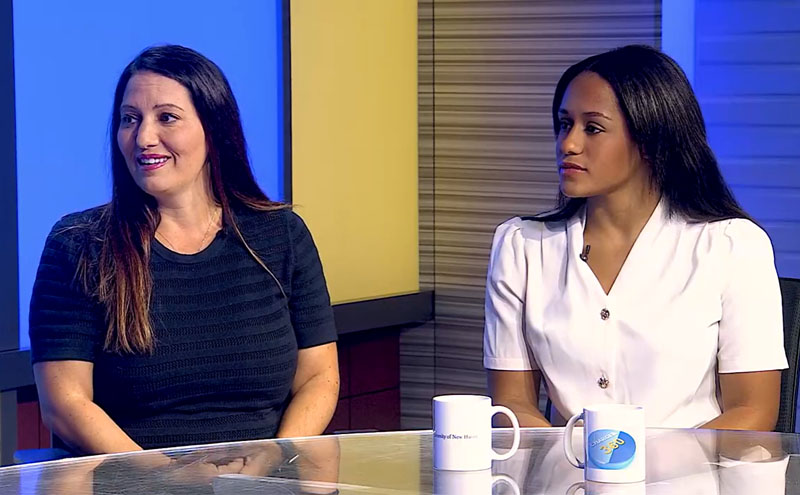
Season 5, Episode 4: Ashley McClain ’07 and Ariana James ’27
In the Media