
After conducting a series of studies, sport management faculty members Gil Fried and Ceyda Mumcu determined that the buffer zones around basketball courts should be larger to ensure the safety of athletes. Their findings are scoring them points in the industry.
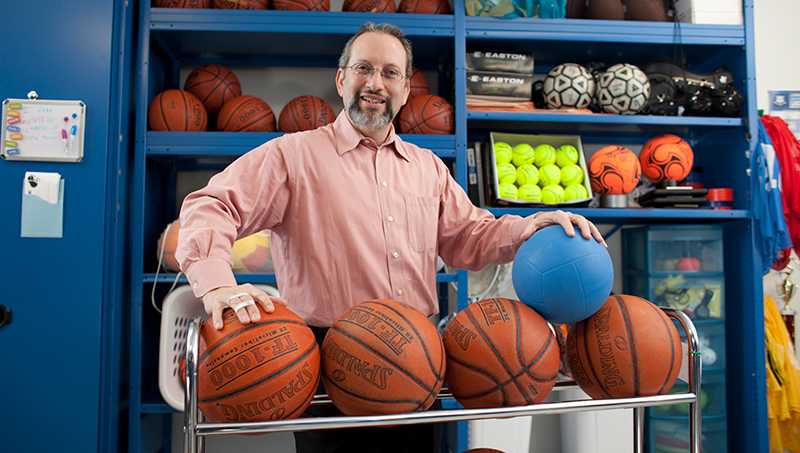
As a sport attorney with nearly 30 years of experience, Gil Fried has handled many injury cases in which athletes or fans have been hurt when players have gone out of bounds on the basketball court. In some cases, these injuries have been serious – leaving individuals paraplegics or quadriplegics.
Fried noticed that the rules governing the size of basketball court buffer zones in athletic facilities seemed arbitrary – some required a minimum buffer zone of three feet while others required 10 feet. His background research confirmed that there were, in fact, no rules governing how these requirements were determined. He says this is especially concerning for smaller facilities, such as high school gymnasiums or recreational facilities, although it has been an issue at professional venues as well.
"It indicates that there is a big need for facilities to examine what they’re doing and if they’re providing a safe environment for people."Gil Fried, J.D.
"At the NBA level, where there’s a larger playing area for the game, fans are often right on the court," said Fried, chair of the University’s Sport Management department. "There have been a number of instances where people – including LeBron James – have gotten injured because they were heading out of bounds and they ran into somebody. It can be dangerous for the players and for the fans."

Teaming up with Ceyda Mumcu, assistant professor of sport management and a former professional basketball player, and Dan Liu, a physics professor at the University of Hartford, Fried conducted three studies. The researchers wanted to explore the average size of existing buffer zones, survey coaches to determine the mechanics of how athletes go out of bounds, and determine how players move during a game and how long it takes them to stop when they are headed out of bounds.
The researchers recruited several students to play a basketball game and put markers around the court to measure how far athletes went out of bounds. They analyzed their speed with radar guns and used force plates to measure their strength. They found that athletes need at least three steps before they can stop, and they found that a minimum of 5.2 feet is needed for an appropriate buffer zone.
"It is fulfilling to have an opportunity to contribute to creating a safer playing field for fellow basketball players."Ceyda Mumcu, Ph.D.
"That dispels the three-foot minimum that is commonly used in rules and regulations," said Fried. "In other words, it indicates that there is a big need for facilities to examine what they’re doing and if they’re providing a safe environment for people. Perhaps they need to redraw lines or change how the court or the seats around it are configured."
Their research is gaining some traction, including attention from Athletic Business, an industry publication with approximately 40,000 subscribers. Fried says the research suggests that more studies are also needed in other areas, such as how much space should be required behind a treadmill.
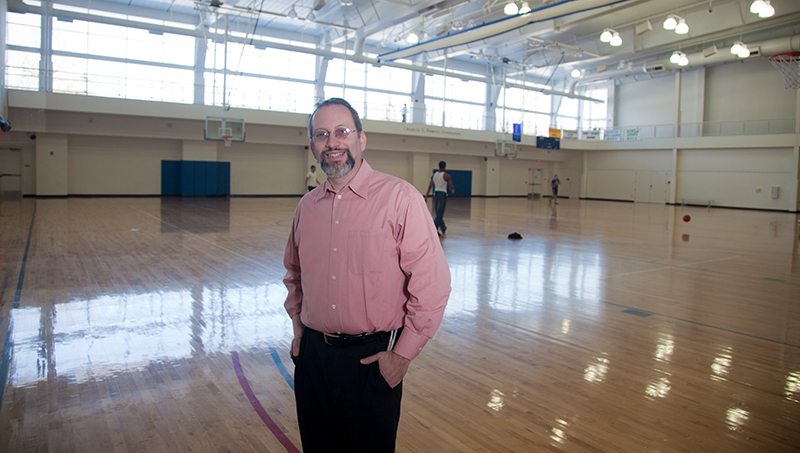
For now, the researchers are trying to get the word out in an effort to make sports safer, an issue that, for Mumcu, is personal.
"As a former professional basketball player, I had a serious injury as a result of a lack of buffer zone space," Mumcu said. "Athletes have short career spans, and staying healthy is essential to performing to one’s highest potential and to pursuing the profession. It is fulfilling to have an opportunity to contribute to creating a safer playing field for fellow basketball players."
Contact
Get the highlights!
Stay up to date with our weekly e-newsletter, highlighting stories from around the University and media clips featuring our faculty experts.
Recent News
The Charger Blog

University of New Haven Research Team Presents Digital Transformation Study at Major International Conference
The Charger Blog