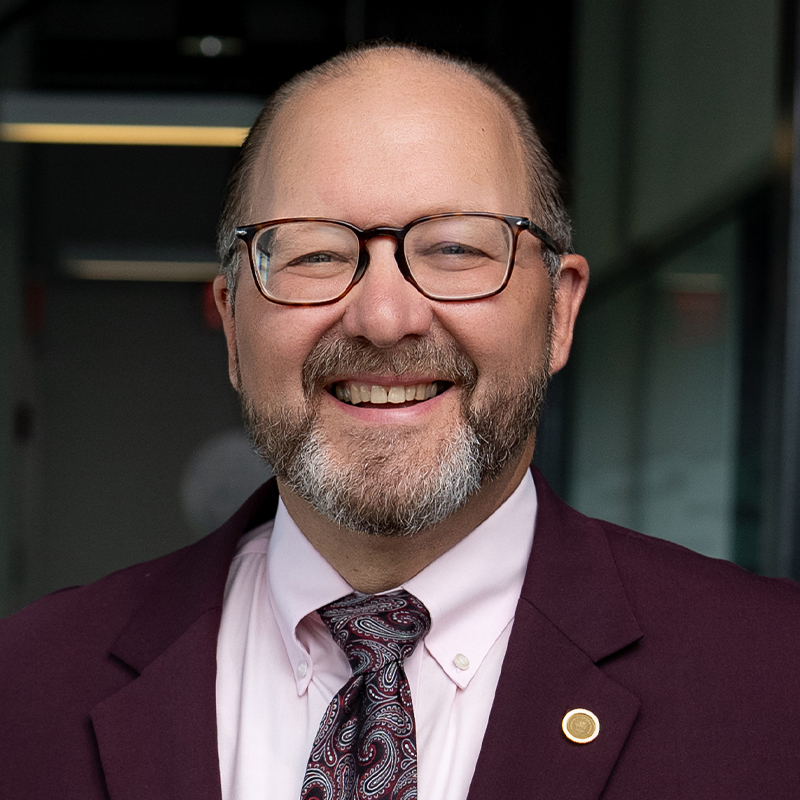
L. Craig Parker, Ph.D., an internationally known criminal justice scholar and a long-time professor at the University of New Haven, passed away at his home on December 31, at the age of 82.

Less than a month after the 1989 rape of a jogger in Central Park that gained national headlines, L. Craig Parker, Ph.D., an internationally known criminal justice scholar in the University of New Haven’s Lee College of Criminal Justice and Forensic Sciences, was interviewed by the New York Times in his office on campus about the consequences of living in an increasingly violent society and the roots of this violence.
Parker was asked what he considered to be the root of the apparent apathy that he pointed to as one of the reasons for the rise in violent crime in the mid 1980s.
“I'll reduce it to this: if young people don't have good supervision and discipline, and if they don't have somebody who cares a lot about them, then there is a potential for acting out violently,” he said.
Parker, who dedicated his life to ensuring that the developing minds in his classroom had the guidance and direction they needed to excel in careers that spanned the public service arena, passed away at his home in Madison on December 31, at the age of 82.
Born in Lewiston, Maine, he received his Ph.D. at SUNY-Buffalo, his master’s degree at Springfield College, and his bachelor’s degree at Bates College. He taught at the University of Wisconsin-Milwaukee and the University of Alberta before joining the University of New Haven to launch its program in criminal justice in 1972. Parker was also a Visiting Scholar at Columbia Law School and a Visiting Faculty Fellow at Yale University
Known internationally as a criminal justice scholar, his studies brought him across the globe, including to Great Britain, Canada, Sweden, Iceland, Finland, Denmark, The Netherlands, China, and Japan.
In the 1980s, when such collaborations were rare, he initiated exchange programs among American, Chinese, and Japanese scholars. He was the author of five textbooks and numerous articles.
In lieu of flowers, memorial contributions may be made in Dr. Parker’s name to the Virginia M. Parker Endowed Scholarship at the University of New Haven, c/o Office of Advancement, 300 Boston Post Road, West Haven, CT 06516.
Contact
Get the highlights!
Stay up to date with our weekly e-newsletter, highlighting stories from around the University and media clips featuring our faculty experts.