One of the world's foremost forensic scientists, Dr. Lee will be featured in a CBS documentary chronicling the reexamination of the 1996 murder of six-year-old JonBenet Ramsey. The four-hour series will air on Sept. 18 and 19.
Dr. Henry C. Lee, the world-renowned forensic scientist, believes that initial missteps in the investigation of 1996 disappearance of six-year-old JonBenet Ramsey may have ultimately impacted the likelihood of solving the crime.
The police were called to the Ramseys’ Boulder, Colo., home early in the morning of December 26 after Patsy Ramsey discovered what was believed to be a ransom note left by the abductor of her daughter.
"Subsequently, law enforcement was contacted and police, FBI investigators and family, relatives and friends flooded the scene," said Dr. Lee, the founder of the University of New Haven’s forensic science department. "By the time they realized it wasn’t a kidnapping, that it could be a homicide, the scene was already totally contaminated."
Recreating The Scene
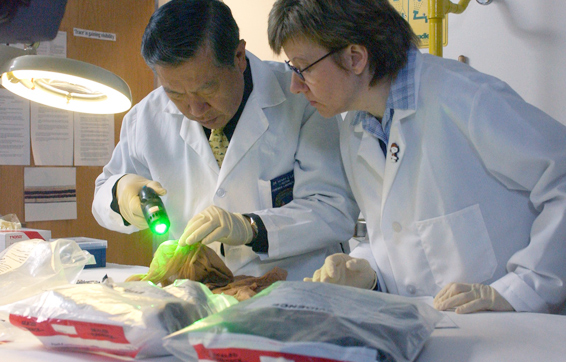
Dr. Lee, who visited Boulder six or seven times to meet with authorities, review evidence and recreate the scene, discussed the still-unsolved case in advance of the premiere of The Case of JonBenet Ramsey, a CBS docuseries that reunites the original investigators and teams them with new experts to reexamine the case. Dr. Lee will be a central figure in the four-hour series that will air on Sept. 18 and 19.
"Of course, it is easy to be a Monday morning quarterback, but in this case there was a fundamental mistake: The investigators did not secure the scene," Dr. Lee said.
"If the scene was secured, and if investigators searched the house thoroughly upon arriving around 6 a.m., they should have found JonBenet Ramsey’s body within the hour, said Lee. The body, though, was discovered in the Ramseys’ basement around 2 p.m.
"In that time frame, the body changed a lot," Dr. Lee said. "So, the exact time of the death became unclear. That is another crucial deciding factor. If they found the body earlier, it would probably be easier to determine the time of death and the manner and cause of death."
All Is Not Lost
Despite the challenges, all hope to solve the case is not lost. The Henry C. Lee Institute of Forensic Science at the University of New Haven is a national Cold Case Center that assists in cases around the globe. Dr. Lee has been involved throughout his career in solving many cases thought to have been cold, including the 1973 murder of a New Haven woman, Concetta "Penney" Serra, that wasn’t solved until 30 years later.
"When time goes by, it is more and more difficult," he said. "But it is not impossible."
Contact
Get the highlights!
Stay up to date with our weekly e-newsletter, highlighting stories from around the University and media clips featuring our faculty experts.
Recent News
Charger 360
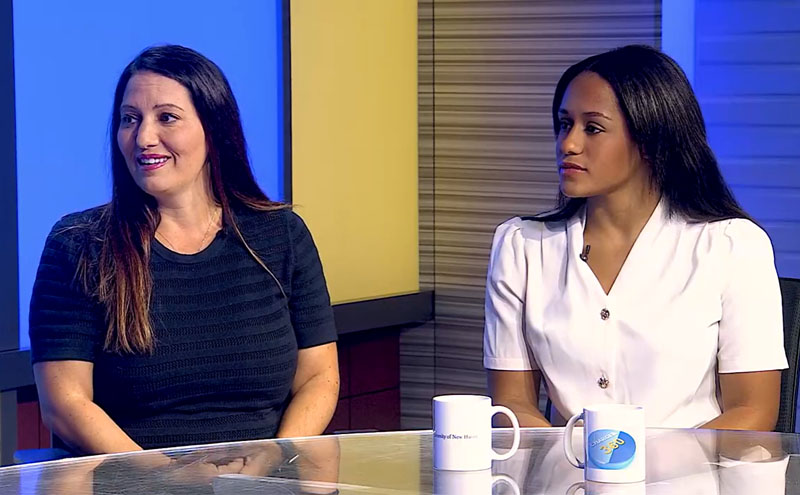
Season 5, Episode 4: Ashley McClain ’07 and Ariana James ’27
In the Media