Mater of Public Health (MPH) candidates presented capstone research focused on community needs and health equity at the New England Rural Health Association Conference.
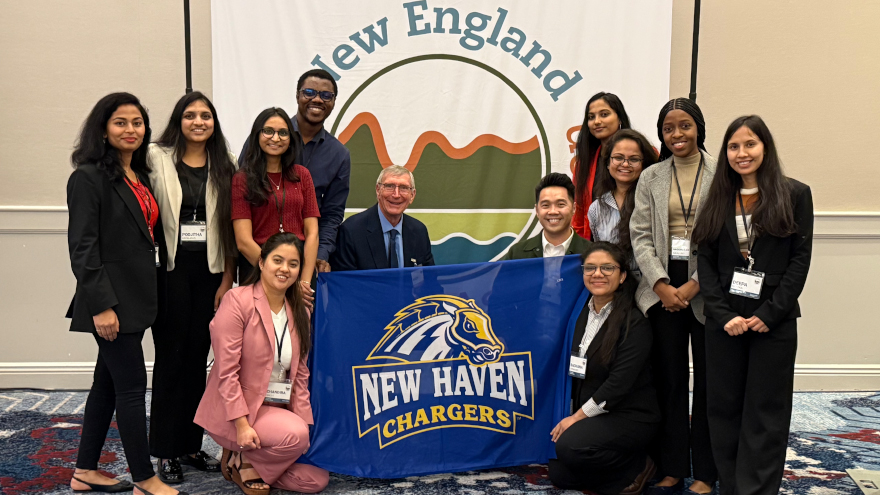
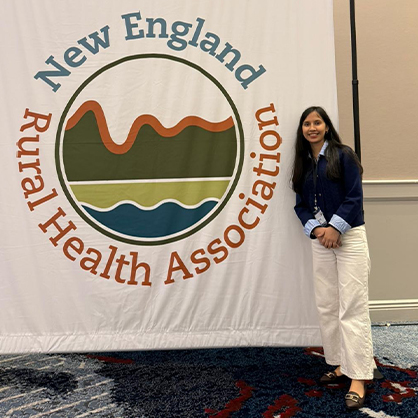
Three Master of Public Health students from the School of Health Sciences represented the University of New Haven and the WeEmbody Lab at the 2025 New England Rural Health Association (NERHA) Fall Conference in Mystic, Connecticut. Their presentations highlighted their community-engaged research in West Haven and demonstrated how these skills can help address health disparities in rural and under-resourced areas across Connecticut.
As part of a public health capstone course, the students conducted their work under the mentorship of Alvin Tran Sc.D., MPH, associate professor of Population Health and Leadership and Director of the We Embody Lab. Dr. Tran oversees an ongoing Community Health Needs Assessment project in partnership with local organizations and guides students through each stage of the research process, including data collection, analysis, community engagement, and presentation of findings. The students’ participation in the NERHA Conference reflects the University’s commitment to experiential learning and Dr. Tran’s dedication to preparing future public health leaders through hands-on, community-focused scholarship.
Community-engaged research plays an essential role in understanding local health priorities, strengthening partnerships, and designing solutions that reflect the lived experiences of residents. Rural communities across Connecticut continue to experience significant challenges including limited access to healthcare services and fewer health-supporting resources. The students’ work showed how listening to residents and assessing local needs can support interventions that improve health outcomes and promote equity.
Below, each student reflects on the experience in their own words.
Contact
Get the highlights!
Stay up to date with our weekly e-newsletter, highlighting stories from around the University and media clips featuring our faculty experts.
Ichchha Shah ’25 MPH
Attending and presenting our project at the New England Rural Health Association Conference was a truly enriching and memorable experience. It was the first conference I attended since arriving in the United States, and being able to represent the University of New Haven and the WE Lab on such a regional platform felt empowering and rewarding.
What drew me to this conference was its holistic approach. It not only addressed general health issues but also highlighted discussions on oral health prevention in rural communities, an area that closely aligns with my future research interests.
One key takeaway for me was the power of community partnerships in bridging healthcare gaps. I was deeply inspired by an initiative where a small island community transformed a boat into a mobile health center, which is a simple yet powerful idea that built trust and made healthcare more accessible. It reminded me that true innovation begins with understanding and meeting the needs of the community.
The conference also gave me the opportunity to connect with healthcare professionals who are actively shaping rural health systems. It was inspiring to learn how emerging technologies are transforming traditional ways of delivering care.
Moving forward, I plan to apply these insights to my community-engagement projects and future research to advance preventive care and health equity for underserved populations. I am deeply grateful to the University of New Haven and the WE Lab for this incredible opportunity to learn, share, and grow.
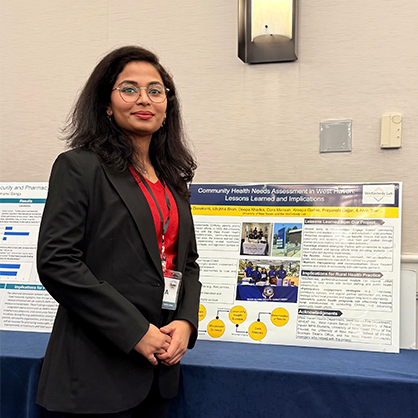
Rachana Donakanti ’26 MPH
As a public health graduate student, I found it interesting to attend the New England Rural Health Association Conference. I was excited to attend this conference when I first found out about it in Dr. Tran's class. Since I grew up in rural areas, I have always had a strong interest in community and rural health promotion and education.
I felt honored to represent the University of New Haven and the WE Lab by presenting my poster, Community Health Needs Assessment in West Haven: Lessons Learned and Implications. I was able to share my knowledge about determining local health priorities and strategies to improve community-based interventions through this project. My confidence increased after the poster presentation, and I was better able to network and interact with public health professionals. Giving a presentation at the conference was a dream come true for me as an international student. I want to express my sincere gratitude to Dr. Tran for his trust, assistance, and guidance during the process.
I learned about applications of telehealth, community health needs, and assessment outcomes, which impact healthcare in rural areas. This increased my interest in exploring the potential applications of artificial intelligence in telehealth to better serve underserved and rural populations.
It not only helped me grow professionally but also motivated me to continue learning and contributing to the advancement of equitable public health innovations. I believe that opportunities like this empower students to build confidence, expand professional networks, and gain valuable insight into the evolving field of public health.
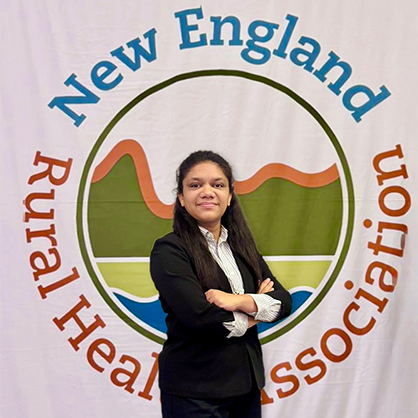
Deepa Khadka ’26 MPH
Attending the New England Rural Health Association Fall Conference in Mystic was such a rewarding and memorable experience as this was my first international conference. I presented my poster, Community Health Needs Assessment in West Haven: Lessons Learned and Implications, which was not only my first ever poster presentation but also my first conference. What motivated me most was my growing interest in rural health and its impact on underserved populations. Representing the University of New Haven and the WE Lab made me feel proud and grateful.
One of my biggest takeaways came from a student breakout session, where I had the chance to interact with so many brilliant and passionate people. It opened my eyes to the importance of collaboration and listening to community voices when addressing health challenges. Many breakout sessions also emphasized that effective public health solutions come from people’s lived experiences and involving them in decision making. These conversations truly deepened my sense of purpose in this field and gave me a deeper appreciation for the human side of public health.
Interacting with public health leaders, students, and advocates pushed me to become more confident in how I communicate my ideas and my role in this work. Hearing others’ experiences gave me meaningful insights into the power of shared conversation for learning and growth. Moving forward, I plan to apply what I have learned by focusing on community-based approaches and engaging more closely with local populations to improve health outcomes. I will focus on what this community needs rather than what I want to give them.
Overall, this conference was an incredible learning experience. It reminded me that I chose public health to learn, to serve, and to help create healthier and equitable communities. This conference has inspired me to keep attending more in the future. I am deeply thankful to my professor and mentor Dr. Alvin Tran for his continuous guidance, encouragement, and support throughout this journey.
Recent News
The Charger Blog
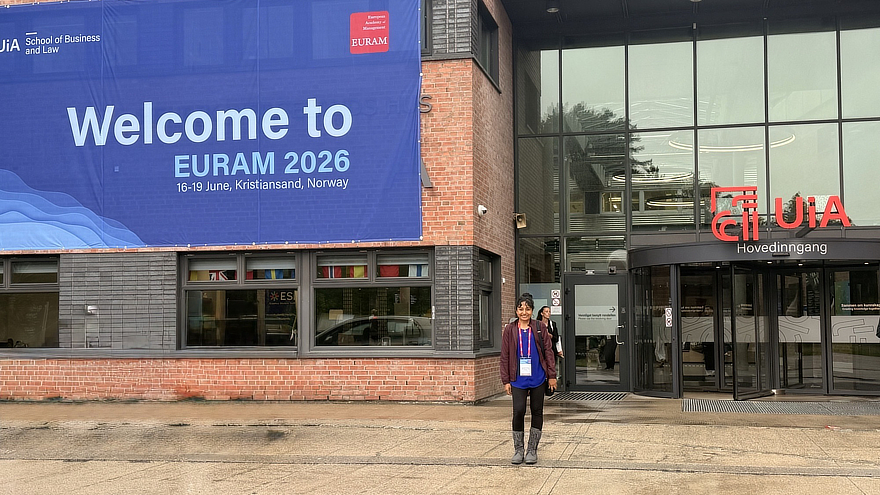
University of New Haven Research Team Presents Digital Transformation Study at Major International Conference
The Charger Blog