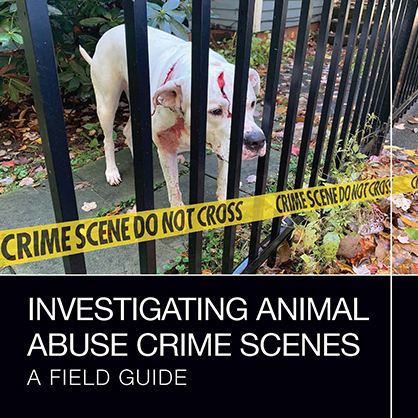
Virginia Maxwell’s new book, Investigating Animal Abuse Crime Scenes: A Field Guide, provides keen insights, information and resources for animal control officers, police officers, forensic scientists, lawyers, and others in the criminal justice system.
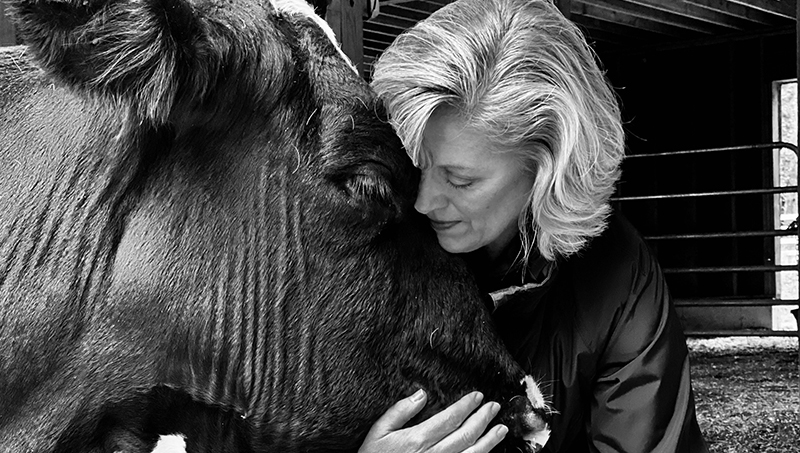
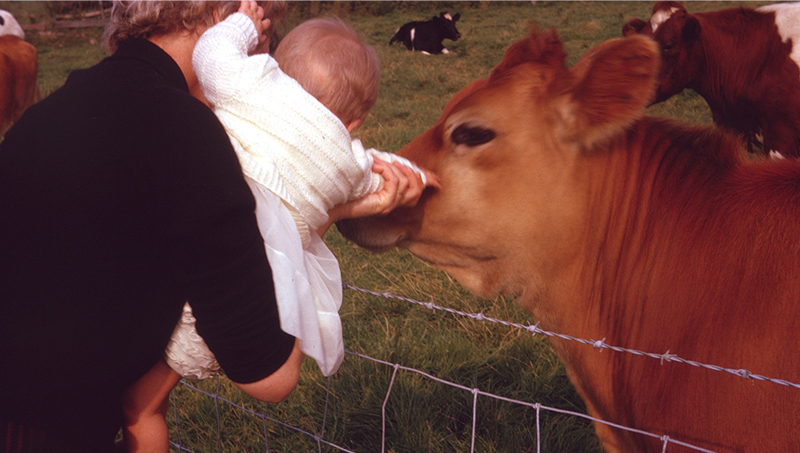
Virginia Maxwell, D.Phil., was just six months old when she met her first Jersey cow. Her grandmother, who owned a farm in England, held her as Virginia looked into the eyes of the very large animal.
So began Dr. Maxwell’s lifelong love of animals. She spent each summer holiday on the farm, learning what it means to care for cows, sheep, and other animals.
She went on to become a steadfast and passionate protector of animals and one of the nation’s foremost experts in forensic investigations into animal cruelty.
Now, she is the co-author of Investigating Animal Abuse Crime Scenes: A Field Guide, one of the first books designed for first responders and those who work on cases involving animal abuse and neglect. The book is already receiving notice, featured in newspapers, on podcasts and in animal-advocacy newsletters.
After working for 15 years at the Connecticut Forensic Science Laboratory, she joined the University faculty in 2007 and later became associate dean in the Henry C. Lee College of Criminal Justice and Forensic Sciences.
“There was a heinous case in Quincy, Massachusetts, the Puppy Doe case, where a puppy was abused and tortured for three months until she managed to escape,” Dr. Maxwell said. The majority of animal cruelty cases are not prosecuted. That one was. The defendant was sentenced to 8 to 10 years in prison, which she said was the longest sentence to date in the country in an animal cruelty case.
‘Define the rest of my career’
As an animal lover, Dr. Maxwell said she was haunted by the sheer brutality of the crime. She had been mulling over returning to a faculty position, where she started her career.
“I wondered what would my research look like?” she said. “Then I thought, I did 15 years at the state crime lab and worked on all the major cases – from quadruple homicides down to vandalism – and I didn’t see a single animal cruelty case come into the lab. Yet there were cases out there.’”
She decided to return to a faculty position, deciding that animal cruelty investigation “was going to define the rest of my career.”
At a 2018 seminar at the UConn School of Law, she met Jessica Rubin, JD, associate dean for experiential education and clinical professor of law, and they developed “a formal collaboration between the two institutions to train animal control officers on how to work on animal abuse cases.”
At that same conference, Dr. Maxwell met Martha Smith-Blackmore, an internationally known Massachusetts-based veterinarian, animal advocate, and an expert in veterinary forensics. They became friends and later each talked about how the Puppy Doe case had heightened their desire to write a book.
So, they decided to write one together.
“I hope that it will help police departments, lawyers and others investigating to understand the difference between human and animal cases,” she said. “An animal is considered a piece of evidence not a victim. If it is injured, it must be sheltered and cared for. And we have cases in the animal world with 100, 200, or as many 500 animals involved – in hoarding, animal fighting, or puppy mills cases.”
‘This book can be the foundation’
Daniel Ettinger, an animal control lieutenant, an expert witness in animal cruelty cases, and a podcast host and producer based in California, said the book will play a vital role in moving the field forward.
“This book can be the foundation of not only how to investigate but it can also assist animal control departments to create policies based on the outline this book provides,” he said. “I wish I could buy enough copies to deliver this book to everyone who investigates crimes against animals. Having the expertise in crime scenes from Dr. Maxwell and the veterinary forensic background from Dr. Smith-Blackmore is invaluable.”
The book has far-reaching implications because of the link between animal abuse and human violence. One study by the Humane Society of the U.S. found that pet abuse had occurred in 88 percent of the families under investigation for suspected child abuse. In many states, including Connecticut, animal control offices and the Department of Children and Families (DCF) cross report – so if an animal is being abused and there are children in the house, DCF is alerted. Dr. Maxwell added that harming animals is a strong indicator for many violent crimes.
She is already at work on a second book – for the general public so people can readily recognize animal abuse and neglect and have resources to know how to report it – that will be published by Bloomsbury Publishing.
At the same time, Dr. Maxwell directs the University’s Animal Cruelty Investigation graduate certificate program and teaches an undergraduate/graduate course on the subject that fills to capacity each semester. The course offers an array of hands-on experiences including visiting the JP Farm Animal Sanctuary in Litchfield and also learning how to recognize what dog fighting operations look like so they can search for them around the country using Google Earth.
‘Humans must be their voice to protect them.’
Connor Swanson '24 who is pursuing a bachelor’s degree in forensic science, was drawn to the course about investigating animal cruelty because he’d taken forensic science courses with Dr. Maxwell. “I was familiar with how knowledgeable she is about forensics in general and with her passion for animals,” he said.
He was especially moved when the class discussed non-accidental injuries to animals. “Dr. Maxwell had been telling us for weeks that this would be the hardest unit to cover, due to the graphic nature of the stories and images that were included,” he said. One particular image of a dog that had been harmed made him think about the kind of forensic work he eventually wants to do.
“Animals have no voice or really any control over what happens to them so humans must be their voice to protect them,” said Swanson, who plans to pursue a master’s degree in cellular and molecular biology. “Maybe in the future I can help prevent monsters like that from hurting animals through the use of forensics and help push for harsher punishments and more legislation regarding these types of crimes.”
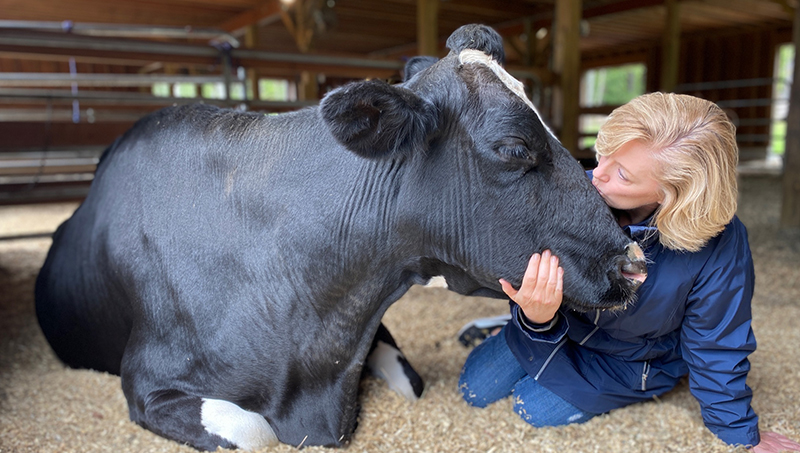
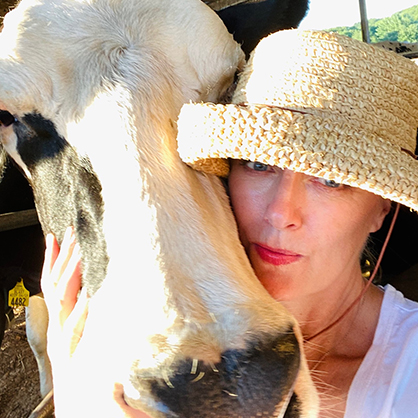
All of this work is very close to Dr. Maxwell’s heart. As it happens, she and her family live in a house in Connecticut next door to a dairy farm. Each day she does what she did as a child, walking with her dog along the farm’s fields. She knows each of the cows by name and by their distinct personalities. They, in turn, recognize the sound of her voice, she said.
“Animals are living, breathing souls and sentient beings,” she said. “Whether they are household pets or farmed animals who provide milk or meat or eggs, I think we owe them a good life.”
Contact
Get the highlights!
Stay up to date with our weekly e-newsletter, highlighting stories from around the University and media clips featuring our faculty experts.
Recent News
Charger 360
Season 5, Episode 4: Ashley McClain ’07 and Ariana James ’27
In the Media