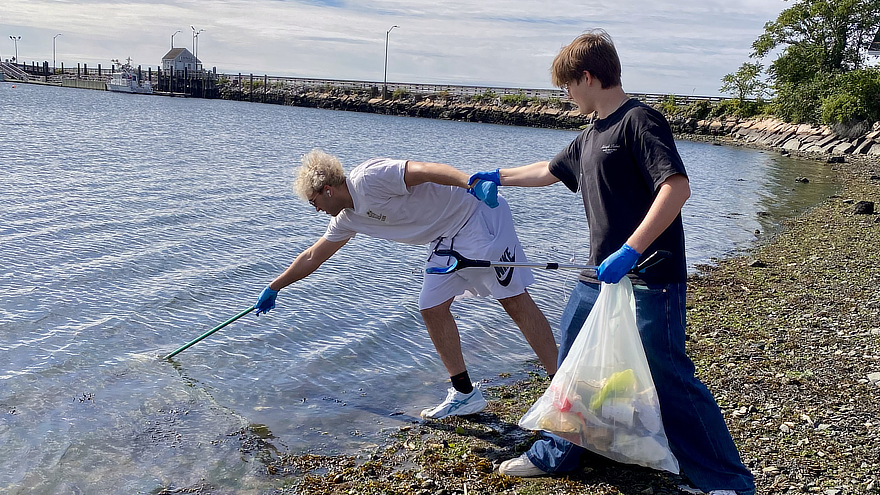
As part of its many green initiatives, the University is committed to composting, and it is now using food scraps to feed crayfish that are used in research.
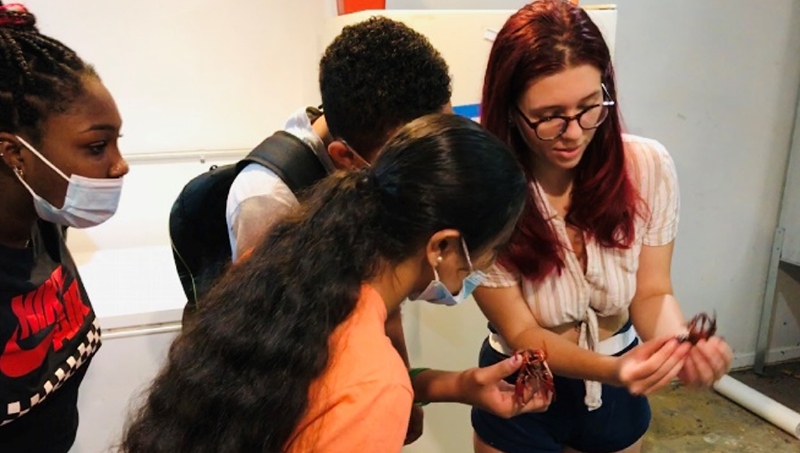
In the spring of 2021, Sophia Gambale ’22 reached out me to see if she could use food scraps from the campus dining halls’ composting waste stream to feed the crayfish that were being used for research. After visiting the dining facilities and coordinating logistics, weekly collections of composted material were set up and the feeding began.
Sophia is a part of the University’s Center for Wildlife Forensic Research, a group that endeavors to improve wildlife forensic science and reveal ecological information important to the conservation of wildlife and the natural environment.
Over the summer, Sophia conducted research as part of the University’s Summer Undergraduate Research Fellowship (SURF) program, studying how crayfish behavior varied when they were exposed to different levels of a synthetic estrogen compound that is commonly used in birth control pills. This compound is subsequently released into the environment, since water treatment processes do not filter out this hormonal chemical.
“The effects of different pharmaceutical personal care products in aquatic ecosystems are only recently coming to light, and their effects on different organisms that fill important ecological roles in these ecosystems are now being studied more and more across different species,” explains Sophia, a forensic science major with a minor in environmental science, when asked why she feels so passionately about her research. “It's important to understand the implications of the presence of these pollutants in the environment and how they affect the natural behaviors of organisms and, therefore, affect the balance of the natural ecosystem.”
‘A fuel to generate electricity’
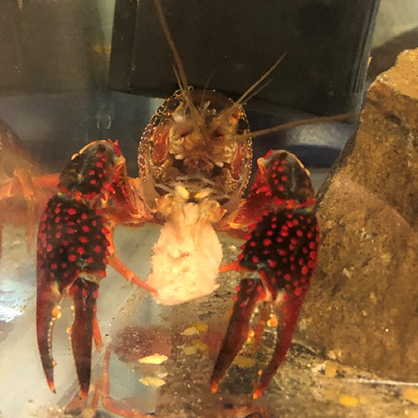
Providing the crayfish with a variety of foods from the dining hall waste stream, Sophia says, also encourages natural behaviors in the scavengers to select and eat the different types of food they prefer. In the wild, crayfish would encounter many different food sources, as opposed to just one type of food that might be used in a controlled environment such as a research lab.
“Using food scraps to feed the crayfish not only provides a higher quality of life for the research animals, but it also mitigates the need for fresh food products that would otherwise have to be obtained,” she says. “It also makes immediate use of otherwise unwanted waste material.”
The University of New Haven started composting in the fall of 2019, and we expanded our composting initiatives to all dining locations in early 2020. Composting is currently carried out by Sodexo staff, who add food scraps generated during meal preparation to separate composting totes located within the kitchen.
By composting, the University is able to reduce the amount of food waste that would typically add to the weight of our general trash output, which, in Connecticut, is sent out as waste to energy facilities, where it is burned.
Instead, the campus’s food waste is collected by Blue Earth Composting of Wallingford, Conn., and transported to Quantum Biopower, an anaerobic digestion facility in Southington, Conn. At this facility, the food waste is broken down and, in the absence of oxygen, leads to the creation of biogas, which can be used as a fuel to generate electricity.
I applaud Sophia for her work and her commitment to helping to protect the environment.
Contact
Get the highlights!
Stay up to date with our weekly e-newsletter, highlighting stories from around the University and media clips featuring our faculty experts.
Recent News
The Charger Blog
University of New Haven Research Team Presents Digital Transformation Study at Major International Conference
The Charger Blog