Because of the global coronavirus pandemic, my family and Muslims around the world are now changing the way we are celebrating the holy month of Ramadan, a time that focuses on gratitude, blessings, and ethical behavior.
Ramadan is the ninth month of the Muslim calendar and it is the holy month in Islam. It starts and ends with the appearance of the new moon. It is also one of the five pillars of Islam.
Out of empathy for the hungry and the poor, Muslims fast for the month of Ramadan (this year April 23 to May 23) in order to experience what it is like to feel vulnerable in society. Paying attention to hunger and thirst makes you aware of those who do not get to break their fast because they are hungry all the time. It makes us grateful for what we have.
During Ramadan, 1.8 billion Muslims around the world refrain from consuming food and drink, as well as smoking and sexual activity, between dawn and sunset. Ramadan is also considered the month of spirituality, which reminds Muslims to stress ethical and benevolent behavior.
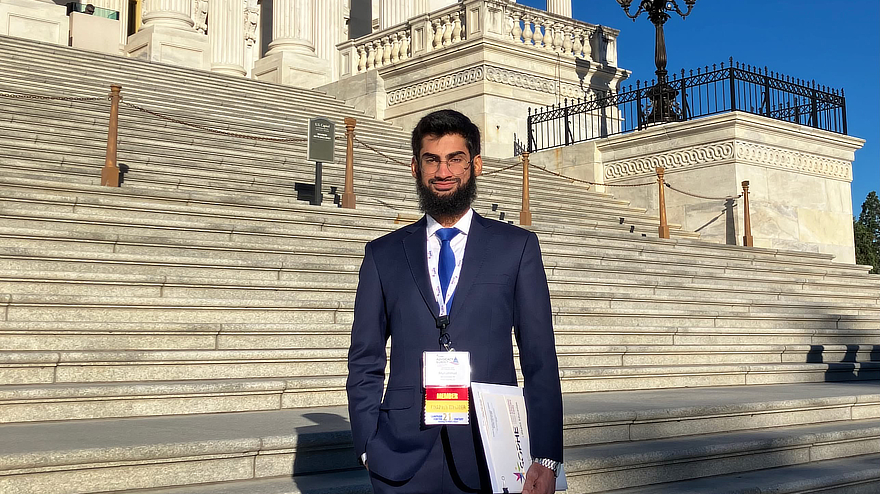
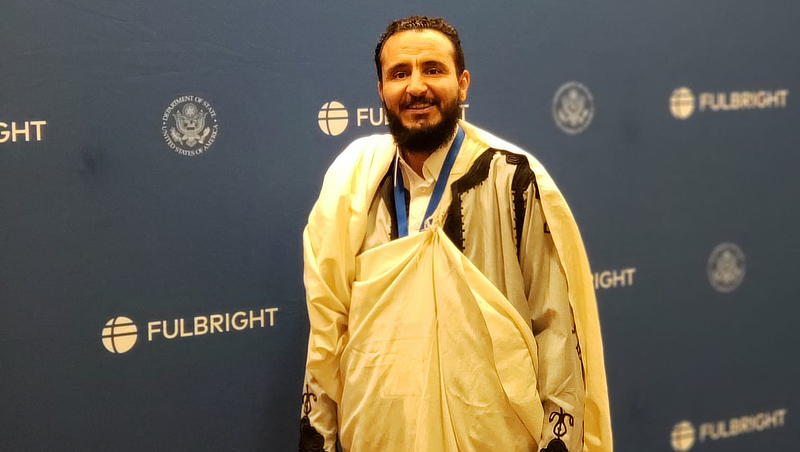
"It is a month of blessings, forgiveness, and gratitude, as well as fostering ethical spiritual behavior."Abdurrahman Karim ’22 MBA
Research has suggested that observing Ramadan has myriad health benefits, including autophagy, which helps the body restructure itself. Restricting food intake during the day can also help combat health problems such as high cholesterol, heart disease, and obesity.
After the sunset prayer, Muslims typically gather in their homes or mosques to break their fast with a meal called "Iftar," often sharing it with friends and extended family. Iftar usually begins with dates and water or milk, as was the custom of the Prophet Muhammad (Peace be upon him). Children, pregnant women, the elderly, sick, and travelers do not fast.
This year, Ramadan is different because of the pandemic. Many Islamic countries have closed mosques and are preventing people from gathering to control the spread of COVID-19. Muslims used to gather to pray together and share food, but this year, we are praying at our homes with our families.
At the end of Ramadan, Muslims celebrate Eid-al-Fitr, the "Feast of Fast Breaking." It is a month of blessings, forgiveness, and gratitude, as well as fostering ethical spiritual behavior.
Help University of New Haven Students Charge Ahead
We've launched the Charge Ahead Student Support Fund in an effort to raise financial assistance for our students for such necessities as remote learning technology, food, housing, medical expenses, and other emergency needs. Please click here to make a contribution that will assist those in our University community who need our support.
Contact
Get the highlights!
Stay up to date with our weekly e-newsletter, highlighting stories from around the University and media clips featuring our faculty experts.
Recent News
Charger 360

Season 5, Episode 4: Ashley McClain ’07 and Ariana James ’27
In the Media