Professor Karl Minges and his public health students are studying the coronavirus pandemic in real time, and he’s finding innovative ways to keep students connected during this time of online learning and social distancing.
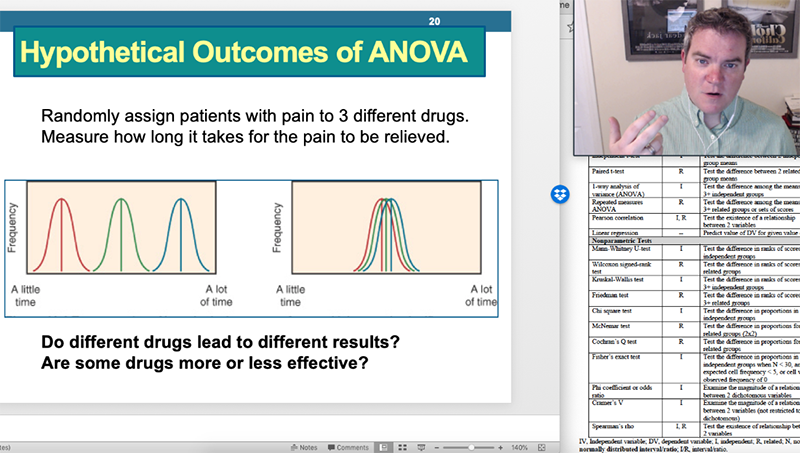
As Karl Minges, Ph.D., MPH, began moving his courses online in response to COVID-19, he started reflecting on the strong sense of camaraderie among his students and colleagues.
"The community at the University of New Haven is strong, tight-knit, and active," says Dr. Minges, assistant professor and chair of the Department of Health Administration and Policy and director of the Master of Public Health program. "The loss of not being part of that community in a physical sense is palpable. However, with a bit of creativity, there are solutions."
He immediately set to work creating them.
He chose to teach his Statistics in Healthcare Administration graduate courses in a synchronous format using Zoom technology so students can continue to meet at the same time they did when they were on campus. Using the whiteboard tablet in his home office ensures students can interact directly with him and each other.
He’s shifted the focus of some of his content so students can use this moment in time to look closely at the impact of public health workers and at the world’s response to a pandemic.
"I intend to use COVID-19 as a frequent example to illustrate course concepts to students."Karl Minges, Ph.D., MPH
"Public health is on display at an international level and grabbing headlines each and every day," he says. "From epidemiologists tracking the spread of COVID-19 to the incredible healthcare workers who are on the front lines treating patients, there is a general awareness of the importance of public health to promote health, prevent disease, and improve the safety of communities. In my online classroom, I intend to use COVID-19 as a frequent example to illustrate course concepts to students."
Dr. Minges is communicating frequently with students and sharing news articles on public health at work in response to the pandemic. He also plans to engage students in a research study focused on the COVID-19 response, and he is developing that study now.
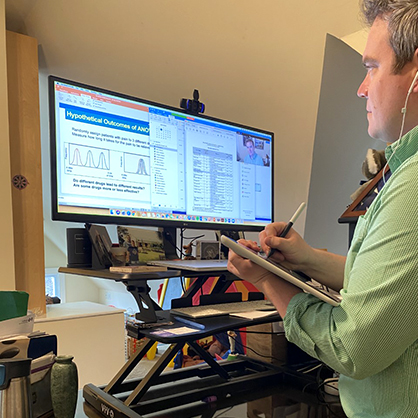
He and other faculty members in the Department of Health Administration and Policy are making sure faculty-student advising is still face-to-face – just via Zoom, instead of in a faculty office. "Being sure the video function is turned on is the best way to mimic in-person communication," he says.
Jordan Schweidenback ’21 MHA says he was struck by how quickly and how well the University moved to create the online experience, and he’s especially grateful to have the opportunity to study with Dr. Minges.
"His direct involvement, expertise in the field, and ability to educate students in real time using COVID-19 examples, correlating key concepts from class, is a gift to me as a student," Schweidenback says. "The knowledge and insight we gain from Dr. Minges will be paramount in our future as emerging healthcare and public health leaders as we learn from this culturally significant moment for our country and the global community."
Schweidenback himself is on the frontlines as a radiologic technologist performing CT scans and nuclear medicine studies, and his wife works in a critical care unit. "We are at high risk, giving everything and sacrificing what most are holding most dear," he says. "To help mitigate our risk toward each other, we are distancing ourselves substantially. I cannot wait to hug my wife again."
"It’s not easy completing lectures and coursework around my essential commitment in the healthcare workforce," he says. "But the University and faculty are compassionate in their understanding."
"The knowledge and insight we gain from Dr. Minges will be paramount in our future as emerging healthcare and public health leaders."Jordan Schweidenback ’21 MHA
The faculty and his fellow students help keep him moving forward. "My peers and I have created a large group chat called ‘Administrators in the Making,’" he says. "We share updates, articles, videos, and positive and encouraging thoughts to further cultivate and maintain the great sense of community here at the University and in the School of Health Sciences."
Dr. Minges encourages all of his students to find similarly innovative ways to deal with the challenges posed by this new school/work/life reality, and he is as well.
"It has never been my preference to teach statistics online, and it is, frankly, something that is brand new to me," he says. "However, as a lifelong learner, I am excited to learn about pedagogical approaches to effectively engage students in online materials.
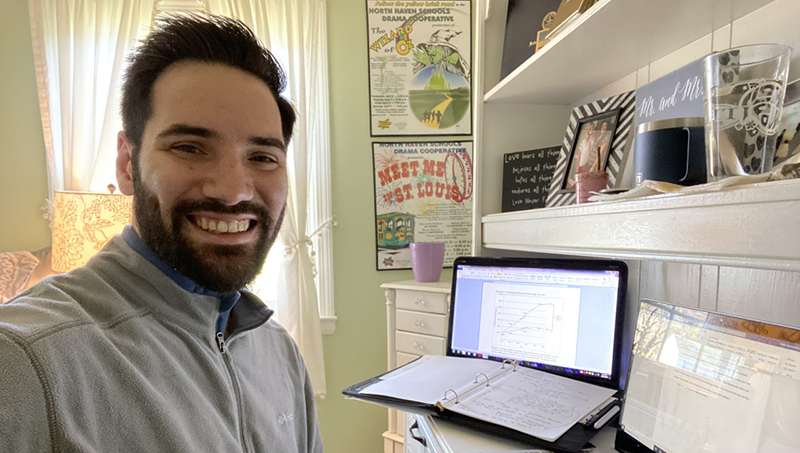
"Regarding other challenges: I have two very young children at home, so ‘shift work’ will become part of the norm of our household until pre-school and daycare, libraries and museums, and playgrounds reopen," he adds.
He’s also tending to his own health, and urging others to do the same. Dr. Minges, who is director-at-large of the Connecticut Public Health Association, coordinates the organization’s "Step Challenge," and he has invited a group of School of Health Sciences students, faculty, and staff to join him on "Team SHS." The "Step Challenge" will conclude at the end of National Public Health Week on April 12.
"While being mindful of social distancing, exercise is one of the best ways to improve our physical and mental health in these challenging and, sometimes, sedentary times," he says. "We just completed our third week of the Step Challenge, and our 15 participants of ‘Team SHS’ have logged almost three million steps so far. If we are mindful of our health and the health of others, we will get through this together."
Help University of New Haven Students Charge Ahead
We've launched the Charge Ahead Student Support Fund in an effort to raise financial assistance for our students for such necessities as remote learning technology, food, housing, medical expenses, and other emergency needs. Please click here to make a contribution that will assist those in our University community who need our support.
Contact
Get the highlights!
Stay up to date with our weekly e-newsletter, highlighting stories from around the University and media clips featuring our faculty experts.
Recent News
Charger 360
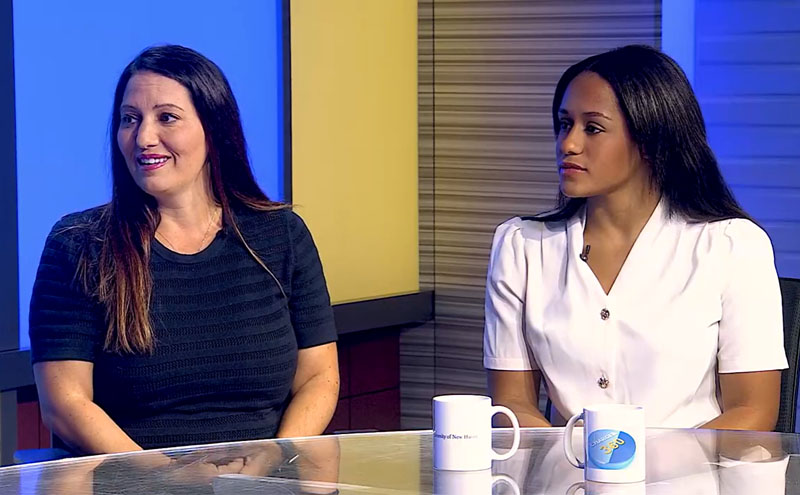
Season 5, Episode 4: Ashley McClain ’07 and Ariana James ’27
In the Media