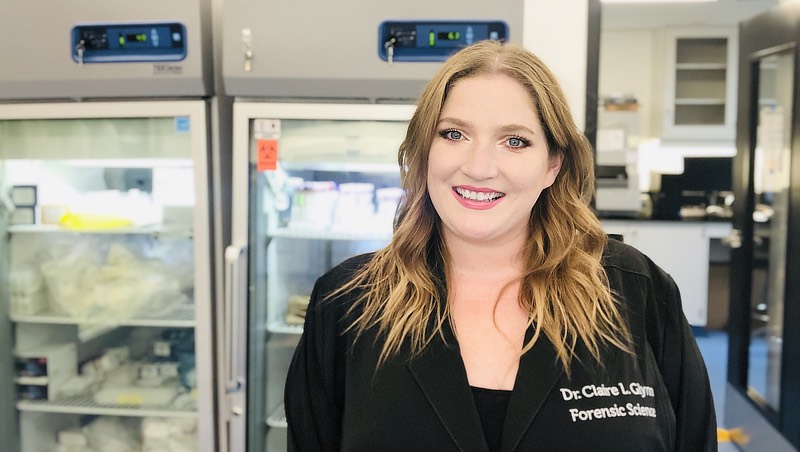
Claire Glynn, Ph.D., is passionate about forensic genetic genealogy, an exciting and fast-growing area of forensic science that has helped investigators solve a variety of crimes, including identifying the Golden State Killer.
When Julia Dollen ’22 M.S. listened to an audiobook about the Golden State Killer investigation, she learned about the integral role that genetic genealogy played in helping investigators identify the perpetrator, as well as the promise it had in helping to solve other cases.
Now a candidate in the University’s graduate program in forensic science, Dollen is exploring forensic genetic genealogy as part of her thesis. An Iowa native, she was excited to deepen her studies and her research at the University.
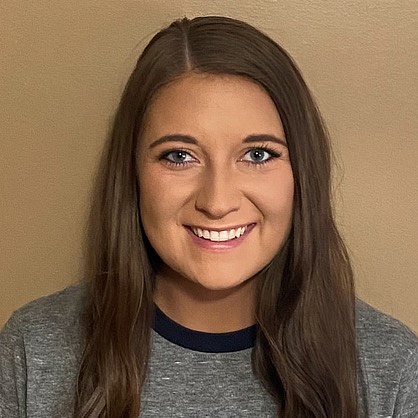
“The University’s forensic science program has a great reputation,” she said. “Even the DNA analyst at the state crime lab in Iowa received her master's degree in forensic science from the University.”
Dollen is now learning from and conducting research with experts, including Claire Glynn, Ph.D., an associate professor of forensic science whose research interests include body-fluid identification, DNA analysis, and RNA analysis. Dr. Glynn has created a new online graduate certificate in forensic genetic genealogy at the University, a four-course, 12-credit program that will begin in the spring of 2021.
"The field of forensic genetic genealogy is rapidly evolving and has become an extremely powerful investigatory tool,” said Dr. Glynn. “It has been used to solve some of the world's most challenging cold cases, some of which may never have been solved without it.”
‘The first university program of its kind in the world’
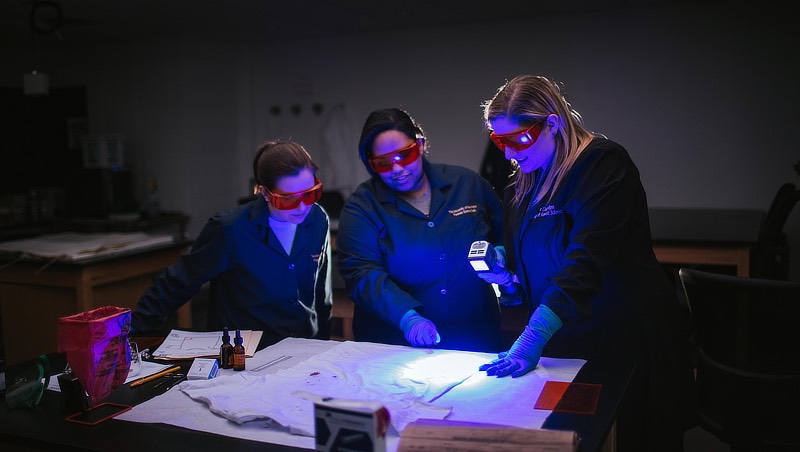
One of the fastest growing areas of forensic science, forensic genetic genealogy gained international attention when it led to the identification of Joseph James DeAngelo, Jr. as the Golden State Killer after a decades-long investigation. He committed at least 13 murders, 50 rapes, and 120 burglaries in California and was recently sentenced to life in prison.
Forensic genetic genealogy has been used in a variety of investigations, including identifying unknown remains, recovering abandoned babies, and solving cold cases. It uses results from genetic testing sites, such as 23andMe, to search for genetic relatives in databases. Investigators upload an unknown perpetrator’s DNA that was left behind at a crime scene to a public genetic genealogy database to identify genetic relatives. When they find a match, they can create that relative’s family tree using information such as census records, then use the family tree to identify who the DNA from the crime scene belongs to.
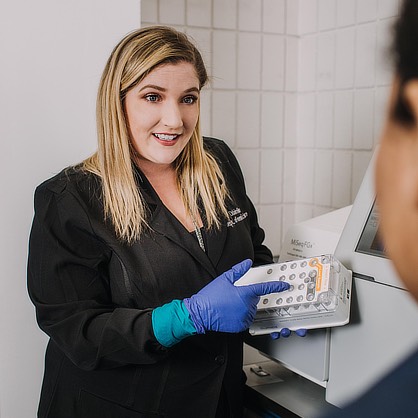
Dr. Glynn hopes the new graduate certificate in forensic genetic genealogy will enable students to understand the methods used, as well as their strengths and limitations. It will teach students about the processes used, including the fundamentals of forensic biology, genetic genealogy, and documentary evidence.
"This new online graduate certificate in forensic genetic genealogy is the first university program of its kind in the world,” said Dr. Glynn, who also hopes to establish a Center for Forensic Genetic Genealogy at the University, which would build a collaborative framework between academics, industry professionals, and law enforcement agencies from around the world. “As more agencies begin to use this new tool, it is crucial that anyone who utilizes genetic genealogy in forensic investigations has the required knowledge and training. It is a scientific process, in both the genetic testing and the traditional genealogy methods, to build family trees."
‘There is so much more that can be explored’
Last May, Dr. Glynn and two of her students, including Rachel Graziano ’20, conducted a survey investigating the public’s opinion of the use of genetic genealogy in forensic investigations. She recently presented the results as part of the Northeastern Association of Forensic Scientists annual meeting, and she is preparing the results for submission to a scholarly journal with the students as coauthors.
Graziano, who recently earned degrees in forensic science and biology, became interested in genetics while a student at the University. She says collaborating with Dr. Glynn on the research was fascinating, and she learned that many people who use popular genetic databases do not fully understand the privacy settings.
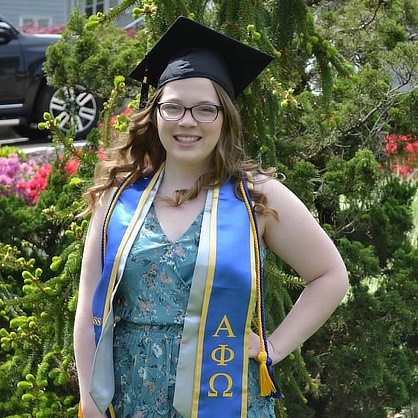
"We found that the public was in favor of allowing law enforcement to use public genetic databases in their investigations, but they were more apprehensive about it if it was to be done covertly and without giving their consent,” said Graziano, who is now pursuing her master’s degree in genetic counselling at Bay Path University. “I think this sheds light on how many people do not fully understand how useful their data could be in a forensic investigation. Overall, it was very interesting research, and there is so much more that can be explored with our data and in future surveys investigating law enforcement’s use of genetic databases.”
Dollen, one of Dr. Glynn’s graduate students, is focusing her thesis on another area in which forensic genetic genealogy promises to make an impact. As part of her research, she is collecting and degrading sexual samples, then identifying who the samples came from using forensic genetic genealogy. She is excited about the opportunities in forensic genetic genealogy, as well as its potential to make an impact in future cases and help investigators solve crimes of sexual assault.
“I would love for my research to be a gateway for future forensic methods, especially when dealing with cases in which a DNA profile may be difficult to obtain because the sample is degraded,” she said. “It would be wonderful if my research were to be a starting point for old sexual assault cases to finally be solved.”
Contact
Get the highlights!
Stay up to date with our weekly e-newsletter, highlighting stories from around the University and media clips featuring our faculty experts.
Recent News
Charger 360
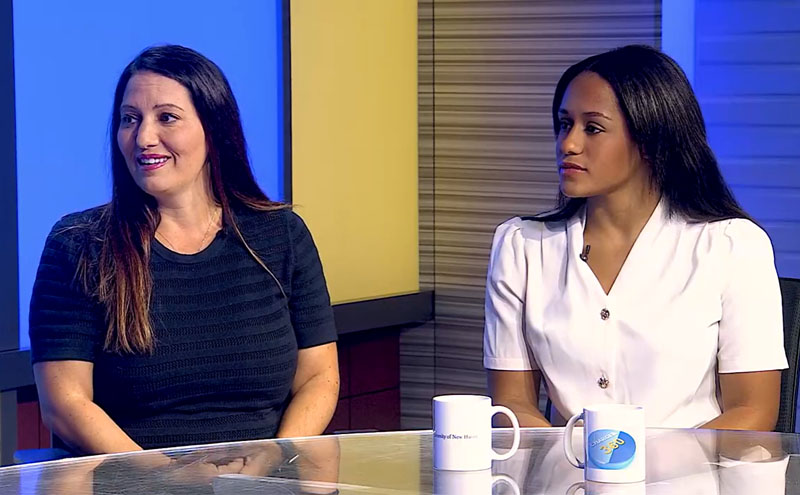
Season 5, Episode 4: Ashley McClain ’07 and Ariana James ’27
In the Media