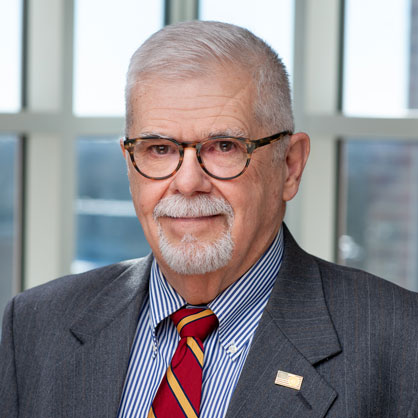
Entrepreneur David Sussman, Pompea College of Business Advisory Board Member and chief visionary officer of The Family Security Plan®, is collaborating with University of New Haven students, faculty, and staff to create a program and app that helps Chargers support each other to achieve academic, personal, and professional goals. It’s called Uccountability.
When people ask David J. Sussman, Esq, chief visionary officer of The Family Security Plan®, an Orange-based insurance business, and a highly successful career and life coach, how he achieves all he does in a day, or in a year, he smiles.
He smiles because while he has created Uccountability – an immersive program where a person focuses on specific goals they care deeply about and works with a partner or a small group to keep them accountable and help turn those goals into realities – there have been, “so many times in my life where I’ve been unaccountable.”
Whether talking to University of New Haven sophomores during last year’s inaugural Charge Back program or any number of speaking engagements, Sussman is nothing if not brutally honest about those times. “I’ve got lots of examples,” he said.
There was that time when he was a new student at the Hotchkiss School. Coming in as a junior, he was a great hooper. When the two senior basketball team captains were kicked out of school, he found himself taking their place. He was the MVP, received all kinds of accolades, and, “I was on top of the world,” he said. But, at the end of the year when the team voted for next year’s captain, he wasn’t chosen.
For years, that rejection stung. Over time, he took a long hard look at himself and realized, “I wasn’t doing all I needed to be doing to be the leader I needed to be.”
Contact
Get the highlights!
Stay up to date with our weekly enewsletter, highlighting stories from around the University and media clips featuring our faculty experts.
‘That’s my sweet spot – thinking differently’
He points to another big moment in his life – years later – when he was driving with his wife Lauren through Westport with their three kids, who were involved in sports and dance. Ping-ponging from practice to dance and back each weekend, Sussman said he found himself unengaged and annoyed because, “our weekends got hijacked. I was resentful that I’d lost this time.” One day he was riding in the family’s minivan with his wife, and she called him on it. “Why are you being a jerk?” she asked him.
“I realized, ‘wait a second, I need to flip this around,’” he said. “If I want to have time, I need to create a new time slot. I need to be there for my kids and enjoy this time. From that point on, I was a totally different guy, and my relationship with these now adults is really special. It started in that moment.”
Finding time for himself meant thinking creatively, which was something he’s had to do since he started his career as a second-generation member of his family’s insurance business. There were already established leaders and ways of doing things, so he had to think about what he could bring to the company. “That’s my sweet spot – thinking differently,” he said.
He took on projects others didn’t want to do or didn’t believe in. The company ran its sales face to face, so he took on building the phone sales group. Over time he wanted to merge face-to-face and phone sales, establishing a hybrid sales agent model. “It took eight or nine years to develop the concept,” he said.
“Fast forward to Covid, and on March 13, a Friday, we closed down our face-to-face operation and transitioned to 100% phone sales overnight,” he said. If we hadn’t already built the infrastructure of the hybrid sales agent, we would have gone out of business.”
‘My father built our business; my mother built her son’
Over the years, in addition to becoming the firm’s chief visionary officer, he has branched out into professional and personal coaching.
He’s developed a process called “Uccountability,” an approach where people identify specific goals that really matter to them and what they wish to achieve. “It starts with you and then you pull someone in to act as your accountability partner,” he said.
His clients would text him each day updating him on their goals, and he’d offer guidance. Over time, he said, the clients saw remarkable changes. “They were being held accountable to small actions that really mattered,” he said. “It wasn’t about perfection; it was about consistency.”
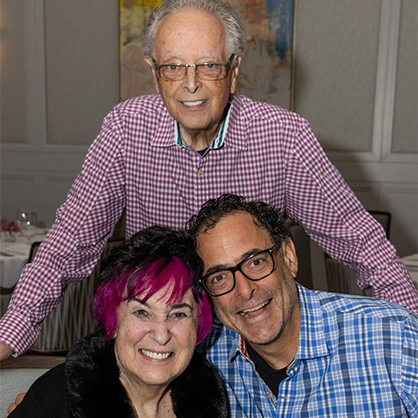
A member of the Pompea College Business Advisory Board, he got involved with the University of New Haven because of his mother Janice Sussman '83 EMBA. “I tip my hat to my mother,” he said. “My father built their business; my mother built their son. She’s always been a guide who inspired me, kept me together and pushed me forward.”
A former member of the University’s Board of Governors, Janice held executive positions at several Connecticut corporations and was a 2010 recipient of the University’s Distinguished Alumni Award. “She loves the University, and she worked closely with former University President Steve Kaplan,” he said. When David was invited to join the Pompea College of Business Advisory Board, he jumped at the chance.
“Our company is around the corner in Orange, and the community that our company serves aligns with the community attending the University,” said David. “We serve working-class families. When I think about the University, I think about first-generation college students and about families that push hard so their children can have an education, people who work hard and value things that matter.”
‘That small change...’
As his coaching consultancy grew, he began to wonder how he could further its reach. He thought about how it could help college students.
That chance came about after he had a conversation with University President Jens Frederiksen, Ph.D., who was immediately taken by the program. President Frederiksen put Sussman in touch with a team of University faculty and staff and Katelyn Beach '25, '26 MBA, who became the program’s intern. Uccountability at the University began to take shape.
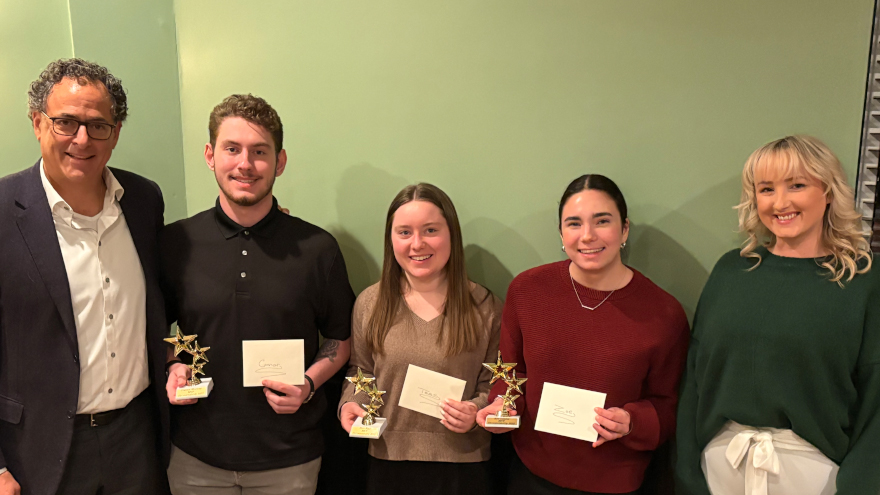
The fall semester cohort included Sussman, Beach and eight students who chose to take part, as well as– Ashley Dunn, associate dean of students; Sheila Y. Smith, MBA, executive director of initiatives for University community, inclusion & belonging; and Anne M. Whitman, associate vice president for development.
They created small pods, and each member of the cohort focused on their goals, such as finding ways to finish assignments earlier in the week, sleeping and waking strategies, being more focused when reading, practicing positive self care, or meeting nutrition and fitness goals.
Each day, they checked boxes on how well they did with each goal, and then they checked in with their pod, texting a short reflection on how they felt. Often, they’d ask for help on a specific goal, inquiring what was a step they could take to get there?
“One participant wanted to be in touch with her parents more often, and someone in the pod said 'there’s still time in the day for it – how about a quick call to say goodnight?’” Sussman said, indicating that small change helped that participant feel reconnected to home.
‘If you want to feel good about the future, connect to the students at the University of New Haven’
The students reported that the process not only had a positive impact on their goals and on their mental health as well. “The Uccountability program brought people together, created momentum, built trust and encouraged people to keep going,” he said. Students also reported more resilience in dealing with the ups and downs that happen across a semester.
Sussman said Uccountability will help students stand out in job interviews because they can say they can get things done, and they can also share their process. “I’ve conducted hundreds of interviews in my career and this skill would catch my attention. I want people in my company who get things done and can show me how they did it.”
He and Pompea College Dean Brian Kench, Ph.D., discussed ways more students could eventually take part.
In February, Sussman and the initial cohort members will host a luncheon for student leaders from across the campus to encourage them to become part of the spring cohort of a web-based Uccountability Program. Later that day, they will hold a University-wide panel discussion where the participants will discuss the impact the program has had on their lives.
Throughout this semester, Sussman and the students will tweak and adjust the program and develop an app they hope to have available for campus-wide use in the fall of 2026. Sussman, Beach, and others on the team are also developing a Uccountability course for credit.
Sussman said he was so impressed by the students in last semester’s cohort. “If you want to feel good about the future, connect to the students at the University of New Haven,” he said. “They are committed, hardworking and have a willingness to go above and beyond. They are incredible.
“All the work I’ve done in my career so far has led me to this opportunity,” he continued. “I can take all I’ve learned and apply those lessons to help others.”
Recent News
University News
Fall Undergraduate Open House - University of New Haven
In the Media