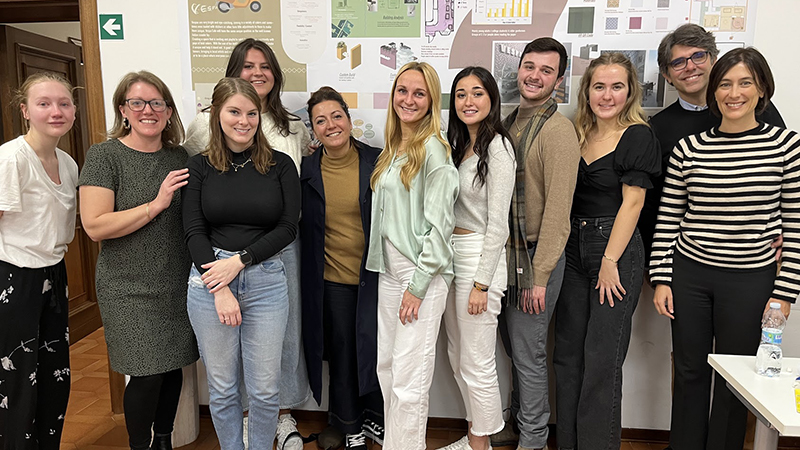
As part of a class assignment, interior design students studying abroad in Italy designed a café that would bring together what they’ve learned in the classroom and what they’ve experienced while exploring a new country and a new culture.
This semester, Sophia Caldas ’23 and her classmates worked together to design a café as part of a class assignment. Their classroom? A café in Italy.
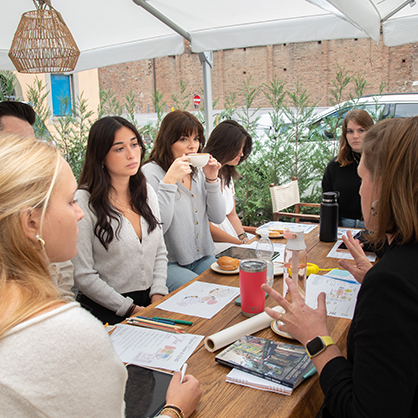
As they sipped coffee at a bottega in Tuscany, the students discussed everything from the plants that would decorate their hypothetical café to COVID protocols. They were just a short walk from the University’s campus in Prato, Italy, where they spent much of the fall semester.
Caldas, an interior design major who is interested in the hospitality industry, says being able to complete the café design project in Italy was a “great experience.
“It’s an opportunity most people don’t have,” she explained. “We’re immersed in a new culture, and we see how historic it is. We’re not just seeing it in textbooks. Here, we see the truest form of design and how it evolved, and we experienced it in Italy.”
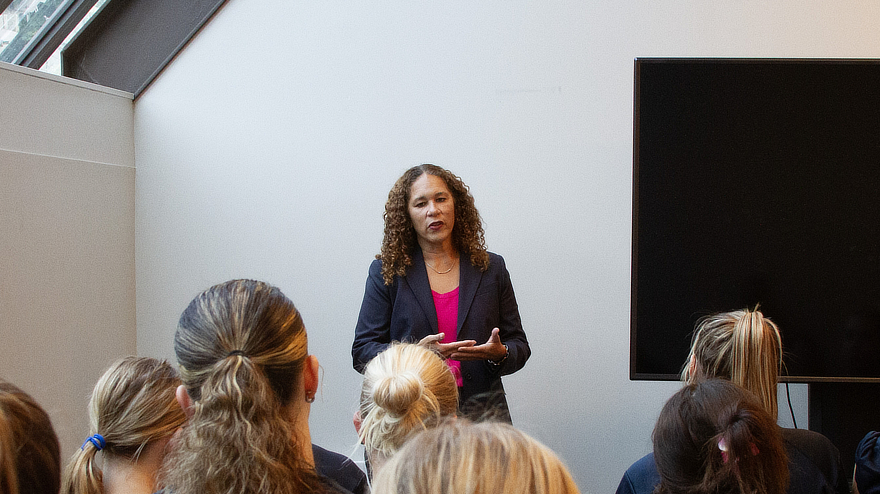
“Design Studio Italy” is an immersive and hands-on course taught by Jamie Slenker, M.F.A.; It focuses on design and community post-COVID. Students researched café designs and explored how physical space can impact one’s experience. Prof. Slenker encouraged them to consider the location of the café’s windows and where students could “open up the space,” and she connected their discussion to theories they’d covered in class.
“We talk a lot about third-place theory, which deals with place attachment and truly understanding the user’s experience, the culture of the place, and the context of the location,” said Prof. Slenker. “Students were able to immerse themselves in Italian culture and design a café for that culture that reinvigorates community building post-COVID. It links all their coursework that they’re doing together.”
‘Make the space embrace that culture’
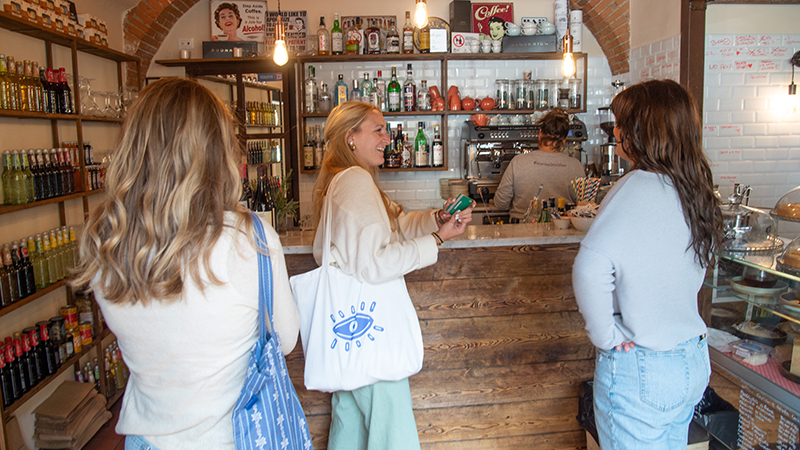
Because students were designing a café for Prato, they learned how they would create a café that would thrive in a city and country far from home. They researched local, regional, and federal codes, finding a document of local codes on their own, just as they would do in the real world.
The project engaged students even when they were exploring Italy outside of class. It challenged them to think about design in new ways and to really notice they places they were visiting throughout the city. It also inspired them to consider their own user experiences in those spaces and how that might impact their own design choices.
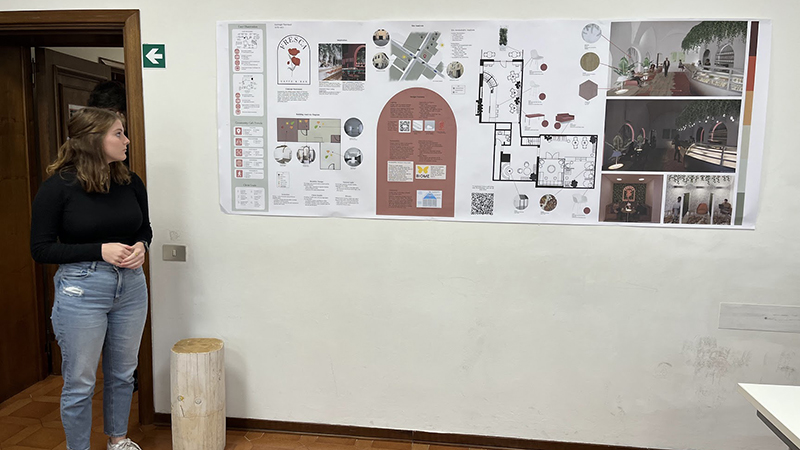
“It’s a perfect pairing for the students,” said Prof. Slenker. “They’re getting to go out and do user observation in the cafés that are also part of the meal plan. So, they’re not just sitting down once to do their homework. They’re actually acting as designers who are constantly experiencing life and allowing that feedback to go into their coursework.”
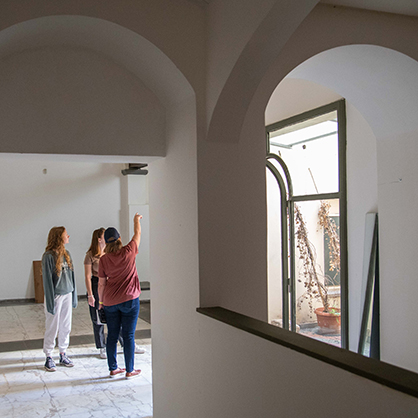
For Prof. Slenker, it was important to make sure the students’ designs reflected their understanding of the culture. She encouraged them to think about why they felt like they were in Italy when they visited local bottegas and restaurants, considering factors such as old and newly renovated features and to consider that, unlike in many American establishments, they could often see their orders being prepared. This resonated with Zachary Ferrauolo ’23, an interior design major who plans to go into commercial work.
“It’s been amazing to be in Italy and to see what we’ve learned about in class and put that into our work,” he said. “Studying a community other than New Haven and learning how it is different from what we are used to at home while learning about a different culture has deepened my design knowledge in a new setting. We’ve learned how to make the space embrace that culture.”
‘I learned how to overcome those challenges’
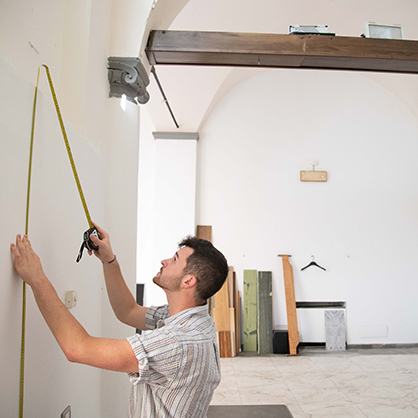
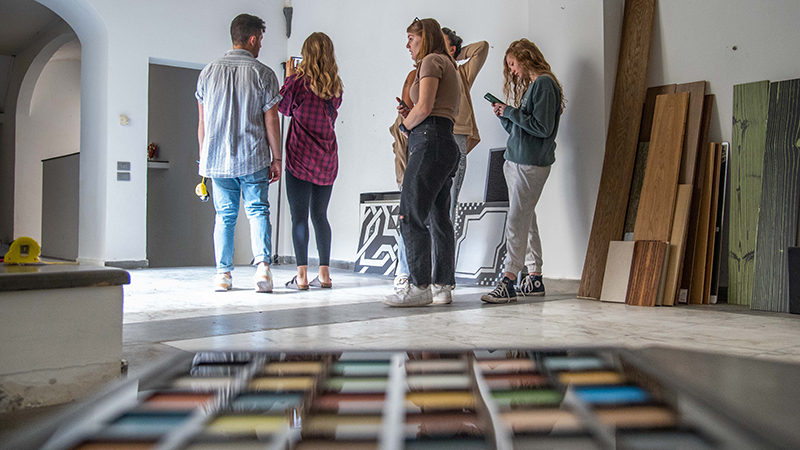
In addition to their class meetings in the community, students used a local tenant space down the street from the campus as a hypothetical site. They took measurements and explored how they could transform the space into their café.
Students also had guidance from members of the Prato community, including local architects and Benedetta Bonechi, owner of a nearby café on the meal plan where the students would often meet. A source of inspiration for them, she came to see their final designs.
It was the opportunity to learn from Italians while exploring spaces and culture in Italy that, says Caldas, made this experience so valuable.
“Seeing what people want and need in a space was easily available to us in Italy,” she said. “I can apply that to my work in the future. There are also challenges we faced there, such as communication challenges because of the language barrier, and I learned how to overcome those challenges. It was great that we got to do this in Italy.”
Contact
Get the highlights!
Stay up to date with our weekly e-newsletter, highlighting stories from around the University and media clips featuring our faculty experts.
Recent News
Charger 360

Season 5, Episode 4: Ashley McClain ’07 and Ariana James ’27
In the Media