Michaela Sullivan ’21 created a research proposal to study microplastics that has been honored by the Society for Applied Spectroscopy, and she hopes her work will inform forensic investigators and inspire more research into how microplastics impact the environment.
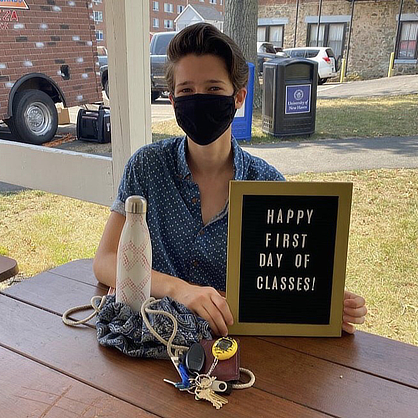
Michaela Sullivan ’21 has always been curious about the world and interested in how things work. Growing up, she and her sister often watched the Science Channel, and as a young student, she discovered a passion and an aptitude for math and science.
Now a forensic science major at the University of New Haven with a minor in environmental science, Sullivan is beginning a project this semester focusing on microplastics – very small pieces of plastic that pollute the environment. In recognition of the potential of her work, she has been chosen as a 2020 Society for Applied Spectroscopy Undergraduate Student Award winner – before she even began her research.
“Receiving this award is really validating to me as a young scientist because it shows that experts and peers in my field recognize the value of my research ideas,” said Sullivan.
The award, which recognizes outstanding research in spectroscopy, is given to up to five junior or senior undergraduate students. Sullivan will receive a one-year online membership to the Society for Applied Spectroscopy, an organization promoting research and education in analytical chemistry, spectroscopy, and optics, and a framed certificate. Awards are presented at the organization’s national meeting, which will be held virtually this year.
Her research, unfortunately, was postponed because of the coronavirus global pandemic. She is currently reviewing the existing studies on the impact of microplastics on the environment and will then begin her own lab work. She will collect environmental samples and analyze them using Raman spectroscopy, a chemical analysis technique that is based on the interaction of light with a material’s chemical bonds.
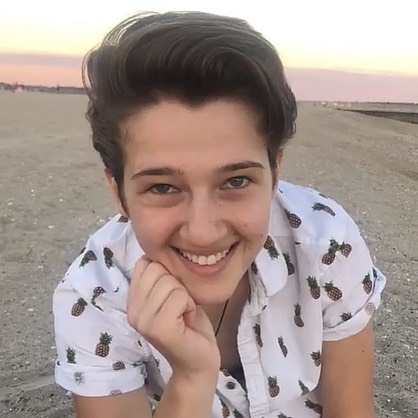
Sullivan learned about Raman spectroscopy and microplastics while visiting HORIBA, a leading company that provides analytical and measurement systems throughout the world. She learned about their instruments, helped with testing and marketing them, and worked with spectroscopy experts. She also gained experience analyzing plastics found in Connecticut harbors. The opportunity was made possible by Brooke Kammrath, Ph.D., an associate professor of forensic science and Sullivan’s adviser.
Sullivan says her goal when she is able to conduct her own analysis as part of her research is to learn whether the results will be reproducible enough to be useful in forensic investigations. She will also try to characterize microplastics by their physical and molecular properties, and determine whether levels of certain microplastics in the environment are characteristic to specific classes of regions. She hopes her work will inspire further research on microplastics.
“I think it is important for the research on microplastics to be intersectional and include various areas of science, including chemistry and forensic science,” she said. “I also hope that my research will inspire future considerations for how the presence of microplastic fibers and particles may impact the evidentiary value of fibers and particulate matter recovered from soil at crime scenes, and how microplastics have an impact on our environment as a whole.”
Contact
Get the highlights!
Stay up to date with our weekly e-newsletter, highlighting stories from around the University and media clips featuring our faculty experts.
Recent News
Charger 360
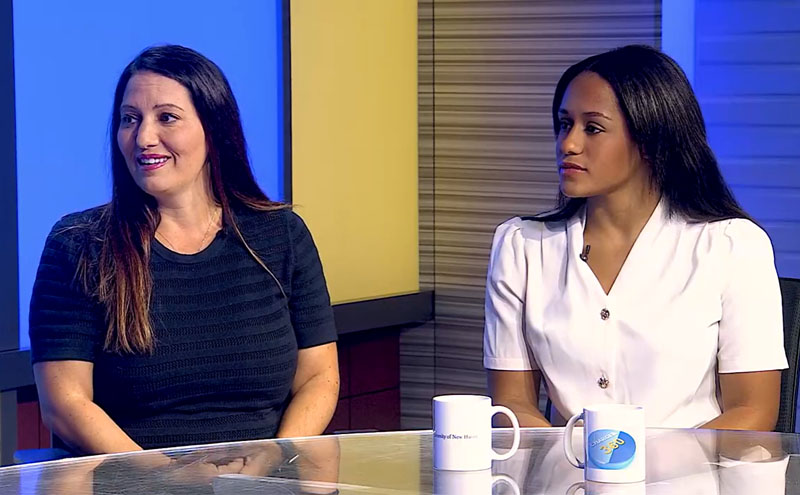
Season 5, Episode 4: Ashley McClain ’07 and Ariana James ’27
In the Media