A newly published study explores an understudied recreational inhalant and its connection to sexual health, while showcasing how faculty and student collaboration advances meaningful public health research.
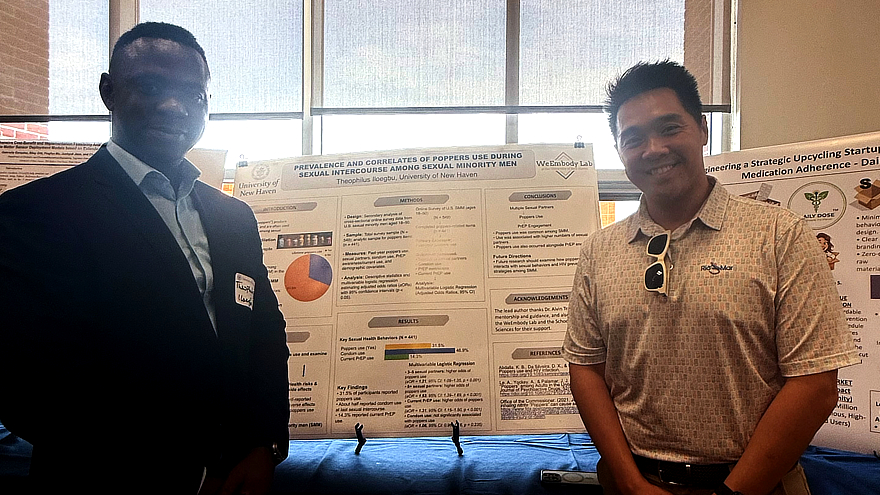
Despite decades of use, alkyl nitrites, commonly known as "poppers," remain an understudied topic in public health research. While poppers are commonly used in some sexual contexts, particularly among sexual-minority men, relatively little is known about how their use relates to sexual health behaviors and HIV prevention.
Alvin Tran, ScD, MPH, chair of the Department of Population Health & Leadership and director of University of New Haven's WeEmbody Lab, and I wanted to better understand this understudied area of public health. Together with collaborators from Fairfield University, Michigan State University, and New York University, we recently published our findings in the Journal of Community Health.
This publication reflects the collaborative nature of research and the opportunities that arise when faculty and students work side by side to answer important public health questions. Throughout the project, we worked together on every stage of the research process, including reviewing the literature, interpreting findings, analyzing data, revising the manuscript, and preparing it for publication.
Personally, the experience also marked my first peer-reviewed publication, an important milestone as I completed my Master of Public Health degree.
'Impactful research is a collaborative effort'
Using data from the University of New Haven's Men's Body Project, we analyzed responses from 441 participants across the United States to better understand how poppers use relates to sexual health behaviors and HIV prevention. We found that nearly one-third (31.5%) of participants reported using poppers during sexual intercourse within the previous year.
Participants reporting a greater number of sexual partners and those currently taking HIV pre-exposure prophylaxis (PrEP) were more likely to report poppers use. Condom use during the last sexual encounter was not independently associated with poppers use after adjusting for demographic characteristics.
Collectively, these findings reinforce the importance of approaching discussions about poppers through evidence-based public health, harm reduction, and patient-centered healthcare, rather than stigma alone.
"Research is a continuous learning process, and every experience, whether analyzing data, reviewing literature, or presenting findings, helps build valuable skills."
- Theophilus Iloegbu, MPH
One of the greatest outcomes of this project was not simply publishing the paper, but the opportunity to learn from one another throughout the research process.
The biggest lesson I learned is that impactful research is a collaborative effort and a continuous learning process. Every stage of this project required patience, attention to detail, perseverance, and collaborative teamwork. This experience taught me that meaningful research is not about getting everything right the first time, but about learning, improving, and working together to produce reliable evidence that can make a real difference.
'Growing beyond my comfort zone'
Mentorship is one of the foundations of the WeEmbody Lab, and this project reinforced how much both faculty and students can learn through collaboration. As our work progressed, we celebrated successes, worked through challenges, and refined the manuscript together. Those shared experiences ultimately strengthened both the research itself and our growth as researchers.
Working with Dr. Tran and the WeEmbody Lab has been one of the most transformative experiences of my academic journey. Dr. Tran's mentorship continually challenged me to strive for excellence by thinking critically and growing beyond my comfort zone. He taught me to take initiative and approach every stage of research with curiosity and a strong sense of responsibility.
The collaboration and supportive environment within the WeEmbody Lab shaped my confidence as an emerging researcher and inspired me to pursue meaningful public health research that has the potential to improve health outcomes and make a lasting impact on communities.
This project gave me more than research experience. It helped shape the way I think and approach problem-solving and collaboration. I developed stronger skills in data analysis, scientific writing, and critical evaluation of evidence. I also gained confidence working with a collaborative team and communicating complex findings in ways that can inform public health practice.
'You can’t wait until you feel completely ready'
As I begin the next chapter of my career, I plan to continue contributing to research while pursuing opportunities in public health, healthcare operations, and global health that enable me to combine my clinical background with research and program management to improve population health.
I learned that you can’t wait until you feel completely ready to start research. Get involved early, and stay curious. Research is a continuous learning process, and every experience, whether analyzing data, reviewing literature, or presenting findings, helps build valuable skills. Be open to feedback, ask questions, and seek mentors who will challenge and support your growth.
Research is about more than answering scientific questions. It is about building partnerships, developing future public health leaders, and creating opportunities for students to contribute meaningfully to scholarship.
Dr. Tran and I hope this publication not only advances an understudied area of public health but also demonstrates the impact that faculty-student collaboration can have on both research and student success.
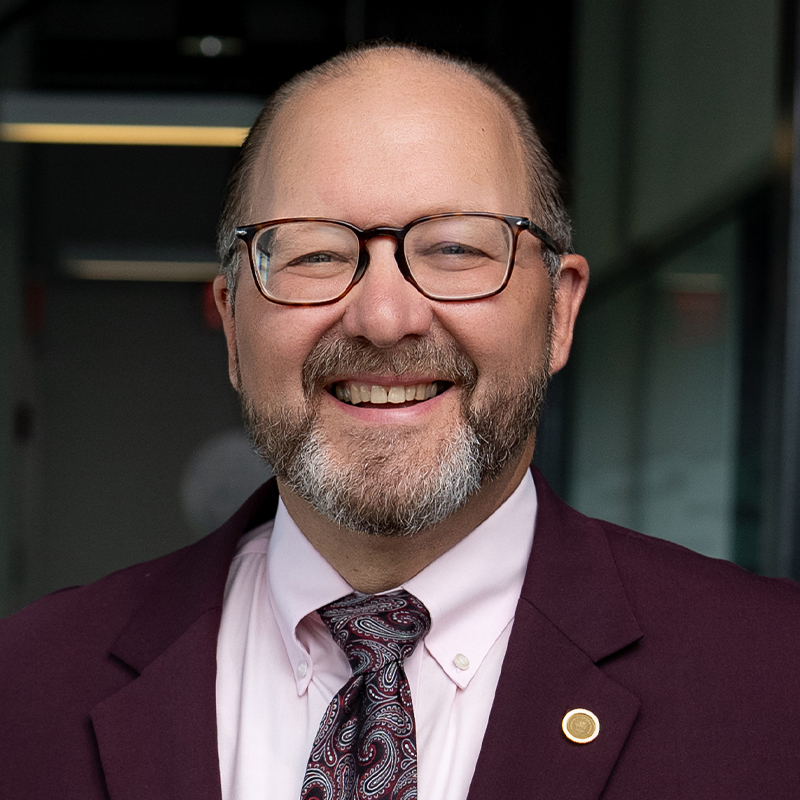
Alvin Tran, ScD, MPH, is associate professor and chair of the Department of Population Health & Leadership and director of the WeEmbody Lab at the University of New Haven. He is a recipient of the 2025–2026 William L. Bucknall Excellence in Teaching Award.
Theophilus Iloegbu, MPH, is a recent graduate of the University of New Haven's Master of Public Health (MPH) program. He served as a WeEmbody Lab Fellow from 2025–2026, where he contributed to community-engaged public health research.
Contact
Get the highlights!
Stay up to date with our weekly e-newsletter, highlighting stories from around the University and media clips featuring our faculty experts.
Recent News
In the Media
WTNH: University of New Haven breaks ground for new Pompea College of Business building
In the Media