Psychology Students Use Photovoice Research to Advocate for Positive Change
Students in a Community Psychology course transformed research into action through Participatory Action Research (PAR) Photovoice projects, identifying issues related to well-being and sharing evidence-based recommendations to help enrich the student experience.
August 17, 2026
By Caitlin Truesdale, Office of Marketing and Communications
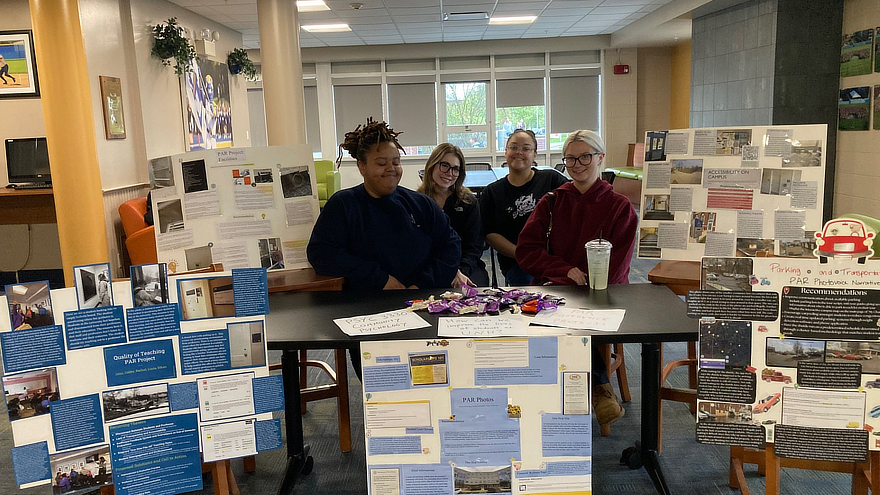
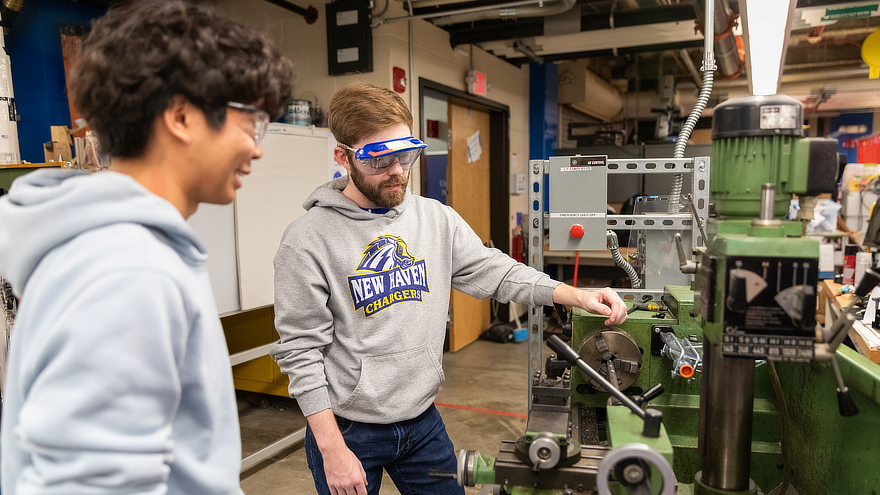
Students in the University of New Haven's PSYC 3330 Community Psychology class.
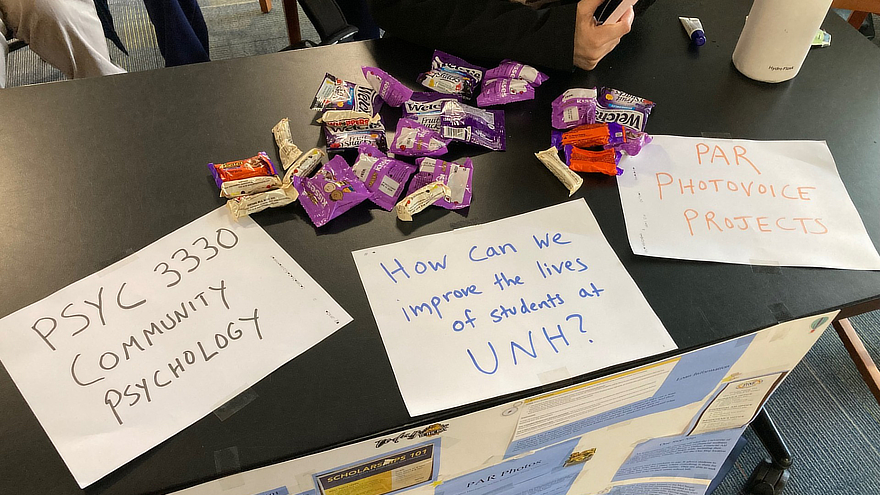
Students in the University of New Haven's PSYC 3330 Community Psychology course spent the semester exploring how research can become a catalyst for meaningful change. Through Participatory Action Research (PAR) Photovoice projects, students examined issues they identified as important to student well-being, combining photography, research, and personal narratives to advocate for enhancements across campus.
The course, taught by Melissa L. Whitson, Ph.D., professor of psychology and program coordinator of the Community Psychology M.A. program, challenged students to investigate the concerns of their peers while learning an evidence-based approach to community-engaged research. Working in teams, students focused on five topics: accessibility, facilities, financial resources, parking, and quality of teaching.
After documenting their findings and developing recommendations, students presented their work as part of a display in Bartels Hall, encouraging the campus community to engage with the issues and consider opportunities to foster positive change.
For many students, the experience demonstrated that research extends beyond collecting data. "Although the process of researching our topics was not too demanding, it was rewarding because we were able to back up our ideas with strong empirical evidence," said Lucia Belbusti ’26.
'This project allows us to let our voices be heard'
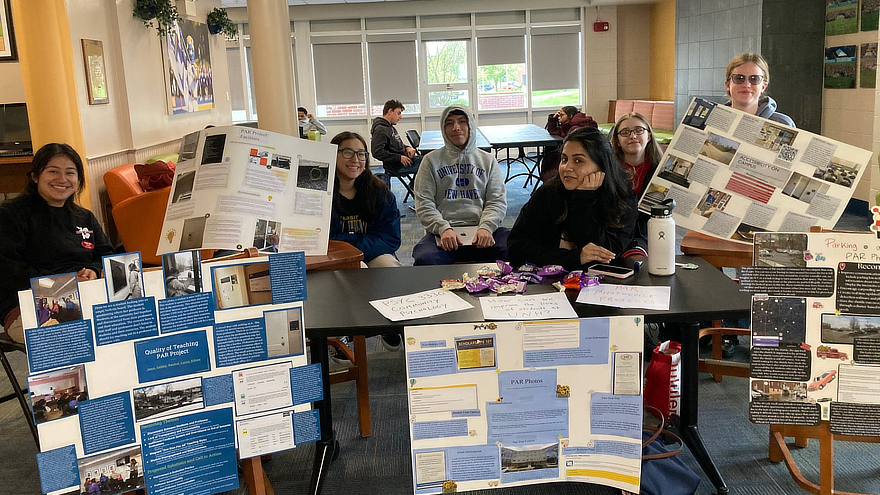
As the students investigated the concerns raised by their classmates, they discovered common ground with classmates who shared similar experiences.
Students in the University of New Haven's PSYC 3330 Community Psychology class.
"Working on this project was extremely eye-opening in terms of issues that students experience across campus," said Madison Webb ’29.
Jennifer Venegas Ambrocio ’26 said hearing from fellow students was one of the most meaningful parts of the project. "It was inspiring to pick a topic that affects students because it was refreshing to hear that many students dealt with similar issues across the University," she said.
For Ethan Butz ’27, a psychology major with a concentration in clinical psychology, the project represented a different way to advocate for change. "This project allows us to let our voices be heard from a different angle," he said.
'We have already made a difference'
Several students said the project gave them a sense of empowerment by demonstrating that their perspectives could contribute to real conversations about enhancing campus life.
"This project allowed me to feel like I actually have a voice on campus," said Rachel Errickson ’26, a student in Criminal Justice, Investigative Services. "Students can feel like their voice matters and that change is possible."
Participatory Action Research (PAR) Photovoice projects examined issues identified as important to student well-being.
Ariana Cortes ’26 said the class provided an opportunity to elevate issues that might go unnoticed. "The goal is to make waves of awareness that eventually lead to policy changes," she said. "I believe, even if we are just one class, that we have already made a difference."
"They all responded to let us know they appreciated us sharing the projects and that they were working on these issues," said Dr. Whitson. "When I shared their responses with the class, the students were surprised and satisfied that the work they did was being heard by those in power."
'I've gained hands-on research experience in a way that I didn't know was possible'
Beyond raising awareness, students said the project changed the way they think about psychology, research, and their future careers.
Lily Heller ’27, whose group focused on accessibility, said the experience highlighted that practical advances could make a meaningful difference. "I was astonished by the number of automatic door buttons that were not functional or required a card to activate," she said. "Everybody should have easy access to using these buttons, and it is a simple barrier to remove."
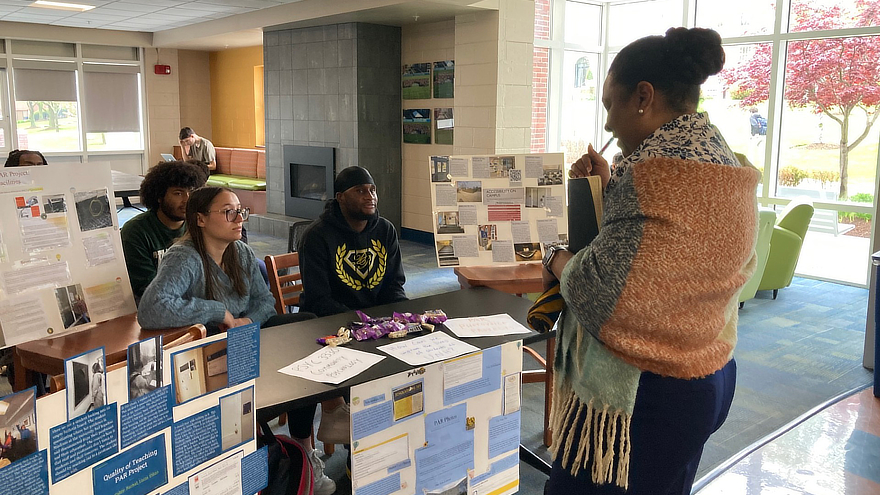
Vice President of Student Affairs and Dean of Students Ophelie Rowe-Allen, Ed.D. Came to learn about the projects.
Carolina Silva '27 said researching parking and transportation gave her an opportunity to pair personal experience with practical solutions. "I had always felt frustration surrounding parking on campus, and being able to voice those frustrations while also finding solutions was very exciting," she said.
Adiana Alves ’27 said the project challenged her assumptions about research. "I've gained hands-on research experience in a way that I didn't know was possible," she said. "PAR research makes the experience interactive, focuses on issues that directly concern communities, and allows you to work alongside those communities to make a direct impact."
For Gabby Woodward ’27 the experience broadened her understanding of her major. "It has reshaped what I thought about psychology and opened my eyes to what research can look like," she said. "It has made me consider my future academic endeavors and how I want to operate within the discipline."
Dr. Whitson hopes that a lasting lesson stays with students long after the course concludes. "It is this kind of empowerment I hope to instill in students so they can realize the impact it can have on all of our communities, particularly those that traditionally don't have a voice," she said.