Students, faculty, and community members removed more than 5,000 pieces of debris from the New Haven shoreline during an International Coastal Cleanup Day event at Long Wharf, helping protect Long Island Sound and promote environmental stewardship.
Each year, communities around the world come together on International Coastal Cleanup Day to protect shorelines, waterways, and marine ecosystems by collecting litter. This Fall, students, faculty, and community members joined the initiative at the University's Robert M. Lee & Linda M. Wilkins Marine Science Center at Canal Dock. Hosted in partnership with the COASTS Program, Save the Sound, and Connecticut Sea Grant, this cleanup brought together volunteers from across the region to remove debris, collect data, and raise awareness about the importance of protecting Long Island Sound.
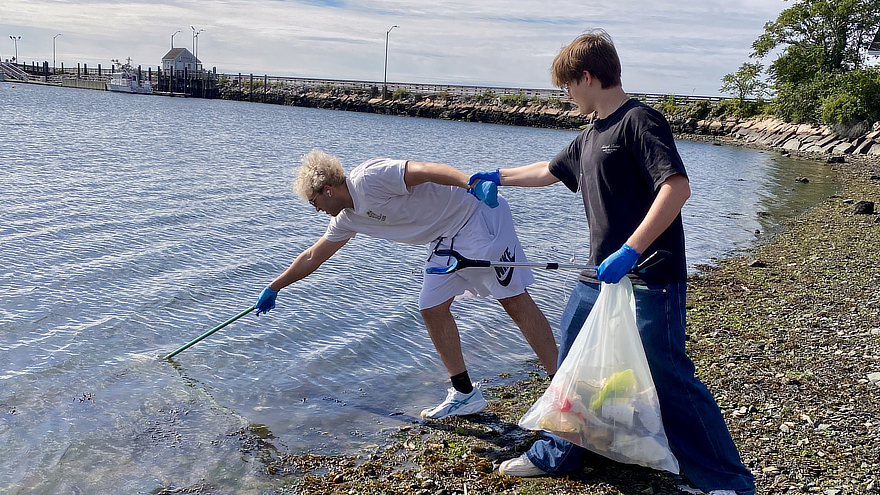
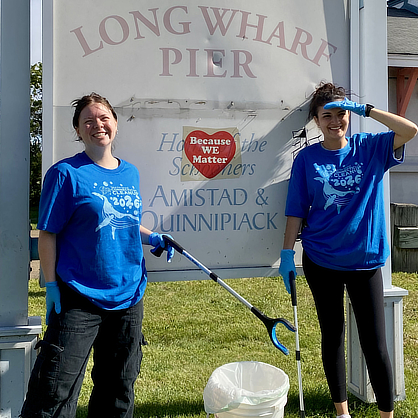
Equipped with gloves, grabbers, trash bags, and lots of enthusiasm, volunteers spent a Saturday morning removing trash from New Haven's shoreline at Long Wharf. Their efforts made a tangible impact on reducing marine debris and preserving the natural beauty of the Long Island Sound. Through this event, community members demonstrated how individual actions can contribute to local and global environmental-conservation efforts. Only a few hours of service can create a lasting impact for our community and the environment.
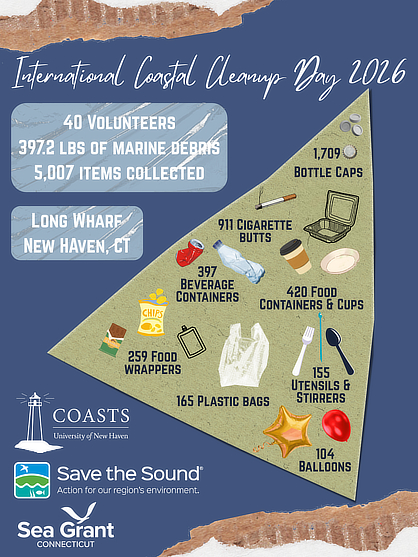
This year's cleanup brought together 40 volunteers who worked collaboratively to collect and gather data on debris found along the Long Wharf coastline. Volunteers sorted and recorded the items that were collected, which contributed valuable data that helps environmental organizations better understand sources of pollution and areas of concern. By the end of the cleanup, volunteers had collected 5,007 individual pieces of debris, totaling 397.2 pounds of waste removed from the shoreline.
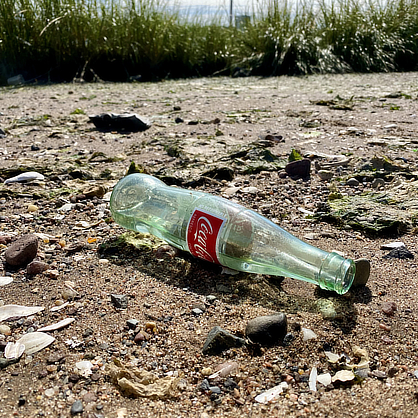
While the numbers tell an important story, the event's impact extended far beyond. Volunteers saw firsthand the types of materials that commonly pollute our waterways, including single-use plastics, food packaging, beverage containers, and other everyday items. These observations sparked conversations about sustainability, responsible waste disposal, and the role that individuals play in protecting natural resources. The experience served as a reminder that while environmental challenges can often feel overwhelming, meaningful change begins with local action.
'A commitment to leaving our communities and ecosystems better than we found them'
Locally, the New Haven shoreline plays an important role in supporting marine organisms, recreation, and overall community well-being. Trash that is left in these areas often enters rivers, harbors, and the Long Island Sound. When it reaches the water, this debris poses risks to aquatic organisms and water quality.
By removing debris before it reaches open water sources, volunteers helped to reduce environmental harm while improving the waterfront for community members to enjoy. Participants also gained a deeper understanding of how environmental issues that may appear small at first glance can have significant cumulative effects over time. Environmental stewardship is a commitment to leaving our communities and ecosystems better than we found them. Stewardship of natural resources is a shared responsibility, requiring collaboration among individuals, organizations, and communities.
Community engagement opportunities such as this one provide University of New Haven students with learning experiences that extend beyond the classroom, helping students connect knowledge with action. By participating, students have the chance to reflect upon and apply concepts related to marine and environmental science, sustainability, and civic responsibility in real-world settings. Throughout the event, volunteers worked together to coordinate collection efforts and document the results of their work. These activities fostered teamwork, communication, and problem-solving skills while reinforcing Chargers' commitment to service and community partnership.
'Inspires future action'
Beyond the environmental benefits, the cleanup also strengthened connections between the University and the Greater New Haven community. Volunteers worked alongside one another toward a common goal, reinforcing the idea that community engagement is most effective when people come together with a shared purpose. A community connected by care for the environment doesn't just make an impact today, but it inspires future action that benefits everyone.
As bags of collected debris accumulated throughout the morning, so did a sense of accomplishment among volunteers. Every item removed from the coastline represented a tangible contribution toward a cleaner, healthier environment and community.
The success of this event reflects the dedication of the volunteers who gave their time and energy to support a cause that benefits both the local community and the marine environment. Their efforts serve as an example of how collective action can create meaningful change and inspire others to get involved in environmental stewardship. At the end of the day, volunteers left Canal Dock knowing that their work had made an immediate impact and helped build momentum for positive change.
If you are interested in future COASTS Program community events and clean-ups, please contact COASTS@newhaven.edu. If you are a prospective or current student interested in learning more about the coastal environment through our Marine Biology or Environmental Science programs, please contact Jean-Paul Simjouw at JSimjouw@newhaven.edu.
Contact
Get the highlights!
Stay up to date with our weekly e-newsletter, highlighting stories from around the University and media clips featuring our faculty experts.
Recent News
The Charger Blog
University of New Haven Students and Local Community Members Support International Coastal Cleanup Day
University News