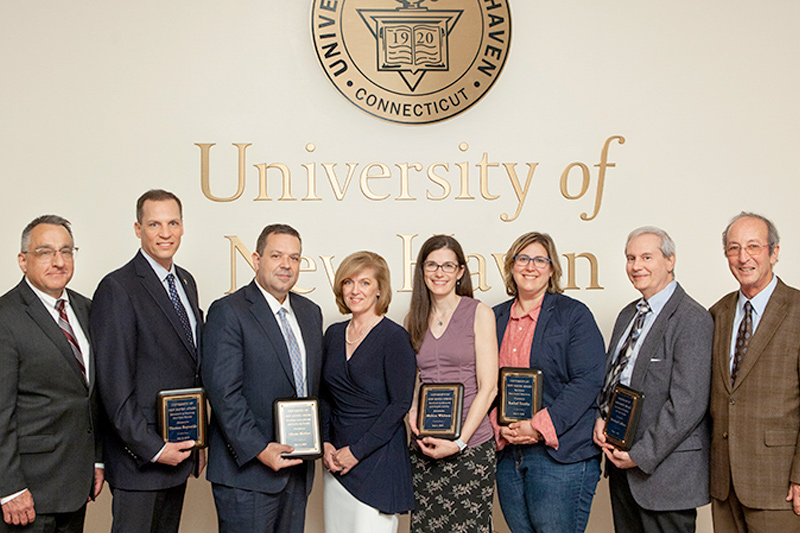
Savage joined the faulty of the University of New Haven in September of 2005. Prior to coming to UNH, she was an adjunct professor at Saint Joseph's College and the University of Connecticut at Hartford. She also spent two years at the National Institute of Standards and Technology in Gaithersburg, MD as a National Research Council Postdoctoral Fellow. We sat down with Nancy Savage and learned what she is doing inside and outside of the classroom.
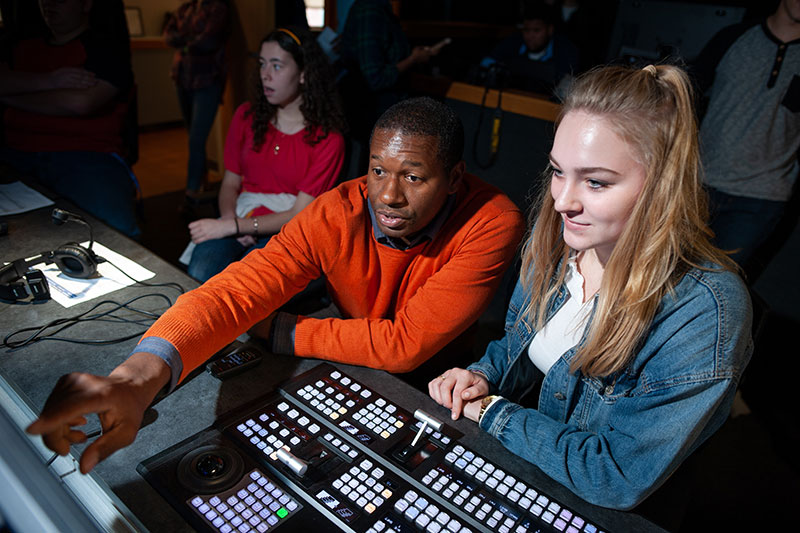
I enjoy working and interacting with the students at UNH. Because UNH is a school with an undergraduate focus, I can interact with students in a one-on-one capacity. It is fun to mentor students, to help them to make decisions about their future, and to observe how they mature as individuals from their first year to when they graduate. The chemistry program at UNH is fortunate to teach students that are enthusiastic about chemistry and the sciences.
I believe that the future of teaching includes an increased use of technology. Today’s student is very comfortable with technology, and this will only increase over time (My first grader has a smart board in his classroom, so imagine how comfortable he’ll be with technology as a college student.) Already, I use the Tegrity system, Blackboard and online homework in my classes and I feel that these technological additions enhance my teaching.
I use the Tegrity program. This wonderful program records what I say and write during class. Students can go back and listen to the whole lecture, or just portions of it, at a later date. This allows them to review and reinforce content, which is particularly useful for students that are not good at taking notes.
I am excited about service learning courses. Service learning courses have a community service experience that is tied the course content. As a result, students will apply course content to their community service and the service learning will impact their course work. Service learning relates and reinforces material learned in the classroom. Students will not just be working for a grade but to see the impact that their work will have on their community. This is a real world experience that will get them excited about their subject matter. I am teaching my first service learning course this spring, Instrumental Analysis Lab. My students and I are working with Common Ground High School in New Haven, giving their students the opportunity to perform experiments typically unavailable to them.
Students look forward to the in-class problem sessions that I have in all of my classes. Students learn chemistry best when they spend time doing problems. By taking time out of lecture and working on problems during class, my students can get an immediate help when they have difficulty with a concept. I love working with students in this capacity and I believe this is when I am most effective as a teacher. The students really respond to it. I provide an atmosphere where they are comfortable asking questions, and it spills over to the days I lecture.
My advice for students is to find some balance during their four years of college. Of course they should choose elective courses that will make them marketable to an employer, but they should also choose elective courses just to learn about another discipline. Yes, a research position or internship will help you get a job, but an interviewer will also find it interesting that you were the lead in spring theater production or wrote an article every week for the college paper. In college you will have to study, perhaps more than you ever have before, but there will still be so much free time. Be engaged in your education, both inside the classroom and out, and finish college with no regrets
At UNH we host the Summer Institute for Young Women, a weeklong, residential science and engineering summer program for middle school girls. This program is jointly administered by the Tagliatela College of Engineering and University College. Last summer we had 17 participants, and enrollment for this year has nearly doubled. The program allow 6th through 9th graders to live and learn together, sharing in their love of science. Many of our undergraduates helped out during the program, a rewarding experience for them as well.