MARY LIPPA ’23
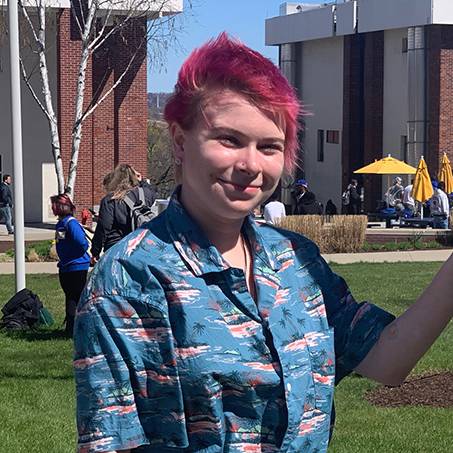
My intention was to make even just one person smile.
Why do people do what they do? And what makes them do it at certain times and in certain places? If you are drawn to the scientific study of human behavior in all of its myriad manifestations, you’ll thrive as a psychology major at the University of New Haven.
You’ll learn to understand, and arrive at explanations for, a person’s thoughts and emotions. You’ll examine psychology from clinical, cognitive, developmental, personality, physiological, and social perspectives. Your classroom studies will then be brought to life in the laboratory and the clinic as well as in personal settings.
Our faculty are leaders and innovators in their fields, bringing both deep professional experience and academic rigor to the classroom.
My intention was to make even just one person smile.
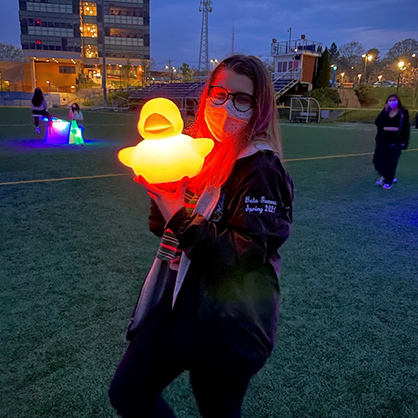
I always dreamed of going to Italy.
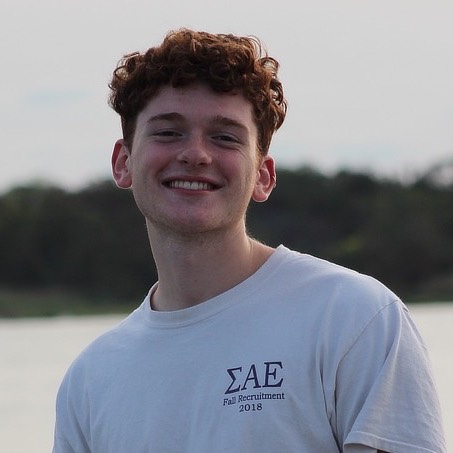
I now know my abilities as a writer, my own self-worth, and that what I say matters and people need to hear it.
The information below is designed to show the many possible careers you could pursue with your major. The research is provided by Encoura, the leading research and advisory firm focused exclusively on higher education. It includes median national salaries and industry growth projections over the next decade. Click here to view the full report.
Social and Community Service Managers
14% Growth 2017-2027
Mental Health Counselor
21% Growth 2017-2027
Behavior Data Specialist
22% Growth 2017-2027
Psychological principles and research as they apply to the problems of working with people in organizations. Analysis of problems and decisions in this use of human resources, including selection and placement, criterion measurement, job design, motivation.
Different types of human and animal learning. Learning as an adaptive mechanism. Psychological principles underlying learning. Practical applications of learning principles.
This course explores the neurological underpinnings related to cognitive processes and their associated behaviors. Specifically, the course will focus on the brain’s role in complex human behaviors such as attention, body movement, consciousness, emotions, decision making, formation and retrieval of memories, and the production and understanding of language.
Different types of human and animal learning. Learning as an adaptive mechanism. Psychological principles underlying learning. Practical applications of learning principles.
This course is intended to provide an overview of the various applications of psychology to forensic settings. Topics include criminal investigation and profiling, personnel selection, dynamics of violence and victimology, eyewitness testimony, trial processes, and a variety of other areas within the criminal and civil justice systems.
This class will review the civil and criminal law as it relates to mental health issues. Particular emphasis will be given to the justification of mental health law concepts, such as civil commitment and parens patriae power. Topics will include competence to stand trial, insanity, civil commitment, sexual predator commitment statutes, confidentiality, duty to warn, informed consent, malpractice, and issues of expert testimony. Legal cases will be examined to give the students a foundation in actual legal case law. Ethical issues and issues of professional responsibility will be covered.
The University of New Haven offers a wide variety of in-depth courses that create a transformational educational experience for our students. To view the complete list of courses you'll take while pursuing a Bachelor of Arts in Psychology, check out the Academic Catalog:
Psychology, B.A. - General Psychology Concentration
Psychology, B.A. - Forensic Psychology Concentration
Psychology, B.A. - Clinical Psychology Concentration
Psychology, B.A. - Community and Society Concentration
Get an inside look at what differentiates the University of New Haven and how your experiences as a student will prepare you for success.
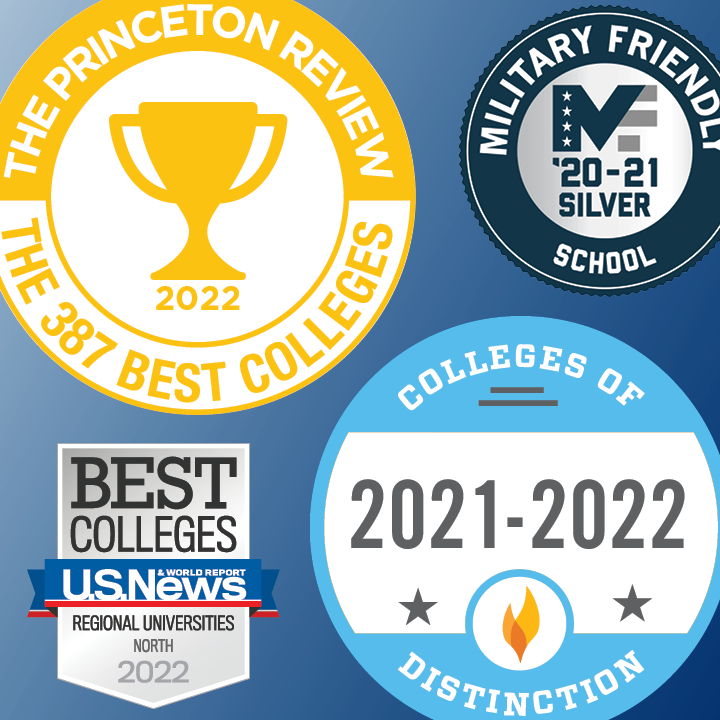



All University of New Haven students have access to the many resources available through the University’s Career Development Center, which has been named one of the best in the nation by The Princeton Review.
From career assessments, networking, and job shadowing to on-campus interviews and salary negotiation, the Career Development Center provides the skills and connections to identify a meaningful career and an opportunity to pursue your passion.
Learn MoreThere are a variety of opportunities for you to learn more about our programs, what it is like to be a student here, and the scholarships, assistantships and financial aid that we offer. Whether you want to meet us on campus or online, we have something for you.
Whether you're still in high school or are transferring from another college, we offer full- and part-time opportunities for undergraduates from inside the U.S. and abroad. The admission process can begin as early as the end of your high school junior year.
The Application Process
We offer a comprehensive financial aid program, with students receiving assistance in the form of grants, scholarships, student loans, and part-time employment. Funds are available from federal and state governments, private sponsors, and from university resources. More than 85 percent of the University's full-time undergraduate students receive some form of financial assistance.
Learn More